Remember the semiconductor chip shortage that disrupted the automotive, computer, and IoT industries from 2020 to almost 2024?
Purdue Movable Dream Hire David Simchi‑Levi and his long-time collaborator Michelle Xiao Wu predicted it.
Because Simchi-Levi had long before developed a framework for companies to assess their time-to-survive (TTS) and time-to-recover (TTR) should some component in their supply chain become scarce, he could read the implications of news coming from contacts in Shanghai. A new virus was causing Chinese factories to be shuttered.
Drawing on his Time to Recover (TTR) and Time to Survive (TTS) framework, he and his collaborators showed that a disruption confined to Chinese factories in January would force manufacturers in North America and Europe to throttle production by mid‑March, as carmakers and electronics producers ran through inventories faster than damaged sites could return to full capacity.
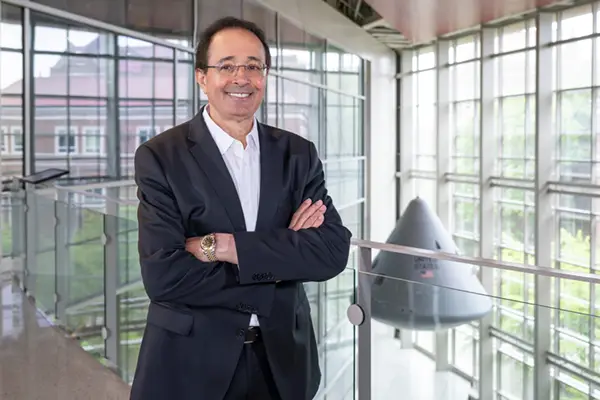
David Simchi-Levi (above) says the center is a bridge between academia and industry.
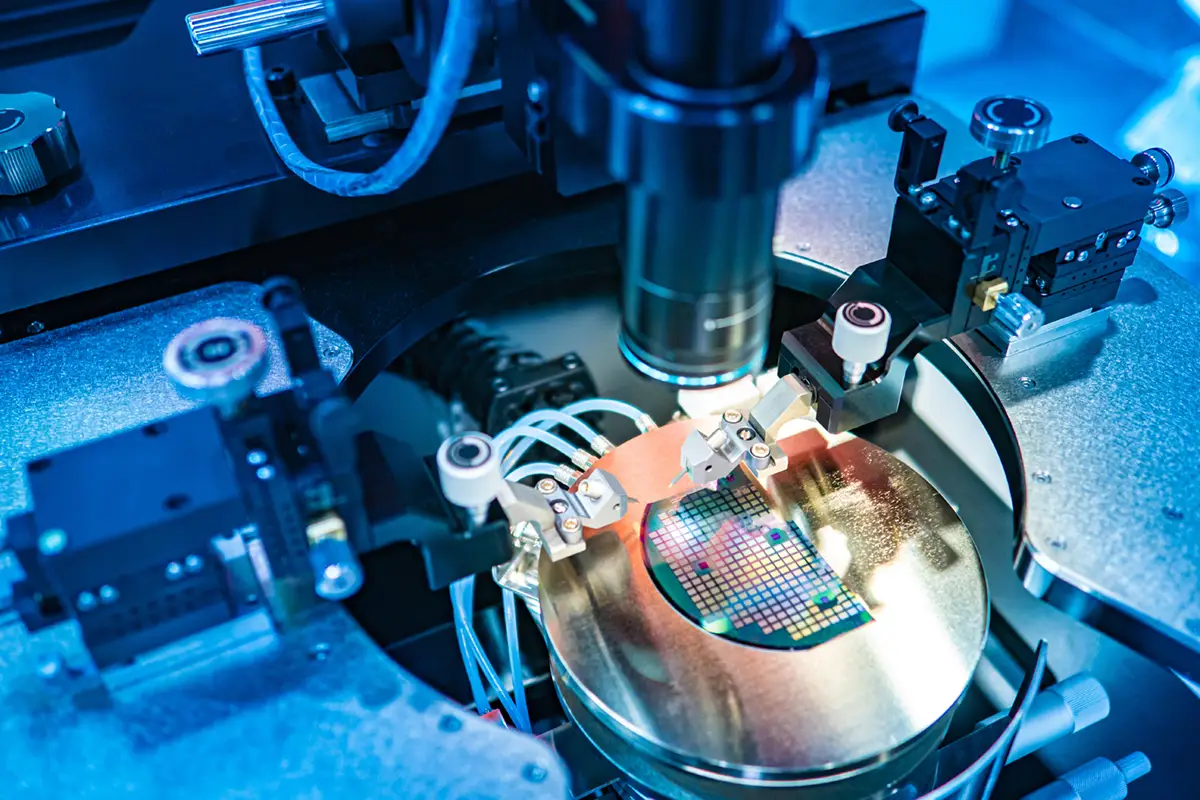
The same logic later illuminated the semiconductor crunch: a 10‑day stoppage at a wafer plant could cascade into six to 12 months of shortages, as bottlenecks and capacity constraints rippled through downstream tiers.
Those insights, first proven in early 2010's crises from Iceland’s ash cloud, catastrophic floods in Thailand, and the tsunami in Japan, anchor the work of Purdue’s Data Science Center for Decision Making, a joint initiative of the Mitch Daniels School of Business and the College of Engineering.
Simchi‑Levi, Susan Bulkeley Butler Distinguished Professor in Operations Management at the business school and Distinguished Professor in the Edwardson School of Industrial Engineering, and his team help companies map where their supply chains are most likely to break — and how long they have to act before they do.
Simchi-Levi began these efforts more than a decade ago, partnering with leading companies across industries. The work is ambitious: solve the most complex operational challenges through research that applies data science to improve business performance.
The center partners with organizations to tackle three main business objectives:
The Data Science Center for Decision Making is a bridge — between academia and industry and between engineering and business — producing research that is both theoretically elegant and practically transformative.
The center's foundation was built at MIT’s Data Science Lab, which pushed into a new frontier: combining predictive, prescriptive and generative AI to transform how companies run core processes.
Learn more about how the center uses TTR and TTS tools to plan resilient supply chains in Daniels Insights, the business school's thought leadership blog.
Discover the Data Science Center LEarn more with Daniels Insights Read About the Center's history