
The disruption began with three natural disasters in two years.
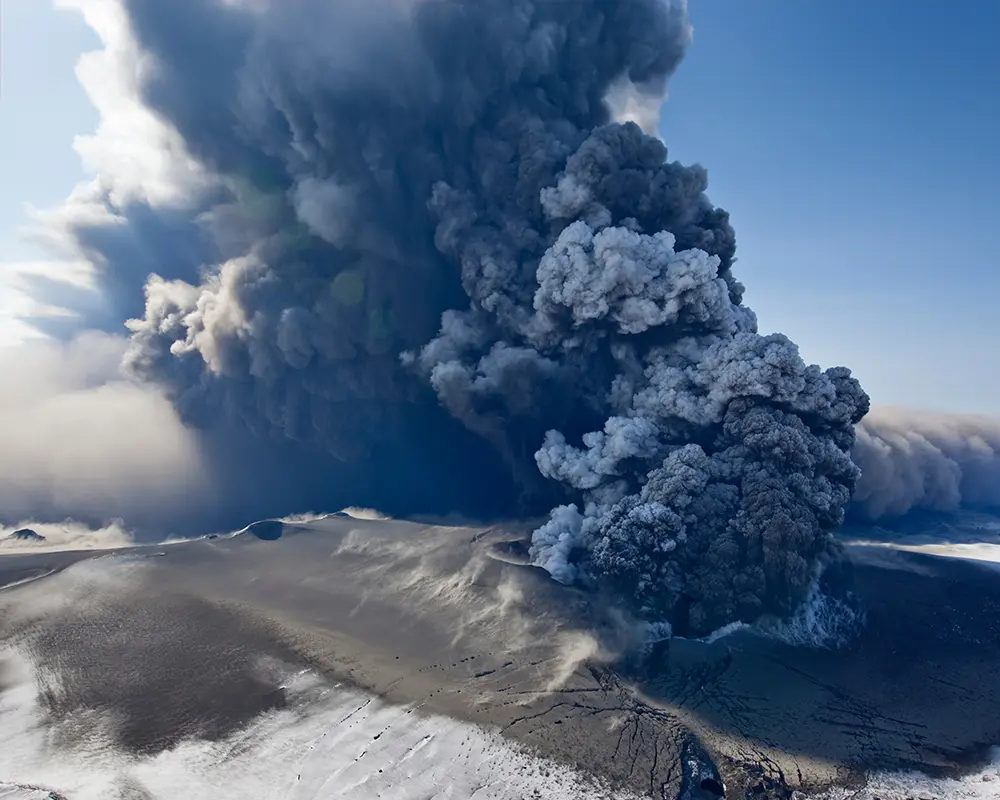
When Iceland’s Eyjafjallajökull volcano erupted in 2010, grounding thousands of flights across Europe, industry executives began to wonder how much disruption a single unforeseen event could inflict on a global supply chain— and what else was hiding beneath the surface.
Within a year, the tsunami in Japan and catastrophic floods in Thailand delivered the answer. Automotive, high-tech and pharmaceutical manufacturing were crippled. Fragilities that no one had fully mapped were suddenly exposed.
Those cascading shocks set David Simchi‑Levi, Distinguished Professor of Management in the business school’s Supply Chain and Operations Management Department and Distinguished Professor in the Edwardson School of Industrial Engineering, on a path that started at MIT and now continues at Purdue University’s new Data Science Center for Decision Making, a joint initiative of the Mitch Daniels School of Business and Purdue’s College of Engineering.
Built on the foundation of MIT’s Data Science Lab, established by Professor Simchi-Levi more than a decade ago, the new center partners with leading companies across industries. Its mission is ambitious: to tackle the most complex operational challenges through research that applies data science to improve business performance.
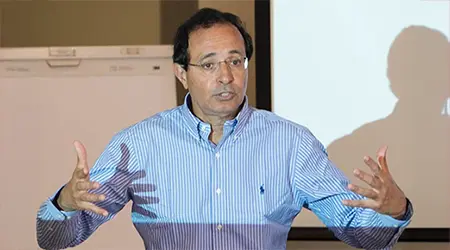
David Simchi-Levi (above) envisions the center as a bridge between academia and industry.
Simchi-Levi envisions the center as a bridge — between academia and industry and between engineering and business — producing research that is both theoretically elegant and practically transformative.
When Ford first approached Simchi‑Levi after the 2010–2011 disasters, the standard advice inside the company was simple: focus on big, strategic suppliers. Leadership wasn’t convinced that was enough. They wanted evidence. They turned to Simchi‑Levi’s team to bring together data, models and analytics for real business impact, not just theory.
The Ford project quickly revealed that risk in global supply chains is often hidden in unexpected places. Low‑cost components— sourced from small suppliers— often turn out to be points of failure that halt production. The lab’s models also overturned another assumption: risk is not confined to Asia. Significant vulnerabilities can show up in the United States and Europe as well.
From disruptive natural disasters to an AI‑powered future in Indiana, the journey of MIT’s Data Science Lab to Purdue’s Data Science Center for Decision Making traces how one set of ideas reshaped the way companies see risk, value and possibility in their data.
By 2014, the team had published its framework in academic journals and Harvard Business Review, and Ford recognized the methodology as one of its top engineering technologies. Yet interest from industry remained muted. Between 2014 and the start of the COVID‑19 pandemic, Simchi‑Levi knocked on doors, urging companies to invest in resiliency. Only a handful signed on.
Everything changed in early 2020, but the turning point came a few weeks earlier— in China.

In December 2019, Simchi‑Levi and his longtime collaborator and lab co-director Michelle Wu were traveling in Asia. As they returned in early January, messages from colleagues with ties to China began to describe a fast‑moving health crisis in cities like Shenzhen and Shanghai. Drawing on technology originally built six years earlier for Ford and other partners, the lab started collecting data and running scenarios.
The analysis suggested something startling: even though the outbreak was then largely confined to China, supply chains in North America and Europe would grind to a halt by mid‑March. Simchi‑Levi and a collaborator rushed a short article to Harvard Business Review.
Within a day or two of publication, hundreds of thousands of readers had downloaded the piece. On March 17 and March 18, newspapers around the world reported that European and North American manufacturers were shutting down, just as the lab’s models had forecast.
Two months later, the team argued in another article that companies needed to adopt supply chain stress tests, especially in life sciences, food, health care and semiconductors. The approach eventually found its way into the U.S. president’s annual Economic Report, which highlighted the lab’s framework as a model for stress‑testing critical supply chains.
Behind those forecasts was a new vocabulary for resilience. Simchi-Levi and his team created a framework that invited executives to think in terms of two key metrics: Time to Recover (TTR) and Time to Survive (TTS).

TTR measures how long it takes a supplier or site to return to full capacity after a disruption. TTS calculates how long a company can continue meeting demand despite that disruption. Together, they help leaders identify both fragile and overprotected operations.
Time to Recover quantifies how long it would take an operation or supplier to bounce back from a disruption, under specific scenarios such as pandemic, fires or storms. The catch was that TTR depends on what actually happens, making it difficult to plan in advance. To address that challenge, the lab introduced Time to Survive: the length of time a company can continue to match supply and demand, regardless of the specific disruption.
Those measures, grounded in detailed data and network models, allowed companies to see where they were dangerously exposed— and where they were over‑investing. Sites with very short TTS became clear red flags, while locations with extremely long TTS often reflected excess inventory or redundancy that could be trimmed without sacrificing resilience.
As the work expanded, the lab studied a new nuance with major automotive supplier Denso: why short disruptions sometimes led to very long recovery times. A 10‑day stoppage at a wafer facility, for instance, could take six to 12 months to unwind due to downstream bottlenecks and capacity constraints. Using its models, the lab began helping executives understand not just how to absorb a hit, but how long it would take their supply chains to return to normal operations.
The pandemic— and the global scramble for semiconductor chips— underscored the stakes. Carmakers were forced to ship vehicles missing critical electronic components, and few understood why the shortage dragged on so long. The lab’s tools helped explain the dynamics and guided companies on where to act.
The power of resiliency framework drew industries, and the lab’s scope expanded with it. What started with supply chains soon included revenue, pricing and customer experience.
Pricing became the second major pillar. Early projects involved online platforms such as Groupon, where the lab tested algorithms for optimizing offers. The team then partnered with Zalando, Europe’s largest online fashion retailer, to deploy a large‑scale pricing engine. The system now adjusts prices weekly for roughly 1.5 million stock‑keeping units across 23 countries, tailoring them to local demand. The price for one item displayed in Germany can now differ from the one in Spain. The process is fully automated and has improved both company performance and customer satisfaction.

When a traveler buys a ticket from Paris to London, a decision engine may begin offering ancillary products such as priority boarding, seat upgrades, rental cars or hotels. The mix and sequence of offers is based on a traveler’s preference, which the system learns over time.
The lab’s third major area of work focused on personalized offers, particularly in the airline industry. When a traveler buys a ticket from Paris to London, a decision engine may begin offering ancillary products such as priority boarding, seat upgrades, rental cars or hotels. The mix and sequence of offers is based on a traveler’s preference, which the system learns over time.
Taken together, supply chain resilience, dynamic pricing and personalization demonstrate that modern decision‑making requires the combination of data, models and analysis.
Over the past two and a half years, the lab — now the Data Science Center for Decision Making at Purdue — has pushed into a new frontier: combining predictive, prescriptive and generative AI to transform how companies run core processes.
Simchi‑Levi describes three layers of capability. Predictive tools, rooted in machine learning, forecast demand, delays or customer behavior. Prescriptive tools, including simulation and optimization, recommend decisions such as inventory levels, production schedules or price changes. Generative AI, particularly large language models, adds a surprising third layer: the ability to automate complex workflows by encoding and executing rules that planners historically spelled out manually.
In the lab’s terminology, the first step is transforming processes — rethinking how supply chain, manufacturing or pricing operations should work in an AI‑enabled environment. The next step is automation: human planners specify “if‑then” rules, and large language models help execute them consistently across the organization. The final step is autonomy, where the system learns policies on its own, adapts them as conditions change and acts without being told explicit rules.
Simchi‑Levi envisions a near future in which hiring managers interview machines the way they interview people, evaluating the capabilities of AI agents before adding them to teams. Human expertise remains essential, he argues, both to oversee probabilistic systems that can make mistakes and to design safeguards, so errors do not cascade across the business.
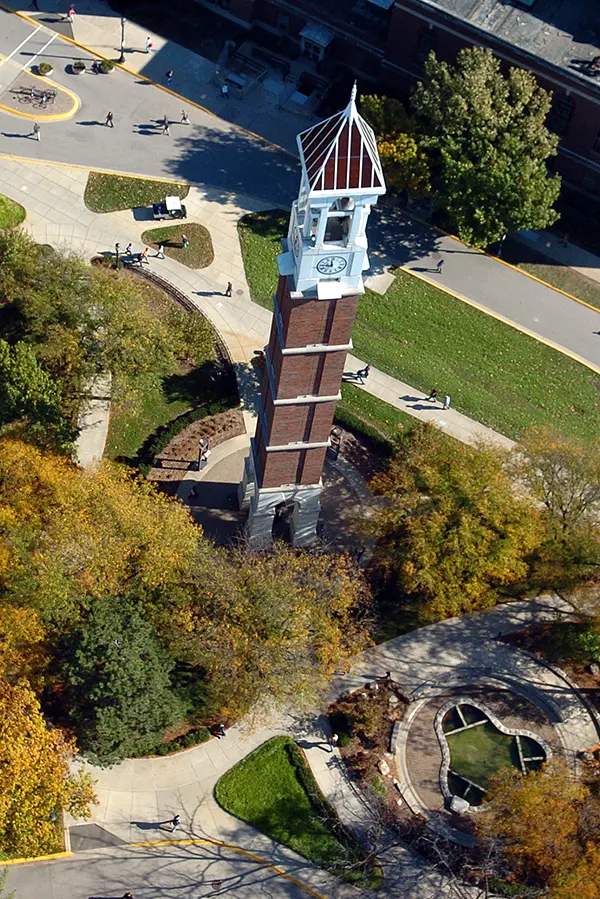
Leveraging Purdue’s strengths in engineering, business, and industry collaboration, the center brings research to the real world at scale.
The Data Science Center for Decision Making is structured as a true partnership: between business and engineering, and between academia and industry.
Drawing on a network of partners in retail, airlines, industrial equipment, consumer packaged goods, software and manufacturing, the center aims to co‑develop methods, test them in real operations and refine them through failures and successes before scaling. Students will work alongside faculty and practitioners on projects ranging from supply chain risk assessments and pricing experiments to AI‑driven process automation. New Purdue hire Michelle Xiao Wu is the center’s executive director.
Simchi‑Levi argues that Purdue is uniquely positioned to host this next chapter.
“This is an ideal environment to advance autonomous supply chains, AI‑driven manufacturing and the future of business analytics. Leveraging Purdue’s strength in engineering, business and industry collaboration, the center brings research to the real world at scale through partnerships in sectors including airlines, finance, high‑tech, insurance, manufacturing and retail, accelerating innovation and transforming operational processes across the economy.”
From disruptive natural disasters to an AI‑powered future in Indiana, the journey of MIT’s Data Science Lab to Purdue’s Data Science Center for Decision Making traces how one set of ideas reshaped the way companies see risk, value and possibility in their data. For Simchi‑Levi and his collaborators, the next disruptions are not just threats to survive, but tests for a new generation of autonomous, analytically driven decision systems.
Simchi‑Levi, a Purdue Dream Hire, also teaches in the university’s Edwardson School of Industrial Engineering.