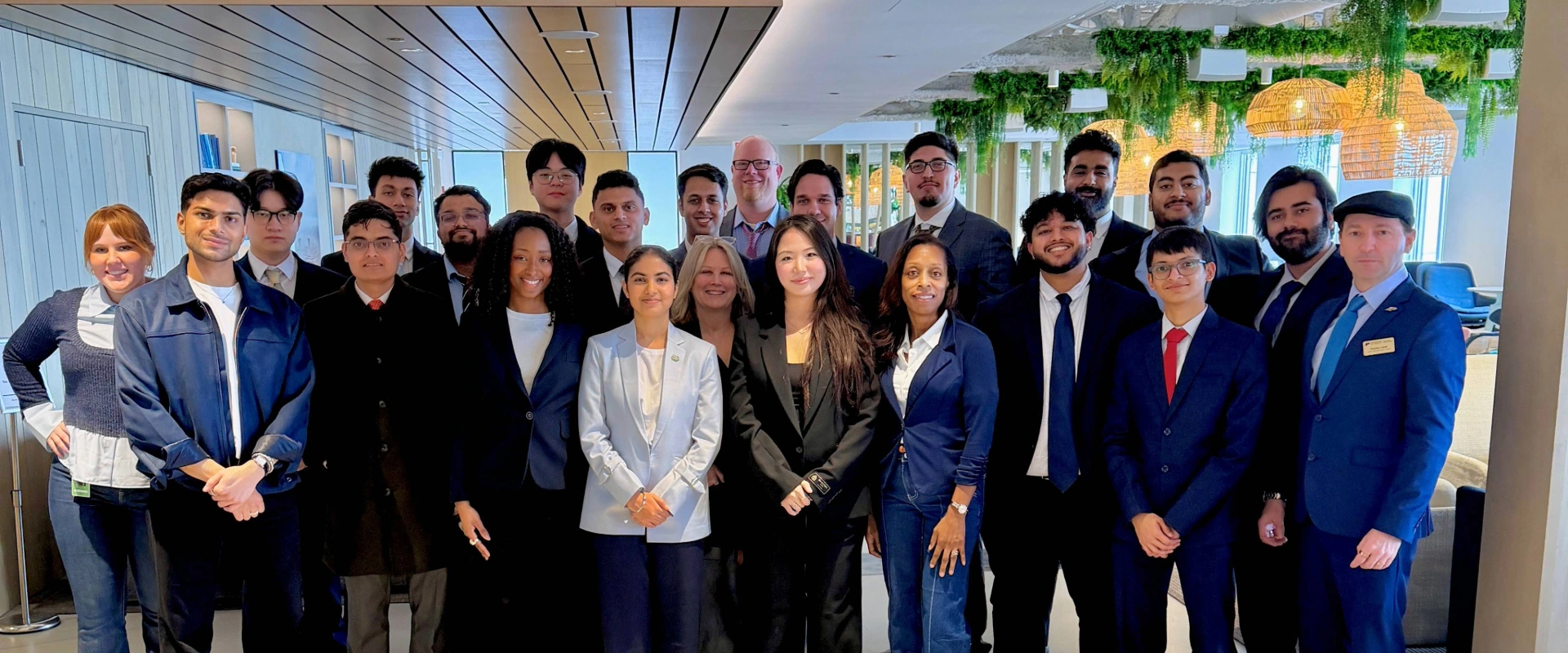
In early March 2026, students from the Mitch Daniels School of Business stepped beyond the classroom and into the heart of industry. Across four Career Treks — spanning undergraduate organizations and graduate programs — students traveled to Chicago to meet with more than 15 companies, gaining firsthand exposure to the realities of modern business and the power of alumni networks.
What they found was more than a series of site visits. It was a living demonstration of how relationships — built at Purdue and sustained long after graduation — can shape careers in meaningful ways.
For students like Daniel King, a senior majoring in Supply Chain and Operations Management, the Chicago Career Trek illuminated possibilities that once felt distant.
“Experiences like the Chicago Career Trek are incredibly important for students because they expose us to opportunities we may not have known existed or give us the confidence to pursue paths that once felt out of reach,” King says. “Being able to step into these environments firsthand helps bridge the gap between what we learn in the classroom and what our future careers could actually look like.”
That bridge between theory and practice is precisely what the treks are designed to build. Organized by Business Career Services (BCS) and supported by multiple departments and student organizations, the initiative brings students face-to-face with professionals who once sat in the same classrooms.
“Across these four treks, students had the opportunity to learn about the application of their degrees and the work of each firm, as well as the culture and community in and around the sites,” says Kathryn Wieland, executive director of BCS. “This type of exposure provides the students with an important opportunity to network with recruiters and alumni and understand the professional practices in business and industry.”
The Chicago Career Trek packed an extraordinary range of experiences into a single day. Students from organizations including Consult Your Community (CYC) and the Operations and Supply Chain Organization (OSCO) visited multiple companies before reconvening for a joint alumni networking event. They were joined by students from the Daniels School’s MS Finance and MS of Business and Technology programs.
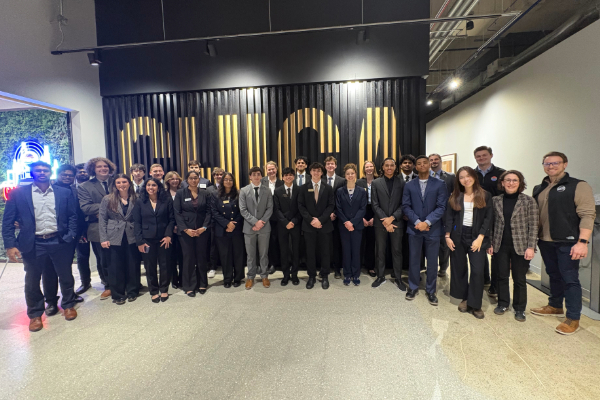
“What made the Chicago Career Trek especially unique was how much we were able to experience in just one day,” King says. “Bringing the two groups back together at the end allowed students to share their experiences, while also connecting with professionals at different stages of their careers.”
At each stop, alumni hosts played a central role — not just organizing visits, but shaping the experience itself. Their presence added a layer of familiarity and authenticity that turned corporate visits into conversations.
“Alumni involvement truly personalized the trek,” King says. “At every company we visited, we were welcomed by Purdue alumni who shared their individual journeys and how they arrived at their current roles.”
For alumni, the experience is just as impactful. Hosting students offers a chance to give back, while also reconnecting with the university and gaining fresh perspectives from the next generation of talent.
“Volunteering with students is incredibly rewarding because it creates a meaningful bridge between the classroom and the ‘real world,’” says Katie Lux, an alumna and Accenture strategy consultant who hosted students during the trek. “It’s an opportunity to share practical insights, demystify career paths and help students build confidence as they think about their futures.”
Lux and her colleagues, including Purdue alumnus and Accenture recruiting specialist Benjamin Guzek, designed their visit to be as interactive as possible, emphasizing candid dialogue over formal presentations.
“We facilitated an open conversation-style panel where students could ask honest questions about day-to-day responsibilities, career progression and industry challenges,” Guzek says.
That openness is critical. For many students, these conversations provide their first unfiltered look at professional life.
Jeff Solak, another alumni host, echoed that sentiment, noting the mutual value of engagement.
“From a professional standpoint, it’s an opportunity to mentor, share practical insights and help students bridge the gap between academics and real-world application,” says Solak, a vice president at Northern Trust. “Personally, I find it energizing as students bring curiosity, fresh perspectives and thoughtful questions.”
At his organization, students toured facilities, learned about company history and engaged directly with early-career professionals — an experience designed to leave students with a clearer sense of potential career paths.
Just as the Career Trek site visits provide insight, the networking events provide momentum.
The Chicago Career Trek concluded with a student-alumni gathering that created space for more informal, honest conversations — often the most memorable part of the experience.
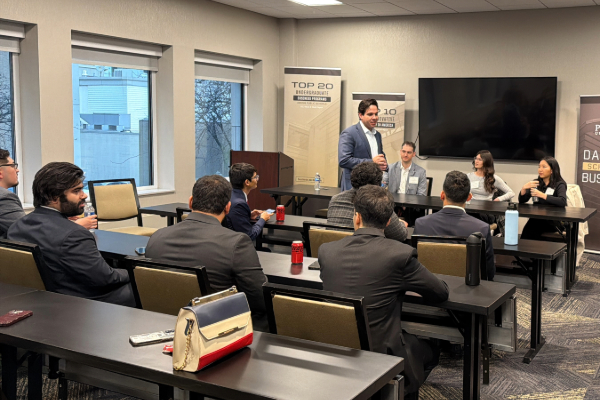
“The networking event offered insight into what life after graduation can look like and how to navigate that transition,” King says. “It was a casual, welcoming space to ask honest questions and learn from people who were just a few steps ahead.”
For alumni like Terrence Li, those interactions are equally meaningful. “It’s always great networking with students at these events,” Li says. “It’s a great way to stay connected with the school and the students and know what’s on top of the students’ minds.”
Li emphasized that these engagements go beyond networking — they are opportunities to guide and mentor. “I was able to share my perspectives to students and help them navigate through their college and career search,” he says.
The success of the four Chicago Career Treks has sparked momentum within the Daniels School. Leaders are now exploring ways to expand and formalize the program in other cities, with the goal of offering even more students access to these experiences.
The mission is to create a sustainable model that deepens connections between students and alumni while strengthening ties to industry.
That model relies on continued alumni engagement. As Lux notes, even small contributions — career advice, resume reviews or informational interviews — can have a lasting impact. Solak agrees, pointing to the many ways alumni can support student success beyond organized events, from job-shadowing opportunities to ongoing mentorship.
And for students, the value is immediate and lasting. Trek experiences don’t just inform career choices; they shape them. They build confidence, expand networks and turn abstract ambitions into tangible goals.
Ultimately, Career Treks illustrate how bringing together alumni and students broadens learning beyond the classroom. It extends what it means to be a Business Boilermaker — what starts at Purdue continually connects with boardrooms, offices and industries around the world.
Alumni interested in hosting students at their company should please reach out to Daniels School Business Career Services by emailing businesscareers@purdue.edu.