10-01-2025
In a world marked by constant change, the way forward should be informed by real-time data, said Jim Bullard, the Daniels School’s Dr. Samuel R. Allen Dean, to an audience of business leaders, college students, academics and more this past Monday.
There was a time, the former Federal Reserve Bank of St. Louis president said, when the Fed largely looked in the rearview mirror. Fed leaders depended on past data and didn’t have in-house “academic-style” research groups. The genesis of Fed research groups was in St. Louis in the late 1950s, and Fed banks across the U.S. and around the world have copied the model, Bullard said.
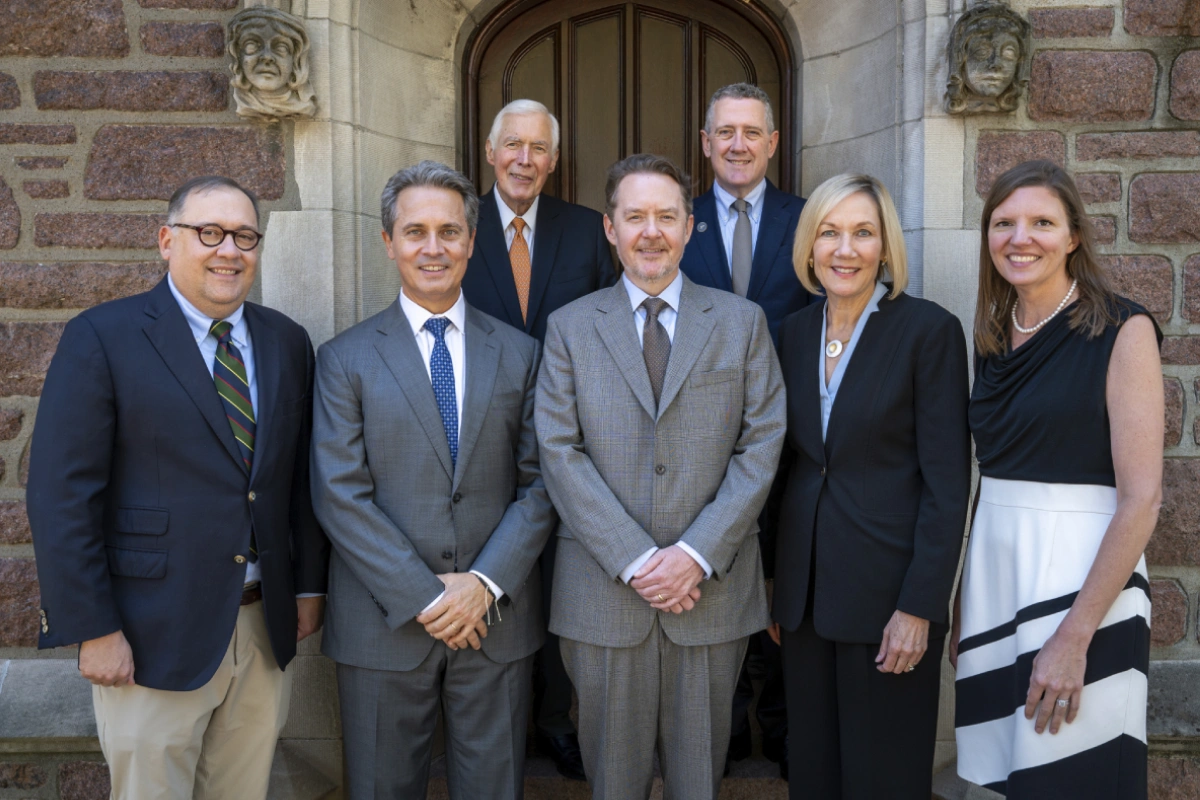
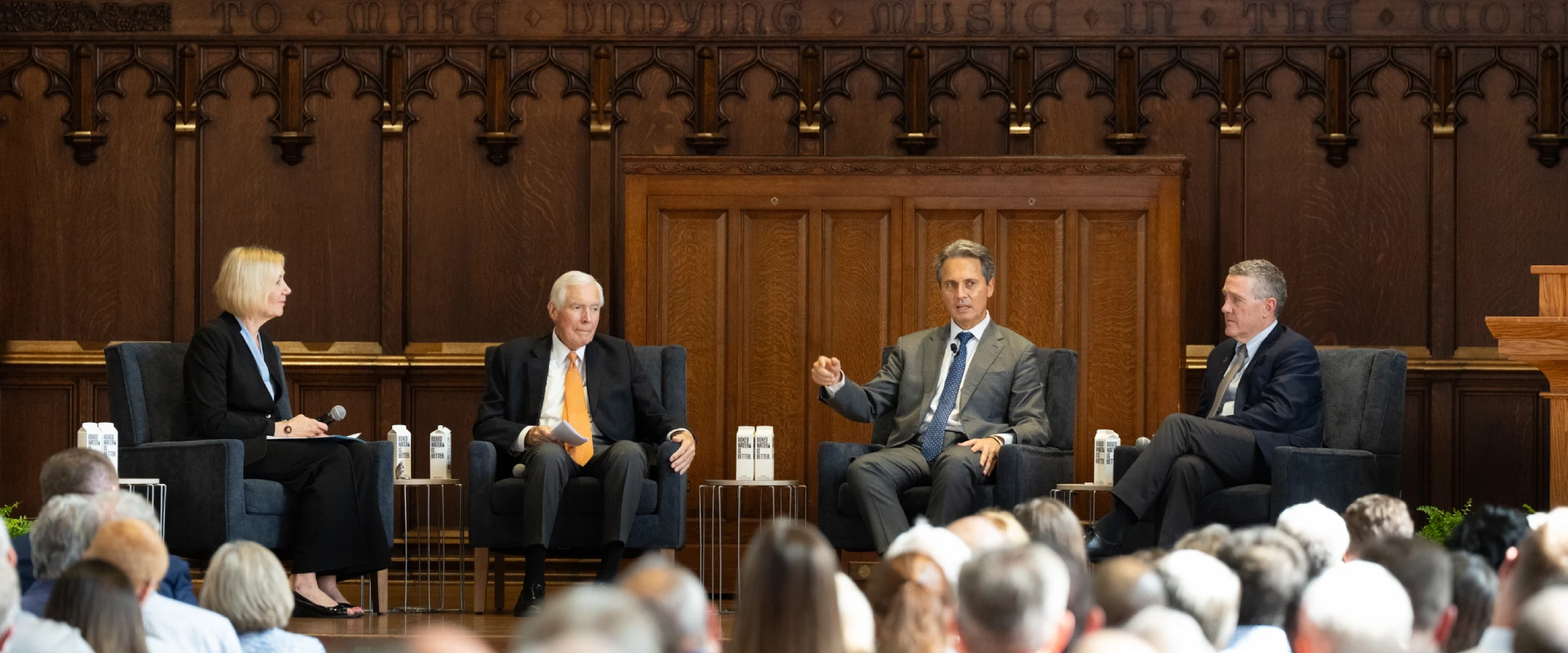
Bullard was joined by Alberto Musalem, current president & CEO of the Federal Reserve Bank of St. Louis, and past president Thomas Melzer. They spoke before an audience of more than 700 in Washington University in St. Louis’ Graham Chapel at a panel discussion cohosted by the Daniels School and WashU’s Weidenbaum Center on the Economy, Government, and Public Policy.
It was the first time three Federal Reserve Bank of St. Louis presidents — the current and two former — held a stage together. Moderated by President and CEO of the St. Louis Regional Business Council, Karen Branding, they touched upon the history of the Fed’s dual mandate, the effects of tariffs on inflation, the importance of having an informed playbook for when big shocks hit, how Alan Greenspan made his mark, the Fed’s “journey to transparency,” as Bullard described it, and much more.
View the discussion to learn why it’s important for the Fed to set an inflation target and why Musalem says “data-dependency is always backward looking.”