11-19-2025
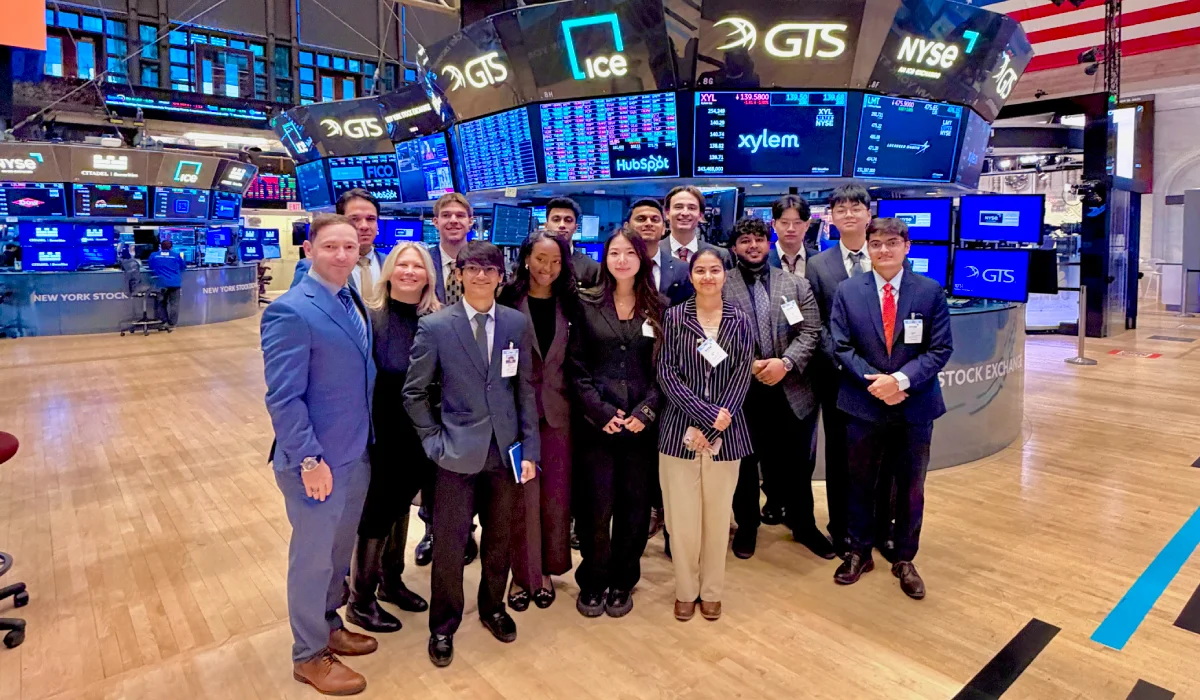
Networking is a career-defining skill and an art that everyone must learn. At the Daniels School, home to a global network of more than 50,000 alumni, master’s students in finance learn to network through treks to high-finance destinations.
According to Fabricio d’Almeida, clinical assistant professor in the Finance Department, the highly competitive finance industry requires students to learn that navigating this community is a core competency. Beyond landing the next job opportunity, networking means developing interpersonal skills and connections that power career growth, institutional knowledge and adaptability throughout a lifetime.
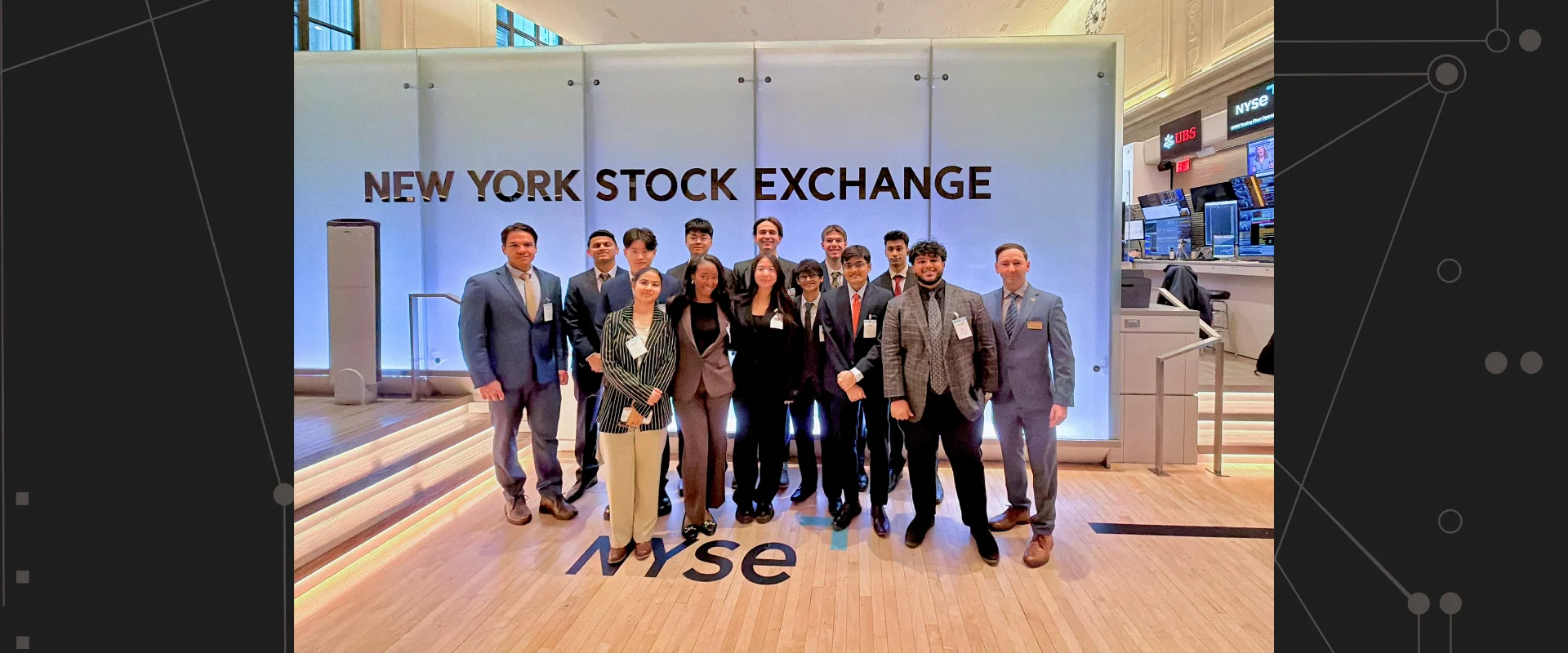
With Purdue’s proven track record, organizations trust Boilermakers’ STEM skills, and many master’s students arrive focused on technical proficiency. For this reason, faculty intentionally embed opportunities to hone soft skills in their program. The Daniels School's Master of Finance program addresses this through immersive experiences, like the annual treks to New York City and Chicago. These structured opportunities move students beyond theory, d’Almeida explains, exposing them to the inside track directly from professionals and alumni who’ve walked the same path.
Networking is about building authentic, mutually beneficial relationships. Before the city trek, students learn how to research the alumni and professionals they hope to meet. Each participant identifies at least three alumni in advance, reviews their backgrounds and prepares tailored questions. This transforms the trek’s happy hours and company visits from awkward exchanges into purposeful, deeper conversations, ones that go beyond surface-level introductions to explore career arcs, personal stories and how the industry works, according to d’Almeida.
Presentation, whether online or in person, matters. In preparation, students sharpen their presence by updating LinkedIn profiles, refining résumés, and completing preparatory assignments on ethics and communication. The finance faculty consider these steps essential: Students enter networking events prepared not only to present their technical abilities, but also to convey curiosity, adaptability and self-reflection — qualities industry leaders consistently cite as vital for team fit.
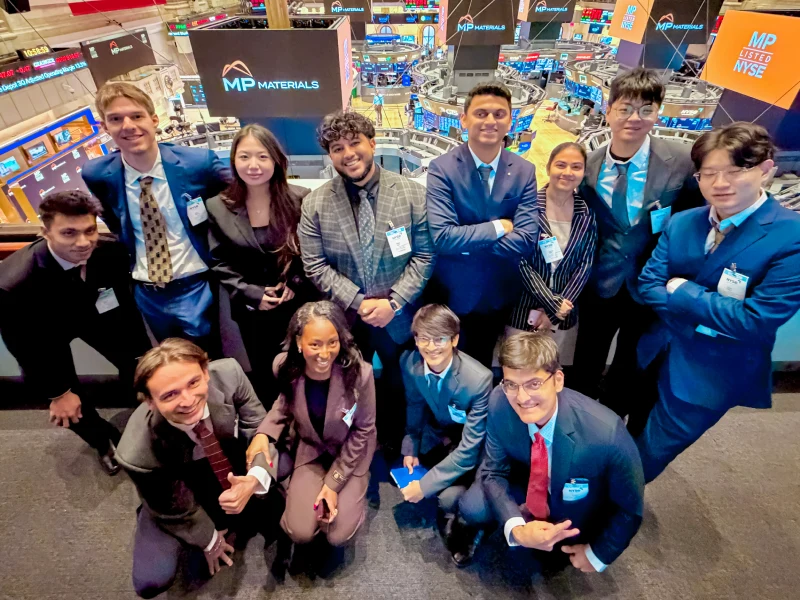
I appreciated the variety of firms we visited, from innovative startups like Affiniti to major institutions like Morgan Stanley, American Express and CIBC. They gave me a broader perspective on the types of opportunities available in finance and analytics.” — Oyushagai Amartuvshin
Exposure to New York’s financial ecosystem demystifies the industry. Students quickly discover there’s no single “finance career.” The landscape includes opportunities at investment banks, fintechs, commercial banks, boutique advisory firms and more. These conversations often reveal roles students had never considered, prompting them to imagine new avenues and question their assumptions about what success looks like in finance.
“The Purdue MSF trek to New York City was an eye-opening and inspiring experience. I appreciated the variety of firms we visited, from innovative startups like Affiniti to major institutions like Morgan Stanley, American Express and CIBC. They gave me a broader perspective on the types of opportunities available in finance and analytics," says Oyushagai Amartuvshin. "The most meaningful part was speaking with Purdue alumni. Everyone was so welcoming and willing to share advice, answer questions, and genuinely support us. It felt comforting to know that there are people out there who’ve been in our shoes and have our backs as we navigate our own paths.”
These treks have catalyzed transformative outcomes. Encounters during the trip lead students to reframe their own experiences. D’Almeida describes one such success, when an alumna shared how she translated her limited work experience in a campus pizza shop to land a job in her firm.
A master’s student with a food science background listening to her story took it to heart. When Goldman Sachs asked faculty for soon-to-graduate candidates to interview, d’Almeida took a risk recommending the student with the food science experience. She had technical savvy but lacked confidence in communication. Goldman Sachs offered her the job and shared with d’Almeida how well she’d reframed experiences from her career in food science, connecting them to criteria to thrive in finance. That self-awareness and interpersonal fluency set apart candidates in fiercely competitive settings.
In today’s finance world, technical mastery is the starting point. D’Almeida says the industry’s hiring focus has shifted: Employers want professionals who complement data analysis and quantitative rigor with self-knowledge, interpersonal influence, cultural agility and openness to learning.
Knowing that much of this can be developed only through practice in authentic settings — through conversations, questions, and superior listening skills — the Master of Finance program emphasizes the extraordinary value of its treks. By supporting students as they learn to network and imagine new career paths, the school prepares its graduates not just for first jobs, but for success in a finance world defined by constant change and relentless competition.