“Every pitch deck these days has ‘AI’ somewhere in it. The real challenge is separating substance from the noise.” — Darwin Ling, Founder & Partner, Good AI Capital
As the world races to unleash artificial intelligence across industries, discerning which startups are transforming meaningful problems — not just tweaking buzzwords — is more critical than ever.
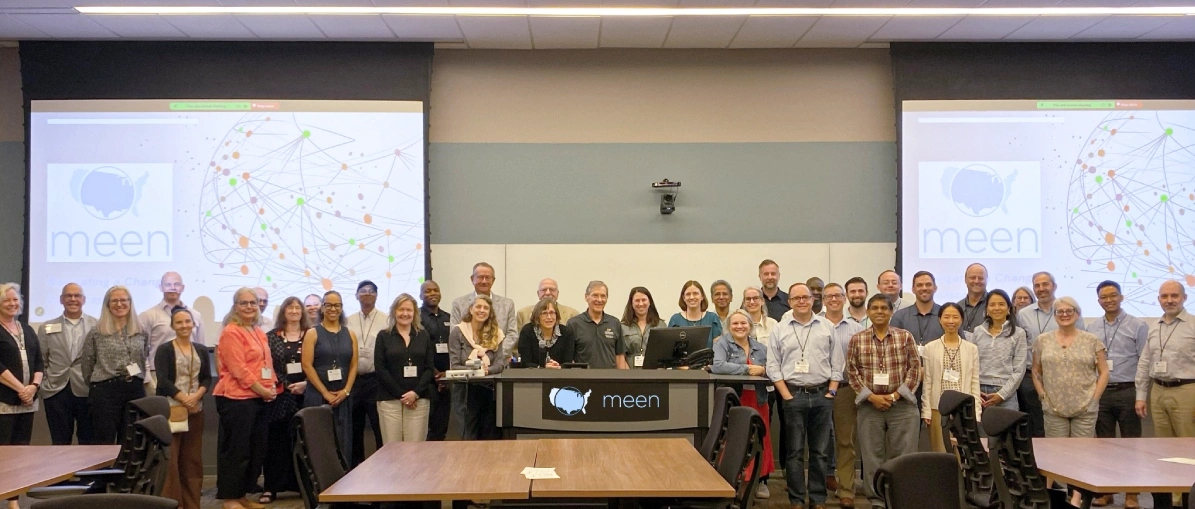
At this year’s Midwest Engineering Entrepreneurship Network Conference, hosted by Purdue and headed by the Daniels School’s Matthew Lynall, Purdue alum Darwin Ling offered a seasoned, pragmatic lens on the difference between hyping AI and truly harnessing it for disruptive value in healthcare, fintech and the broader automation landscape.
What sets genuine AI innovation apart?
During his session, “Emerging Technologies: AI – Separating Substance from Hype,” in Indianapolis, Ling presented his simple, but rigorous, thesis: Look for founders applying AI to hard, high-impact problems, with evidence of traction and a deep sense of mission. Here are key markers he emphasizes:
Problem-first approach: Successful startups build real AI-powered products to solve persistent, industry-specific challenges — not just to catch the latest tech wave or impress VCs.
Evidence of impact: It's not about publishing papers or touting “AI-powered” in a press release, but demonstrating clear business value to customers, partnerships and revenue.
Mission alignment: The founding team must have a genuine desire to tackle consequential problems — “doing good while doing well.”
Team and execution: Technical and domain expertise, plus the entrepreneurial grit to navigate the journey from research to sustainable product.
Examples of AI innovation
Ling shared examples across industries from Good AI Ventures’ portfolio.
Healthcare: From drug manufacturing to personalized therapy
Persist. AI leverages AI, robotics and microfluidics for drug reformulation, specifically long-acting injectables. Its platform acts as an AWS for drug development, enabling pharmaceutical giants like Eli Lilly to reformulate medicines faster, make them last longer and drive accessibility by lowering costs and overcoming manufacturing bottlenecks. The result? Faster, more scalable solutions to critical supply and pricing issues in medicine, not just incremental improvements or theoretical research.
Mekonos targets gene and cell therapy delivery, not merely the therapies themselves. Their use of AI enables precision, personalized single-cell delivery, addressing real-world bottlenecks in getting next-gen therapies safely to patients. The IP emerged from Stanford research, but success depended on bringing in seasoned business leadership alongside academic expertise — a vital lesson for university spinouts seeking to commercialize next-level AI tech.
Fintech: Redefining credit with AI
Sofi illustrates early real-world AI in fintech. Instead of simply digitizing traditional banking, Sofi built an AI-powered underwriting model to assess student loan credit risk more accurately than generic FICO scores. The mission was clear: Expand access to fairly priced education loans, which supports financial well-being “from graduation to retirement.” This impact-driven use of AI — not yet ‘deep learning’ but a critical differentiator — helped Sofi scale from a niche startup to a household name.
Automation beyond the hype
Serve Robotics delivers food using fully autonomous, Level 4 robots. Spun out of Uber, Serve addresses pressing urban challenges: lowering delivery costs and emissions in cities where sending a two-ton car for a two-pound burrito “just doesn’t make sense.” The company delivers palpable value by tackling labor shortages, climate impact and the future of last-mile logistics. Due to its success with partners such as Uber Eats, it has attracted investment from NVIDIA, which ultimately led to Serve’s phenomenal IPO.
How do you spot true AI startup innovators?
Ling’s checklist, distilled from his own due diligence, is both practical and powerful:
Is there a distinct, high-value problem being solved — not a generic process with a sprinkle of ‘AI?’
Is AI central to the solution, or just window-dressing? The team should demonstrate technical depth and clear value creation from its AI.
Are there customers, revenues or strategic partners validating the product’s impact?
Does the startup have a sustainable roadmap to productization, not just commercialization? Sustainable value outlasts a quick “exit.”
Is the team aligned on mission and values, with the resilience to weather tough pivots as the tech matures?
Ling’s advice is clear: Stick to investment fundamentals. Don’t be swayed by AI hype, celebrity backers or novelty for its own sake. Scrutinize cap tables, team backgrounds and the path from IP to real customers. Ultimately, innovation that truly moves the needle will be validated in the market — not just the pitch deck.
“Don’t just look for companies publishing the most papers,” he says. “Find those using AI to fix problems nobody else could crack — and doing it in a way that’s scalable, sustainable and, above all, meaningful.”
Daniels Insights Footer
Thought Leadership from Purdue's Business SchoolDaniels Insights