10-08-2025
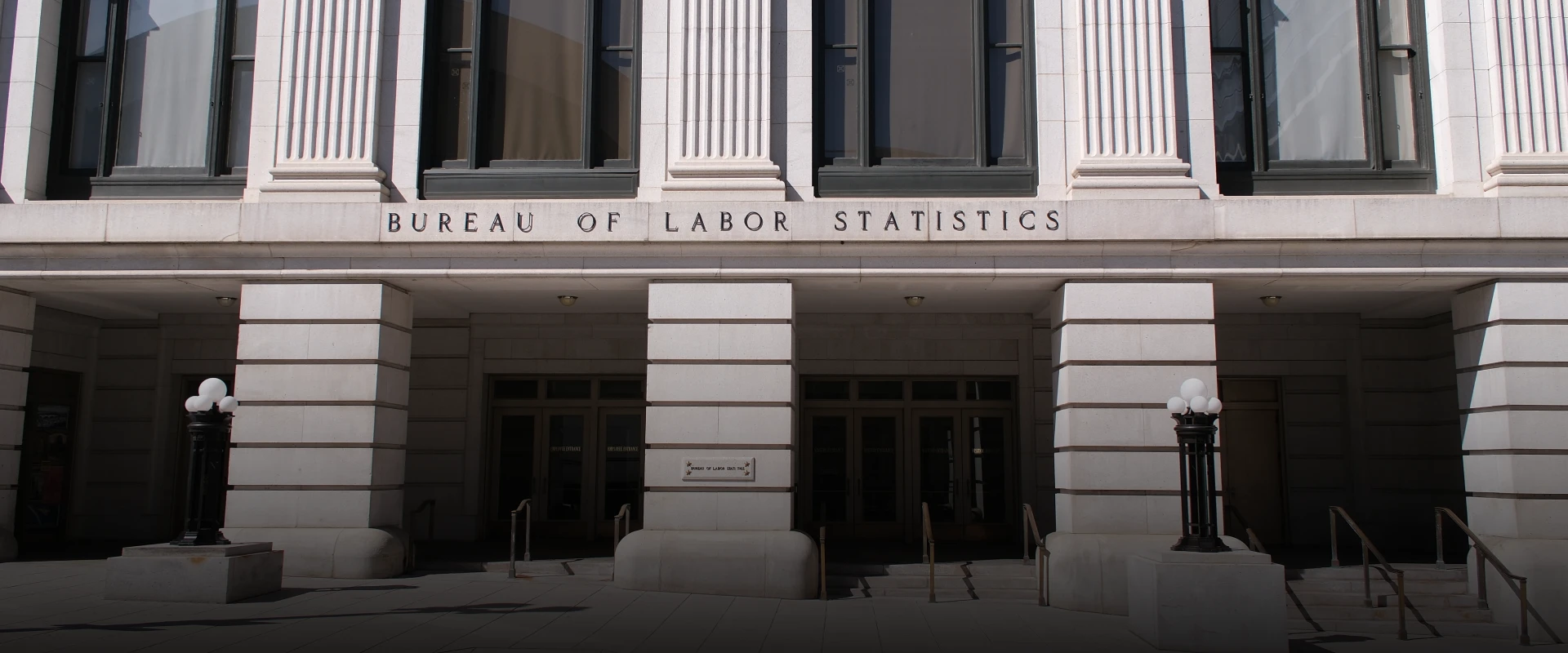
The Bureau of Labor Statistics (BLS), an agency within the U.S. Department of Labor, has been very much in the news of late. The July Employment Report, released on August 1, contained a sharp downward revision to the monthly job-creation estimates for May and June: June’s job creation came down from 147,000 to a mere 14,000 and May was downgraded significantly to 19,000 jobs. The administration asserted that the report had been “rigged” and BLS Commissioner Erika McEntarfer was fired.
A bit over a month later, the BLS released its annual preliminary benchmark revisions to employment data from April 2024 to March 2025. The annual benchmark revisions allow the BLS to anchor its estimates to data from the Quarterly Census of Employment and Wages (QCEW), a more comprehensive dataset derived from state unemployment insurance records covering more than 95 percent of jobs. The upshot was that, during that time, BLS reported 911,000 fewer jobs were added than previously estimated, or 0.6 percent of total nonfarm payrolls — a much larger miss of the usual range of 0.2 to 0.3 percent. Accusations of partisan manipulation of the employment reports resumed.
These stories focused on partisan politics, even though there is no evidence that the estimates are anything other than professional and unbiased. But the large revisions do reveal a real problem: The BLS needs more data each month and that may require more people, new techniques and more money.
To see this, note that in July 2001 the household survey, which is used to measure unemployment, was expanded from 50,000 to 60,000 households and has remained about the same size ever since. Over the period 2001 to 2024, the labor force grew by 14 percent from 144 million to 168 million. So, just to keep the sample as the same fraction of the labor force, it would have to be raised to roughly 70,000.
On top of that is the fact that the response rate has fallen from 92.7 percent (55,620 of 60,000) in 2001 to 69.5 percent (41,700 of 60,000) in 2024. So, to get the same number of responses, the sample size should be about 80,000.
A similar story emerges regarding the establishment survey, which is used to compute the payroll employment (“jobs”) data. In 2015, the survey covered 588,000 work sites with a response rate of 61 percent. As with the household survey, the response rate has plummeted, to 42.6 percent in 2025. So, instead of surveying 631,000 work sites, the BLS would need to survey 842,000.
The bottom line is simple: The population, labor force and economy keep getting larger. Even with stable response rates, sample sizes must rise just to keep up. They have not, and the decline in response rates has made the problem worse. Small monthly samples lead to less precise monthly estimates and open the door for larger revisions when more data become available.
Why doesn’t the BLS come to terms with this reality and survey more firms and households? Among other factors: money. The inflation-adjusted budget for the BLS was $754.4 million in 2001. By 2010, this had risen to $822.8 million. But since that time, the nominal budget has been flat and inflation has reduced the inflation-adjusted budget to just $654.1 million — down 20.5 percent from 2010. (A similar tale can be told about the Commerce Department’s Bureau of Economic Analysis, which produces the estimates of gross domestic product and related data.)
Providing policymakers with high-quality data on the state of employment, income, output and inflation is of transparent importance. But at the current time, it is especially vital as the Federal Reserve juggles its responsibilities to deliver price-stability and full-employment. How high is inflation, and is it actually rising? How weak is the labor market, and is the United States threatened with a downturn in employment? It would be desirable to have confidence in the measures of inflation and employment delivered by the BLS, but the constraints are limiting its ability to perform.
Currently, the federal government spends roughly $7 trillion dollars a year. It is penny-wise and pound-foolish to starve the BLS of funding, only to sow the potential for errors in policy decisions as a consequence.
Douglas Holtz-Eakin, President of the American Action Forum, is a Distinguished Fellow at the Daniels School of Business. He served as chief economist of the President’s Council of Economic Advisors and was the sixth director of the Congressional Budget Office. He blogs on The Daily Dish.