06-10-2026
Academic conferences serve a disputable purpose. They provide opportunities to share research, learn about emerging ideas, and connect with colleagues across institutions. Yet many of us have likely had the same experience: rushing from session to session, quickly exchanging email addresses to send follow-ups, and returning home with a (sometimes abysmally small) stack of notes but little time to process what we learned before we are off to the next thing.
As we began planning the inaugural Center for Working Well Research Conference at Purdue University's Mitch Daniels School of Business, we found ourselves asking a simple question:
What if we designed a conference differently?
Rather than focusing primarily on research dissemination (which is an often-assumed goal), we wanted to create a gathering centered on something else: meaningful conversations, genuine community and the collaborative development of ideas.
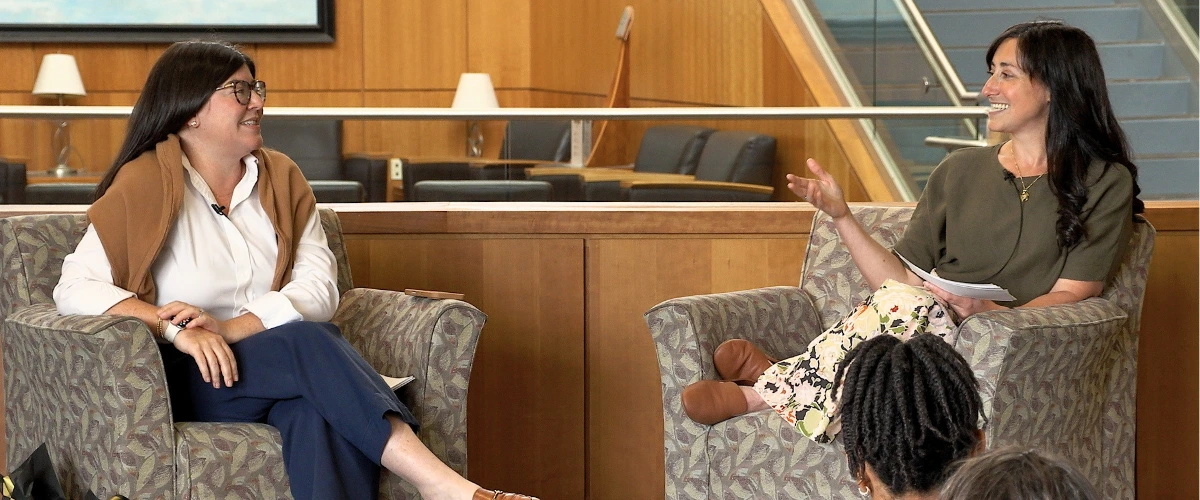
Over three days this past May, 90 scholars from around the world gathered in West Lafayette to explore topics related to work, well-being, leadership, recovery, relationships, performance and thriving. While the research remained decidedly exceptional, what made the conference special was not what was presented but how people engaged with the research and, perhaps more importantly, one another.
The experience we crafted for participants offers several lessons that extend beyond academia and are relevant for anyone designing meetings, retreats, conferences or communities.
Without much consideration, many conference programs are built around a standard format of research presentation sessions. Instead, we wanted to build ours around novel formats that centered conversations. To do so, we intentionally created opportunities — in and outside of the research sessions — for dialogue throughout the conference. Sessions included interactive workshops, roundtable discussions, and opportunities for attendees to engage directly with presenters and one another. Some of the most valuable moments occurred not at a podium, but around tables, during meals, and in informal discussions between sessions. When people have space to exchange perspectives rather than simply consume information, learning becomes more collaborative and ideas become stronger.
Professional gatherings often focus on what participants will learn. We also wanted to focus on who they would learn alongside.
From the conference's opening moments, our goal was to create an environment where senior scholars, junior faculty, doctoral students and practitioners could engage as members of the same community — and be on equal footing with each other to break down any possible social hierarchy. This meant intentionally incorporating opportunities for relationship-building, mentorship and shared experiences alongside traditional academic programming.
The result was a conference that felt less like a series of isolated presentations and more like an interconnected community invested in helping one another succeed. Organizations can benefit from a similar mindset. Information is important, but community is often what sustains engagement long after an event concludes.
Academic conferences can sometimes encourage people to present their most polished work. While polished research has its place, innovation often emerges when people feel comfortable sharing ideas that are still evolving. This is also often when we can make the biggest difference in our work — before it is finished.
Several conference sessions are designed to help participants workshop challenges, test assumptions and receive feedback on developing projects. The emphasis was not on demonstrating expertise but on advancing ideas. This is where the sense of community really shines. Creating environments where people can be curious, ask questions, and think together often generates richer outcomes than environments that emphasize performance alone.
The Center for Working Well was founded on the belief — and evidence — that work can be both productive and meaningful. That same philosophy shaped our approach to designing this conference. As organizations continue to think about how they bring people together — whether through conferences, retreats, team meetings or leadership gatherings — it may be worth asking not only what information needs to be shared, but also what kind of experience you hope people will have.
For us, the answer was clear: create space for meaningful conversations, authentic relationships and the collective development of ideas. And while we know that the research and presentations mattered, we also know that the community we built will likely offer the most lasting impact.
Allison Gabriel is the Thomas J. Howatt Chair in Management in the Daniels School’s Organizational Behavior and Human Resource Management Department and director of the Center for Working Well.
Kate Zipay is an associate professor in the business school’s Organizational Behavior and Human Resource Management Department and associate director of research and impact for the Center for Working Well.
Find their Substack, “Paying Attention with Kate and Allie,” here.