05-28-2026
The Stoic philosopher Epictetus wrote that some things are within our control and some things are not. He argued we are wise to focus on what is in the realm of our control. That idea is also central to my people-first framework for communication, where I write about emotional intelligence and building connection and trust — and how that impacts how we communicate with and lead others.
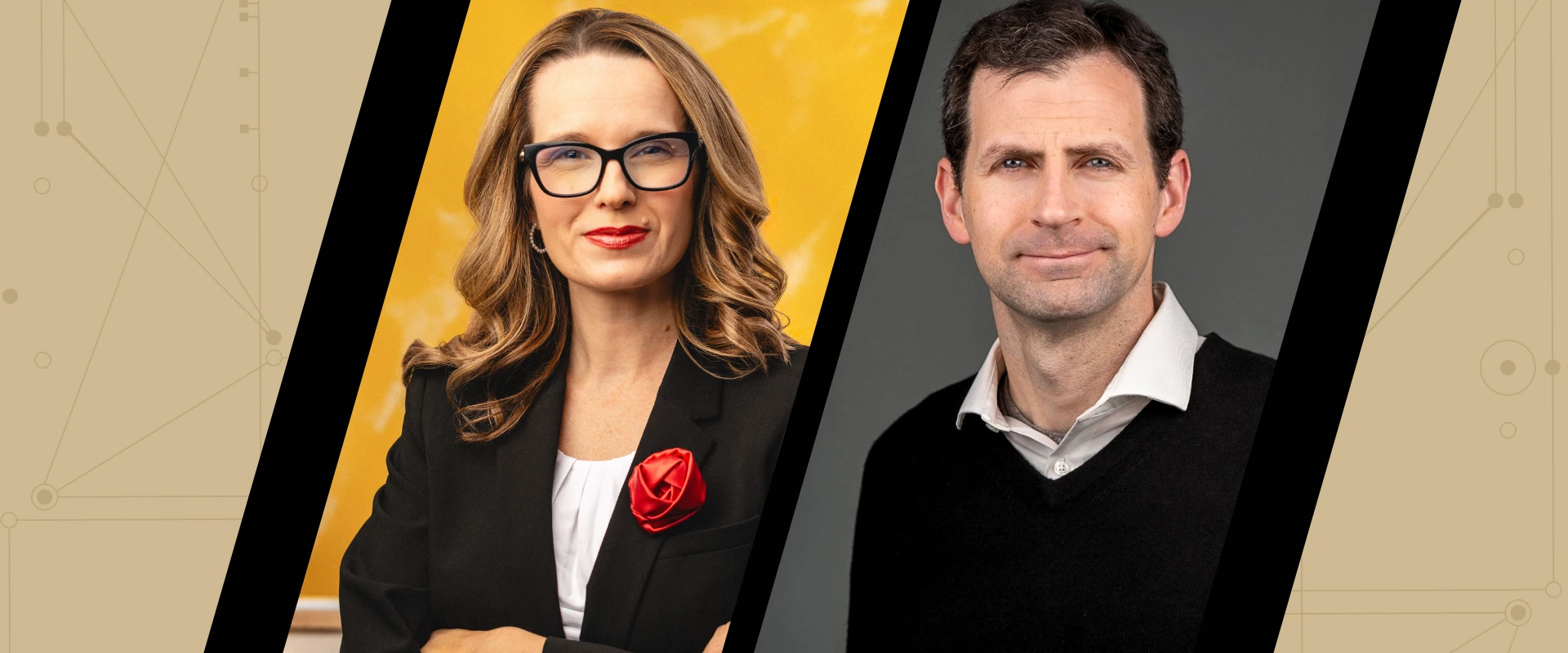
In this month’s Daniels Insights post in the Best Practices in Business Communication Series, I am joined by Brian Roberson, Professor and Department Head of Economics at the Mitch Daniels School of Business, to discuss dichotomy of control, its kindred idea in rational choice theory, and how both connect with best business communication practices for leaders.
Dichotomy of control breaks a decision-making problem into two basic components: things that we can control and things that we cannot control. This is a deceptively simple idea that lies at the heart of good decision-making and ultimately, leadership.
According to dichotomy of control:
What is up to us includes:
What is out of our control includes:
Keeping these two categories separate is harder than it sounds and more important than most people realize, especially when you are making decisions and communicating with and leading others. This requires leaders to lean into emotional intelligence and understand what is driving their decision-making and how they communicate with others.
In practice, the simple two-part distinction mentioned above can benefit from an additional layer. Some things are beyond our direct control, but still within our influence. For example, a leader cannot control whether employees will trust them after a difficult announcement, but a leader can work to influence the likelihood of that outcome.
This is where the dichotomy of control connects naturally to rational choice theory, the analytical framework that underlies much of modern economics and decision science. Rational choice theory is a way of thinking about how people make decisions, and it begins with four key ingredients:
This framework highlights a key distinction: choices involve alternatives, while preferences involve outcomes. This distinction matters because many decisions are stochastic, meaning that the same choice can lead to different outcomes depending on factors beyond the decision-maker’s control. In other words, the decisions leaders make often influence the likelihood of different outcomes rather than determining them directly.
Returning to the example, suppose a leader must make a difficult announcement to his or her employees. If he or she communicates with the best practices of clarity, transparency and a shared sense of purpose, employees are more likely to feel reassured, trust the leader, and work toward a productive path forward. But that is not guaranteed.
With this additional layer, we can look at decision-making in terms of a practical three-bucket model:
A rational choice involves choosing the feasible alternative that is best according to the decision-maker’s preferences, given his or her available information and expectations about uncertain outcomes. Notice that this formulation takes as given things that are outside of the decision-maker’s control and focuses attention on the decision in front of him or her: the choice he or she can make and how that choice may influence the outcome.
Note that the decision-maker must accept both the limits of the information available at the time of the decision and the uncertainty in the relationship between choices and outcomes. The decision-maker controls the choice: what to say, when to say it, how to say it and what evidence to provide. Those choices may increase the likelihood of trust, understanding or buy-in, but they cannot guarantee any of them. Rational leadership means making the best choice given the available information, while accepting that even the best choice may influence the result without determining it.
In business, as in life, a surprising number of bad decisions trace back to confusing what we can control, what we can influence and what we must accept. When making decisions, we can begin by asking which parts of the situation we must accept, which choices and actions are actually within our control, and how those choices influence the outcome.
When the outcome involves other people, as most leadership outcomes do, communication becomes one of the leader’s most important tools of influence. Leaders cannot control how others respond, but they can improve the odds by communicating with clarity and transparency, establishing common ground, and helping others understand the reasoning behind the decision.
Your preferred outcome may not always become reality, but by separating control, influence and acceptance, you give yourself the best chance of making a good decision and communicating it well.
Stay tuned for next month’s article in the Best Practices in Business Communication series, which discusses influence more in depth.
This blog post is part of a monthly series written by Professor Kasie Roberson designed to share best practices in business communication. Each article highlights a business communication principle or idea and actionable strategies.
Professor Kasie Roberson, PhD, is a Clinical Associate Professor in the Department of Organizational Behavior and Human Resource Management and Head of the Center for Working Well’s Hayes Leadership Coaching Institute at the Mitch Daniels School of Business at Purdue University.
A strategic communication expert, executive coach, and award-winning faculty member, she is also the author of “Strategic Business Writing: A People-First Approach,” one of the first books to market to discuss best practices for using Artificial Intelligence in business writing.
Learn more about Kasie LinkedIn and check out her “This Is Purdue” podcast episode on AI and Authenticity. You can also follow her @dr.kasie on Instagram.
Professor Brian Roberson, PhD, is a Professor and Department Head of Economics at the Mitch Daniels School of Business. His research focuses on economic theory and game theory. Learn more about Brian.
This blog post provides general insights and best practices for business communication. It is for informational purposes only and should not be considered coaching, consulting, or professional advice. Neither Professor Kasie Roberson, nor Professor Brian Roberson, nor the Mitch Daniels School of Business, nor Purdue University are responsible for how readers apply this information in practice. Readers should use their discretion and seek professional guidance as needed.