08-14-2025
Both satellites and black holes send us information in the form of radiation. One fuels global commerce, the other fuels scientific discovery. Can we make room in the spectrum for both? Behind that choice lies a much deeper dilemma for modern infrastructure and discovery. At the heart of modern communication and cosmic discovery lies an invisible, yet finite resource: wireless spectrum. Whether it's delivering broadband to your phone or unveiling the mysteries of the universe, this narrow slice of the electromagnetic spectrum is doing a lot of heavy lifting.
But the spectrum is scarce. The range of frequencies suitable for high-quality communication is limited, and demand is only growing. Historically, regulators have allocated these frequencies to incumbent users such as federal agencies, the military, public safety bodies and scientific institutions; they all rely on interference-free spectrum access for their critical missions. Today, commercial users also want in, sparking a central question: how can we allow new users to access the spectrum without undermining existing, high-stakes activity?
That question sparked award-winning research that I developed with my postdoctoral advisors — Lewis B. Cullman Rising Star Professor Thanh Nguyen (Purdue University’s Daniels School of Business), Randall Berry (Northwestern University), Michael Honig (Northwestern University), Vijay Subramanian (University of Michigan) and Rakesh Vohra (University of Pennsylvania). Together, we examine how incentives shape who gets to access the airwaves, applying tools from optimization, economics and game theory to design effective, actionable policies for smarter spectrum sharing. The study received the Best Paper Award in the policy track at the 2025 IEEE DySPAN Symposium in London.
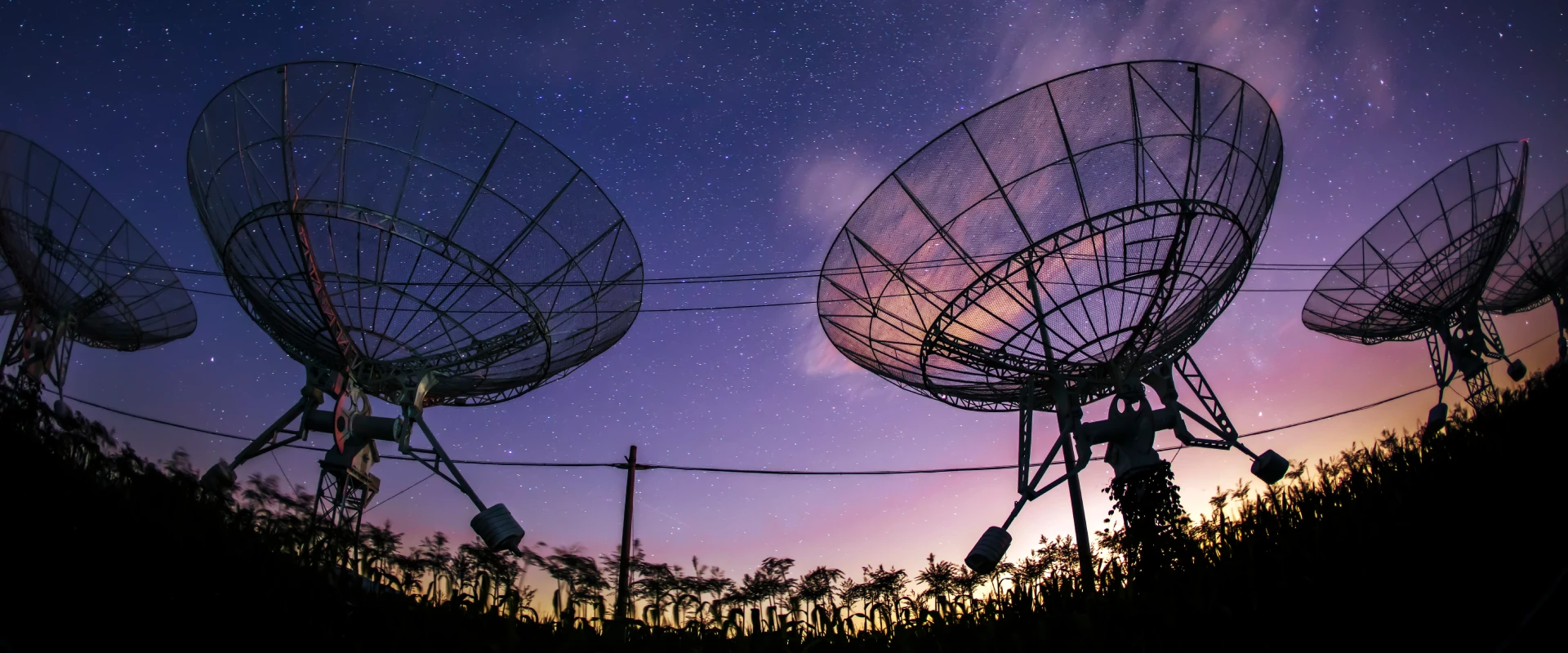
Sharing spectrum isn’t just a matter of flipping a switch. The key challenge lies in managing interference, especially when only the incumbent knows just how much interference would disrupt its operations. For example, radio telescopes have been pivotal in recent scientific breakthroughs, including capturing the first image of a black hole by detecting gravitational waves. These instruments are incredibly sensitive, and nearby satellite transmissions can wreak havoc on their ability to detect cosmic signals. Unfortunately, the extent of the damage from interference isn't always measurable by outsiders. Only the incumbent, say, an astrophysics lab, can estimate the real cost.
That presents a problem. Incumbents have strong incentives to overstate interference to avoid sharing the spectrum. Monetary transfers from commercial users to incumbents have traditionally been used to negotiate access, but this creates ethical concerns: Should public or scientific institutions receive direct compensation when interference from commercial activity degrades their essential operations? More importantly, it risks distorting their mission, creating incentives for incumbents to inflate harms for a payout. So if money is off the table, how can a regulator design a system that results in efficient spectrum allocation?
We explore how regulators can implement inspections, for example from third-party agencies assessing interference claims, to encourage truthful reporting. The trick lies in making the mechanism “incentive compatible.” The system must be designed so that incumbents are better off telling the truth than exaggerating. If a regulator runs an inspection and catches the incumbent lying, the penalty is clear, and sharing will proceed anyway. To ensure truthful reporting, the regulator must make it clear that if an inspection reveals the incumbent has overstated the interference, there will be consequences. Fining the incumbent is not appropriate, since their value is not financial. Instead, the regulator can enforce spectrum sharing despite the reported interference, effectively imposing the very harm the incumbent sought to avoid. This creates a credible threat that deters dishonest reporting and aligns incentives with truthfulness.
Inspections, of course, aren’t free. So who should foot the bill? Since the commercial user stands to gain access, it’s reasonable that it pays for the possibility of inspection. Our model introduces an entry fee for commercial users that funds these checks. This way, regulators avoid burdening incumbents while still encouraging honest participation in the process.
The result? A framework where inspections are used strategically and sparingly. When the commercial utility is very high, sharing is granted without inspection. When it's very low, the incumbent gets exclusive use. And when it’s uncertain, the regulator pulls the lever, launching an inspection to get to the truth.
Our model doesn't just work on paper. It offers real-world guidance for how policymakers can promote innovation while preserving critical missions. And while we may not be able to eliminate interference entirely, we can ensure the signals regulators get are clear, credible and worth tuning into.
After all, in the business of spectrum, transparency might just be the most powerful message of all.
Federico Bobbio is a Postdoctoral Researcher at Northwestern University, affiliated with Spectrum X. Bobbio earned a PhD in computer science and operations research from Université de Montréal and a master’s degree in theoretical mathematics from the University of Pisa.