11-20-2025
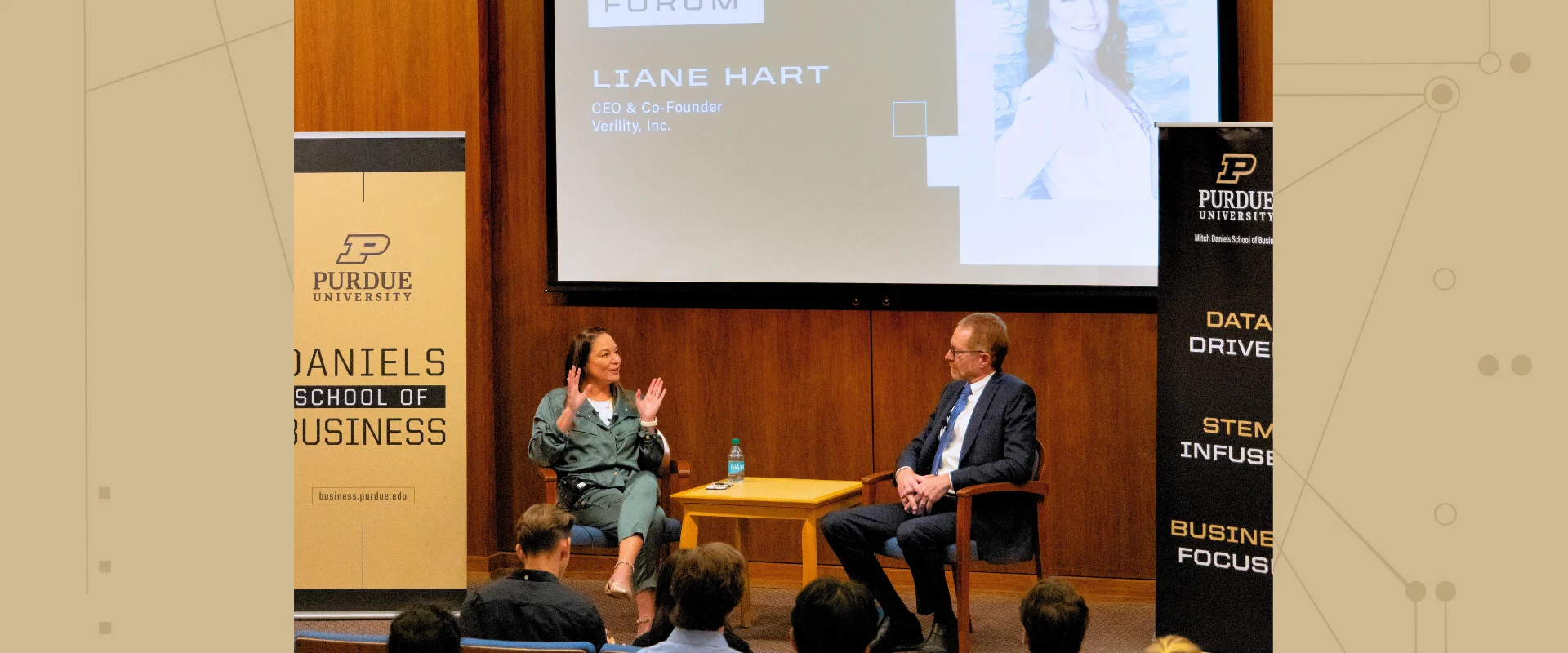
Stepping off the corporate ladder for entrepreneurship is a roller coaster, thrilling but full of twists, turns and drops, as well as climbs. Speaking to students in a recent Executive Forum class, Verility CEO and co-founder Liane Hart offered a window into that journey, sharing concrete lessons for executives contemplating a similar shift.
“You have to learn to navigate when the stakes are really high, but the margins are low,” Hart said of the pace of starting one’s own business. “The stakes are always high in a startup. I'm constantly living milestone to milestone. Every milestone is a live or die event for me.”
Hart works in the animal health industry, where trust is key. “When you look at the psychology of that customer, they typically are slower to adopt. In any given industry, there’s always the early adopters, the late adopters and everyone in between. But the timelines can be different on how quickly that runs through its course, and farmers, producers, animal producers — they can be very skeptical," she said. "They have very tight margins. It's a commodity market, and so to interrupt their business...you better have their trust.”
Hart came from Elanco, a pharmaceutical company that produces medicines and vaccinations for pets and livestock. She recommends professionals gain experience in corporate America, which she describes as a place of “seatbelts and safety ties” — an environment that, while at times confining, provides nourishment, education and a low-risk setting to gain operational and leadership expertise.
Far from dismissing those years, Hart credits them with building the inertia — what she calls “outcomes orientation” — required to successfully launch a venture. Executives considering a jump should wring every learning out of their corporate tenure, establishing a broad base of experiences while learning the rhythms of a functional organization.
However, no amount of preparation can fully simulate the startup phase’s intensity. Hart’s entry into entrepreneurship began not with a big idea, but with a problem she had lived firsthand: the subjective and inefficient methods in livestock breeding. Her story underlines a crucial startup insight: Solutions rooted in personal pain points lead to the kind of insight and conviction investors and customers recognize instantly. Founders with “skin in the game” — emotional and practical investment in solving a real, urgent problem — are better equipped for the marathon ahead.
Building a business is not a solo endeavor. The network you cultivated in the boardroom, while valuable, is not enough. As she founded and built Verility, which produces fertility analysis products that enable livestock producers and breeders to accelerate reproductive performance, Hart found herself building from scratch, identifying new partners, investors and advisors attuned to the startup realm.
Her advice is clear: Start growing your ecosystem long before you exit corporate life. Say yes to cross-disciplinary projects, maintain connections with potential collaborators and seek out those who complement rather than duplicate your expertise. In Hart’s experience, diversity of background breeds resilience and creativity — a lifeline when inevitable obstacles arise.
Resiliency, above all, is nonnegotiable. When Hart describes startup life as “milestone to milestone, live or die,” it’s because no’s far outnumber yes’s, both from potential investors and from the market. The key is to absorb rejection without being derailed, drawing motivation from each small victory and keeping your vision anchored in the value you provide. Emotional evenness — “thick skin” — is as important as technical skill. When the stakes are highest, a steady hand, willing to adapt, is your most powerful tool.
Lastly, Hart reminds us not to fear the discomfort of “swimming in mud.” Professional growth is greatest in unfamiliar territory, and every uncomfortable assignment prepares you for the ambiguity and mess of entrepreneurship. Keep moving forward and remember that every door opened — no matter how small — reveals a dozen more paths.
Hart answered questions from Executive Forum instructor Dave Randich, a strategic management lecturer at the Daniels School, as well as students. Guest speakers come to campus each week to share their career insights and experiences with the class.
View and listen to Hart’s Executive Forum class:
The Daniels School’s Executive Forum is held in person on the West Lafayette campus and is open to the public, as seating permits. Follow the business school on LinkedIn to learn about upcoming Forum speakers and more.