
07-16-2026
What began as a semester-long class project at Purdue University has quickly evolved into a promising defense technology venture.
Rapid Rotor AI, a student-led team formed through Purdue’s inaugural Hacking for Defense (H4D) course, has been selected for a highly competitive Defense Innovation Unit (DIU) Commercialization Fellowship — an opportunity that will help the team continue developing artificial intelligence tools for next-generation rotorcraft and autonomous aerial systems.
The five-member team tackled a challenge sponsored by the U.S. Army DEVCOM Army Research Laboratory: how to dramatically accelerate the development of new rotorcraft and drone designs. Their solution combines AI with aerospace engineering concepts to help rapidly generate and evaluate new rotor geometries, potentially reducing the time and effort required to develop advanced aerial systems.
“We took the challenge on, and over the course of the program, we matured into a formal company,” says Gregory Sapp, team lead and a student in the Daniels School’s Master of Business and Technology program.
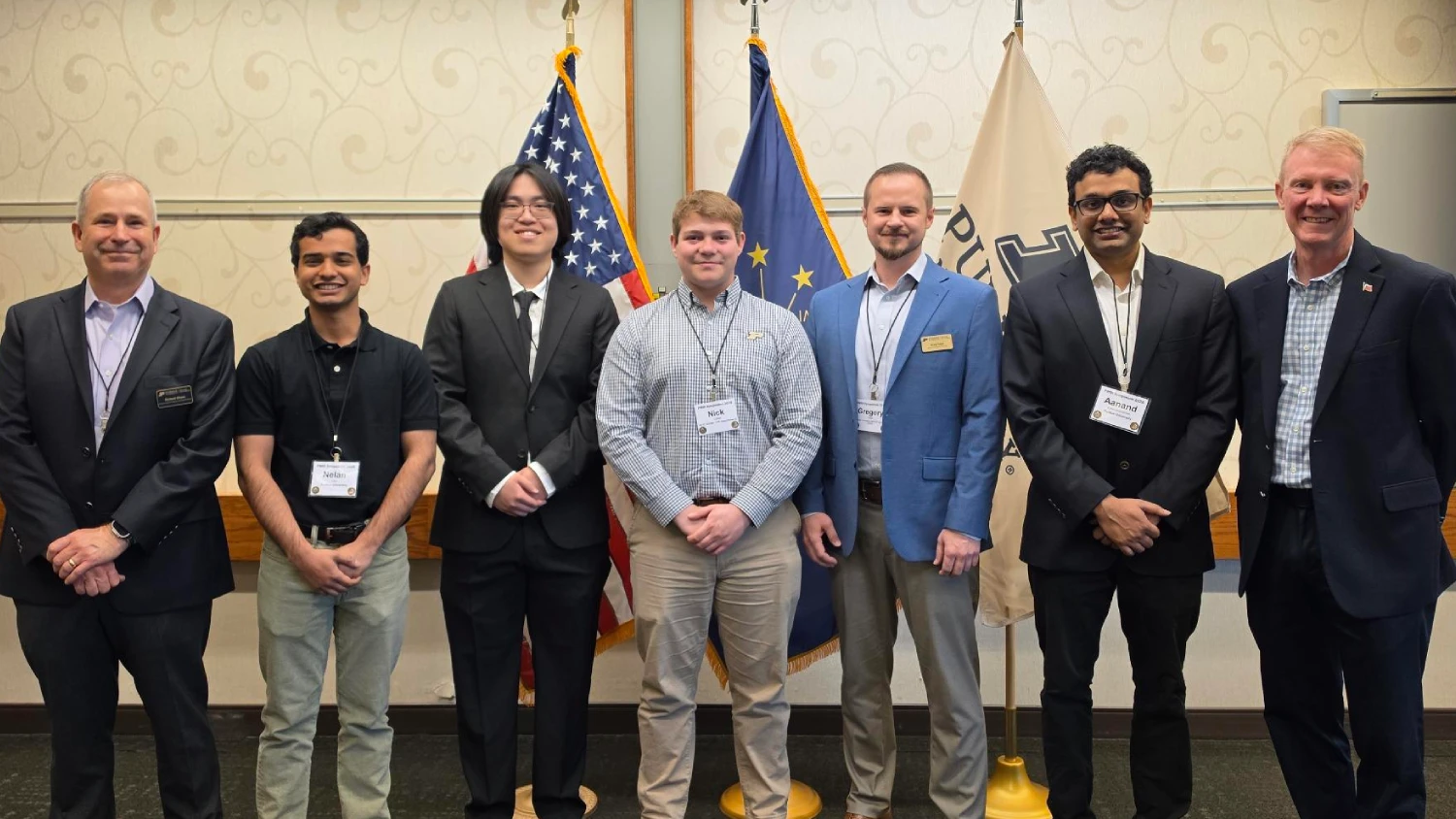
Purdue’s H4D course teaches students to solve real-world national security challenges using Lean LaunchPad methodology. Rather than beginning with a technology and searching for an application, students start with a problem and spend months validating customer needs before proposing solutions.
For the Rapid Rotor AI team, that process involved extensive customer discovery.
“We conducted over 100 interviews over the course of 16 weeks, refining and testing our hypothesis,” Sapp says. “The methodology helped us ensure that we were actually trying to solve the right problem for a group of customers who would need a solution.”
That disciplined approach helped distinguish the team nationally.
Rapid Rotor AI was selected as part of the first Purdue cohort to participate in the DIU Commercialization Fellowship, a program designed to help promising university-developed technologies transition from classroom concepts into viable products and businesses. The fellowship provides mentorship, commercialization training and guidance on navigating the defense innovation ecosystem.

We have experts in aerospace engineering and computational fluid dynamics sitting in a building across from experts in artificial intelligence. Having access to all those subject matter experts in a single location really enabled us to move fast.
Gregory Sapp (MBT ’26) Team Lead for Rapid Rotor AI
“It’s an opportunity to take some of these 16-week ideas that students put together and actually try to build prototypes and products to go into the market,” Sapp says. “It comes with one-on-one mentoring, structured programming around how to raise money for your venture, and how to enter the defense market with your products.”
The team’s success reflects Purdue’s growing strength at the intersection of technology, business and national security.
Throughout the project, Rapid Rotor AI received support from Purdue Innovates, the Daniels School of Business, the Office of Industry Partnerships and faculty experts across multiple disciplines. Access to these specialists proved especially valuable, and Purdue’s collaborative environment made the development process easier.
“Greg’s acceptance into the summer fellowship is an ecosystem success story,” says Matt Dressler, funds manager for Purdue Innovates Incubator and co-instructor for H4D. “He engaged Purdue Innovates through a different venture and continued building his entrepreneurial experience through H4D, where Rapid Rotor AI emerged. His path shows how students can benefit from participating across multiple programs and opportunities. We want Boilermakers to take big swings, tackle meaningful challenges and build things that make a difference. Greg’s journey is a reminder of what can happen when talent is matched with grit.”
Sapp has previously participated in the Purdue Innovates Incubator Summer Sprint, a seven-week program for early-stage founders ready to launch the next great startup faster than ever.
“We have experts in aerospace engineering and computational fluid dynamics sitting in a building across from experts in artificial intelligence,” Sapp says. “Having access to all those subject matter experts in a single location really enabled us to move fast.”
According to Rich Sikora, executive advisor for innovation and entrepreneurship for the Daniels School of Business, Purdue Innovates, and Purdue Research Foundation and co-instructor for the H4D course, the project demonstrates the university’s distinctive ability to connect disciplines around complex challenges.
“What makes us unique is the combination of STEM and business,” Sikora says. “And a class like Hacking for Defense is perfect because it gives us an entire semester to address a problem.”
At the national level, there were 234 problems solved across 37 universities involving more than 1,300 students and faculty. To think that our one problem and our five students stood out at that level — that’s how elite this group is.
Rich Sikora Executive Advisor for Innovation and Entrepreneurship and co-instructor for H4D course
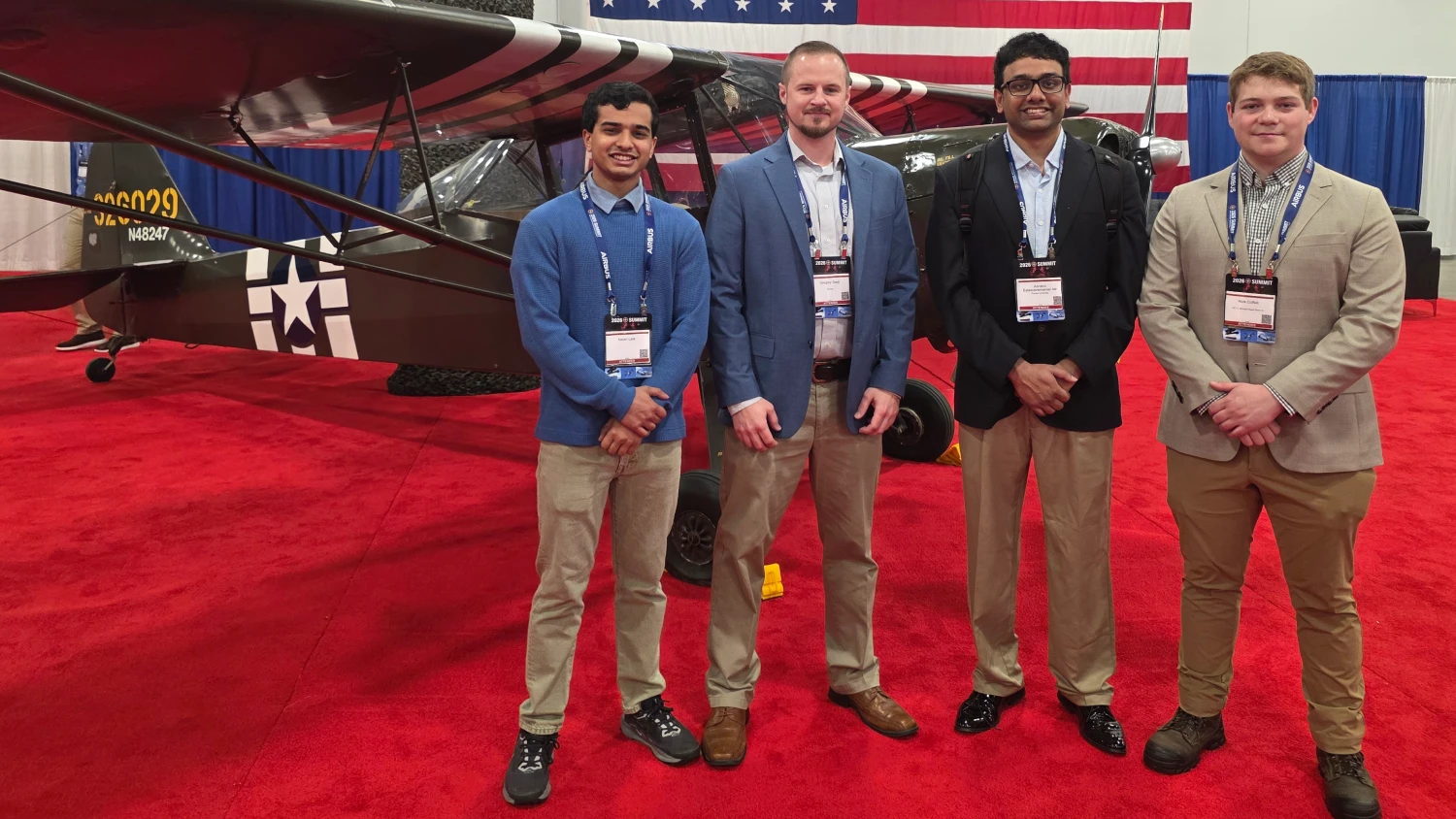
The course itself brought together 17 students ranging from freshmen to doctoral candidates. Rapid Rotor AI was one of three teams in Purdue’s inaugural offering, tackling a challenge that competed against hundreds of projects nationwide.
“At the national level, there were 234 problems solved across 37 universities involving more than 1,300 students and faculty,” Sikora says. “To think that our one problem and our five students stood out at that level — that’s how elite this group is.”
For Sapp, whose background includes service in the Indiana Air National Guard and experience in industry, the project reinforced his interest in defense and national security while opening unexpected new opportunities.
“I came to Purdue specifically because I wanted to continue down the defense and national security part of my career,” he says. “This experience added the ability for me to go about it as a startup founder and entrepreneur, as well as opened the door for me to start helping teach the H4D course here at Purdue.”
As Rapid Rotor AI enters the next phase of development through the DIU Commercialization Fellowship, the team hopes to continue refining its technology and exploring pathways to real-world impact.
For Purdue, the project represents more than a successful class assignment. It demonstrates how interdisciplinary collaboration, customer-focused innovation and entrepreneurial thinking can transform a classroom challenge into a solution with national significance.
“It’s a very different way of teaching and going after a solution,” Sikora says. “And obviously, it works.”