06-02-2026
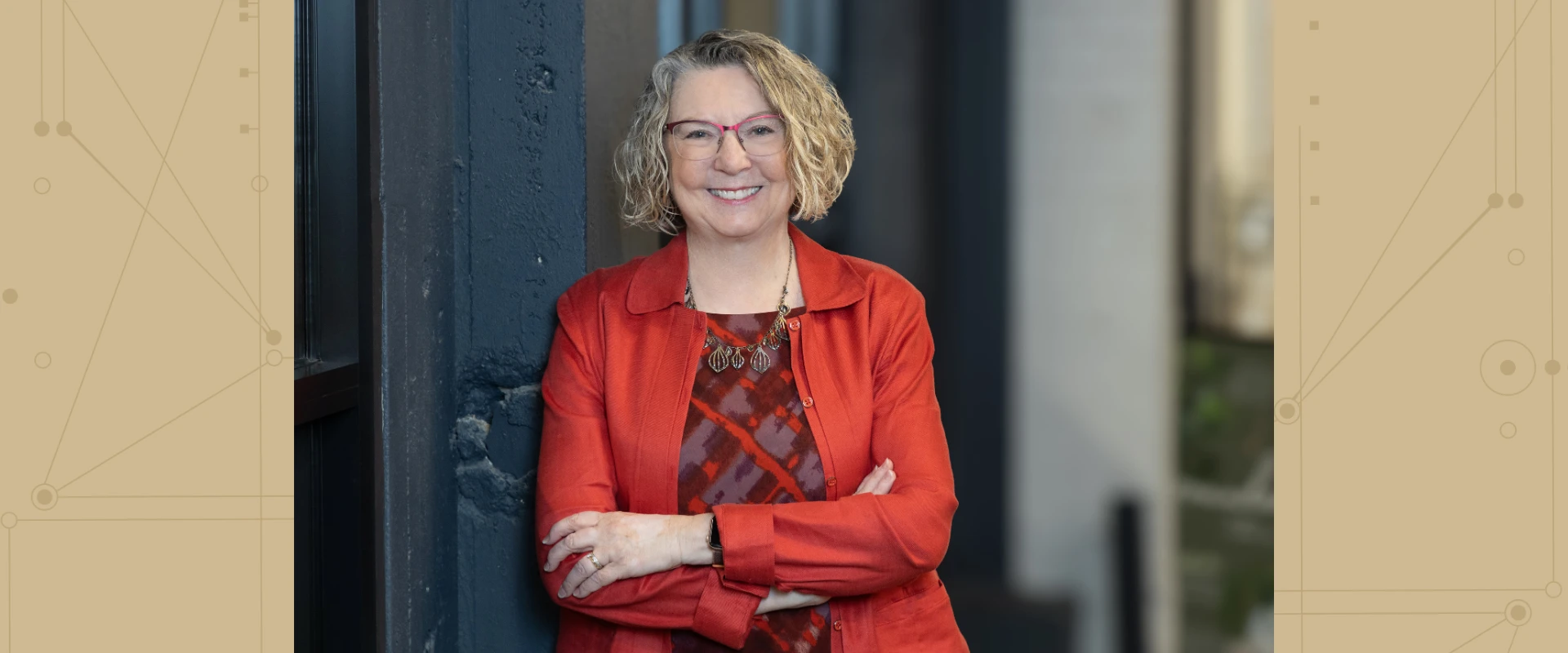
This spring, after the Daniels School of Business honored Gail Farnsley at its “Legacies and Leaders” celebration, she stayed deep in conversation with a table of young women.
Honored for mentoring and helping professionals, often those like her — an immigrant, first-generation college student and a woman — Farnsley shares observations that helped her carve out a fulfilling career as a CIO and the tools she’s used to make better decisions.
When Farnsley graduated with a computer science degree in the early 1980s, more than 40% of her cohort were women. On paper, it looked as though the field was on the cusp of gender parity. But as she moved into her career, the faces at the top did not match the numbers in the classroom. At one IT division where she worked, there were only two women managers among roughly 20 leaders, and for most of her early and mid-career roles she had no women managers at all. She had women peers — friends she ate lunch with or worked out with — but almost no women ahead of her whose lives looked anything like the one she was trying to build.
As she took promotions, she noticed “that the camaraderie I once shared with my female colleagues just wasn't the same with my male co-workers.” While she was friends with her male colleagues and could talk about work challenges with them, they didn't talk about balancing the rest of their lives.
By the time Farnsley became an officer at Cummins and later moved into executive and CIO roles, her reality was still unusual. She had children at home, and her husband was the primary parent who kept their family running so she could take on high-demand jobs with long hours and travel. She did not see men at the same senior levels with school-age kids whose wives were working full time. Eventually, she was introduced to women’s networks, and while at Cummins, she was encouraged to give back.
Over time, Farnsley became a mentor — often to women in her own organizations, including abroad when she led IT in Europe, the Middle East and Africa for Cummins, and later through the Cummins Women’s Network mentoring circles. Those groups discussed promotions and corporate politics. They wrestled with childcare and eldercare, international moves, and what to do when a dream job requires travel that might mean not having a second child. One woman she mentored realized that both she and her spouse were on upward trajectories in high-powered careers. While the woman wrestled with the tradeoff of having another child or meeting the travel and time requirements of her next position, her husband evaluated the opportunity with one question: “Do you want this job or not?” With a great deal of angst, she made the decision to take the role and close the door to expanding their family.
When women come to Farnsley, they are usually asking both sets of questions at once: how to navigate the politics of a C-suite track and how to build a life they can live with if they also want a partner and children.
Farnsley notes that men increasingly wrestle with similar questions. She has mentored men who want to coach their kids’ teams or be home for family dinners and who worry about whether it is “safe” to say that out loud at work.
Her mentoring starts from a simple principle she shares with students and professionals alike: “You can do anything, but you cannot do everything.” She urges them to make conscious choices — about jobs, partners, geography and money — rather than waking up like they are in that Talking Heads song, wondering if their beautiful house and beautiful life are what they wanted.
Because she had so few women managers and had to seek out networks to find people also wrestling with big questions, she continues to show up for Daniels School students, for Women in Business, and for young alumnae and colleagues.
In an era when some organizations are quietly pulling back from explicit support for a workforce that seeks greater family, work, and life balance, Farnsley encourages business leaders to sit down with their mentees, tell the truth about tradeoffs, and help the next generation of women in tech design lives and careers on purpose.