05-19-2026
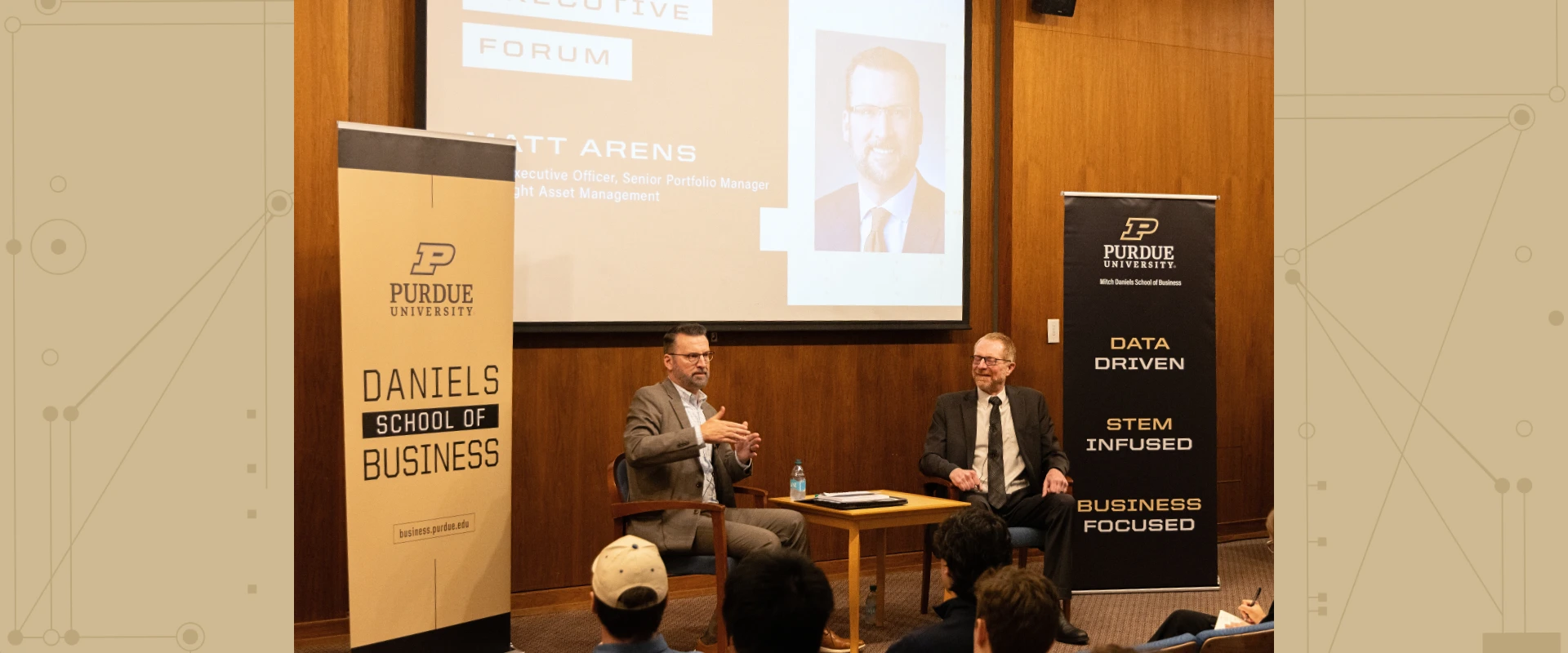
“Business is not an IQ contest,” someone once told First Light CEO Matt Arens. He took it to heart. Technical aptitude, he told the Executive Forum audience, gets you in the door; what keeps you there — and moves you forward — is your ability to connect with people, understand what they want and motivate them.
That means deliberately shifting your mindset if you see yourself as “more of a numbers person.” Arens challenged his audience: “If you’re like, I’m more of a numbers person, change that, change how you view it. Your holistic style.” For him, emotional intelligence and awareness of others are central, the differentiators. Throughout his career, he has used EQ to read what colleagues, mentors and even interviewers were worried about, then responded with humility and a willingness to do whatever the job required.
Humility, Arens says, is both key to character and performance. “Being humble is not only a good way to be; it’s great business,” he says. Knowing clearly what you are good at — and what you are not — helps you avoid the overconfidence that can lead to taking the wrong risks or scaling beyond your capabilities. That self-awareness shaped how he built First Light, from how much capital he was willing to take on to how he handled heart-wrenching growth and contraction in earlier roles.
Arens is also honest about how messy real careers are. As a student, he envisioned a clean, linear path: graduate from Purdue, head to New York, work in investment banking, then get an MBA. Almost none of that happened as planned. He took a different opportunity in Minnesota, watched a firm soar from zero to billions in assets and then collapse, became president in circumstances he “wouldn’t have hoped for,” and ultimately launched his own firm as a matter of necessity rather than long-held ambition. His advice to young professionals?
“Give yourself some grace because you just don’t know what’s going to happen.” You cannot script every twist and turn. That’s okay.
That grace extends to how you handle mistakes. Arens freely admits he has “got a lot of stuff right” and “a lot of stuff wrong" and that he will “make a new series of mistakes this quarter.” The key, he said, is being humble enough to learn from them and change your behavior. Every misstep becomes data — about markets, organizations and yourself — if you are willing to examine it honestly.
Finally, Arens urged young professionals not to overlook a quieter but critical dimension of long-term success: relationships. He spoke with real regret about his own Purdue network. “Be committed to staying in touch with your friends here at Purdue,” he says. Early in his career, he assumed he could always “rekindle those relationships later.” Now, he admits, “I don’t keep track with any of my friends from Purdue… and it’s a bummer.” Those connections matter for business opportunities — but they matter even more for support and meaning across a lifetime.
Arens’ wisdom reminds young professionals that these skills, which are the most human, require the most attentiveness and practice.
The Daniels School’s Executive Forum is held in person on the West Lafayette campus during the academic year and is open to the public, as seating permits. Watch past speakers on the Executive Forum podcast.