08-06-2026
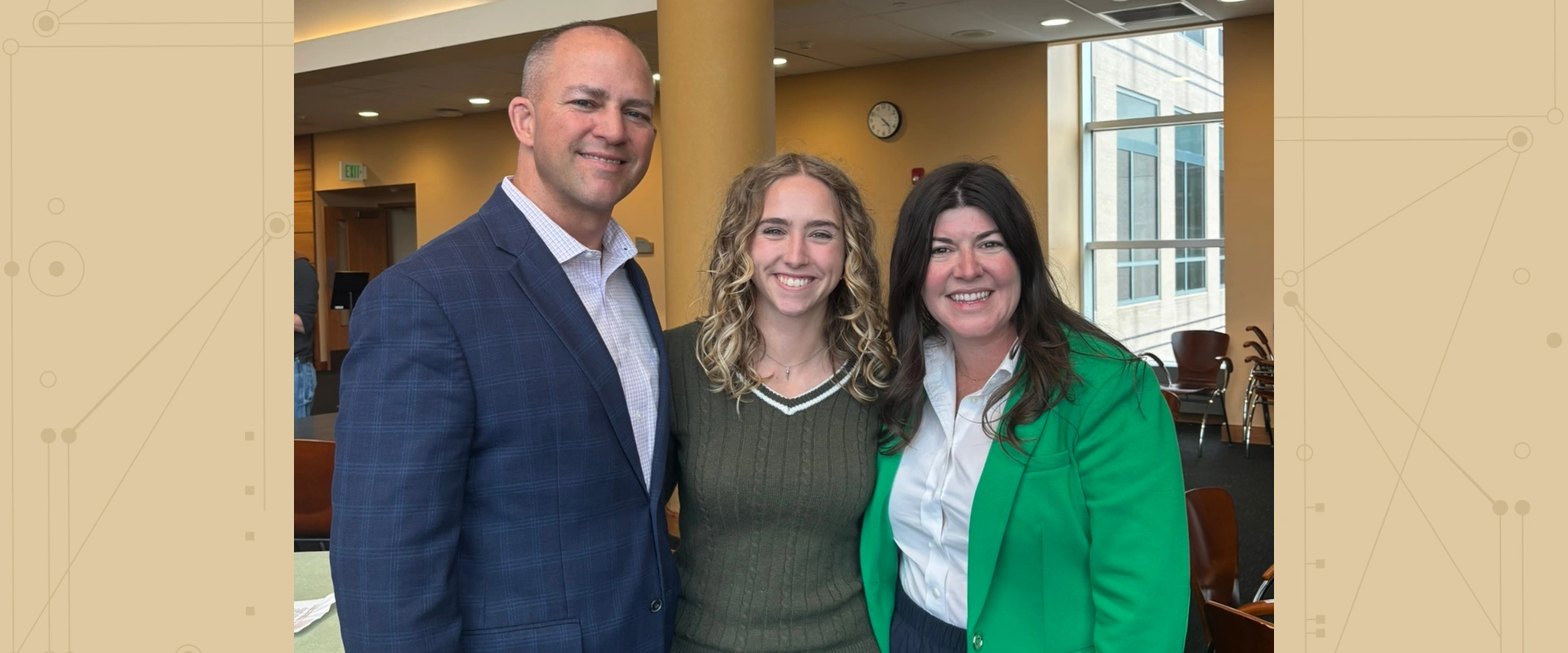
When I received an invitation from Kate Zipay to participate in a leadership roundtable at Purdue University's Mitch Daniels School of Business, I was both honored and excited.
My daughter Kate Simek was completing her final semester at Purdue, graduating a full year early, with plans to attend law school at the University of Connecticut.
As part of the course curriculum, students were tasked with interviewing a leader from the community. My daughter Kate selected me. The interview provided an opportunity to reflect on my own leadership journey while also giving us a chance to discuss leadership and bond over our shared experiences. It was that interview that ultimately led to my invitation to participate in the roundtable discussion.
The class, led by Professor Zipay, explores the leadership principles presented in The Leadership Challenge by James Kouzes and Barry Posner. Zipay invited several leaders from industry and the community to engage with her students and provide firsthand perspectives on leadership. The students prepared leadership briefings that captured their evolving leadership philosophies. Structured around many of the book's core practices, Zipay tasked students to show how to inspire a shared vision, challenge the process, enable others to act, and encourage others from the heart.
I spent 25 years serving in the United States Marine Corps, both on active duty and in the reserve component, and the study and practice of leadership has been a lifelong interest of mine. Although I had not read The Leadership Challenge before participating in the roundtable, I have since done so and found its principles remarkably consistent with the leadership lessons I learned throughout my military career and later in business.
Participating in the leadership roundtable connected me with other inspiring participants. I was honored to be the only panelist who was not a Purdue alumnus.
Zipay hosted us in two separate classes, each with its own unique culture and personality. That distinction did not surprise me. Organizational cultures are certainly influenced by leaders, but they are equally shaped by the individuals who make up the organization. While the two classes differed in some respects, several common themes emerged.
First, I was struck by how capable these students are and how much they reinforced my faith in the future. I have never subscribed to the notion that younger generations are somehow less capable than those who came before them. In fact, considering the complexity of the challenges facing today's young adults, I would argue they must be even more adaptable, resilient and resourceful than previous generations.
Servant leadership consistently surfaced as a theme. Nearly every student demonstrated an understanding that leadership begins with setting an example and putting the needs of others before your own. They recognized that a leader's primary responsibility is helping those they have the privilege of leading perform at their very best. While I was not surprised by their perspectives, I was very much encouraged by them.
Another recurring theme was the importance of collaboration. These students understood intuitively, and through their education, that very little of consequence is accomplished alone. Whether on a sports team, in a military unit, within a business organization, or in a family, success depends on the ability to work effectively with others. Collaboration is often the key ingredient in high performing organizations.
In fact, the emphasis that the Mitch Daniels School of Business places on collaboration was one of the major reasons our family believed Purdue was the right fit for Kate. Throughout her time at Purdue, we saw firsthand how students are encouraged to learn from one another, challenge each other's thinking, and work together to solve complex problems. The leadership roundtable reinforced that belief. The students demonstrated not only individual capability and intellectual curiosity, but also a genuine appreciation for the value that diverse perspectives bring to a team.
The leaders who leave lasting impressions are often those who create environments where people unite around a common purpose, align their efforts, and accomplish something larger than themselves. Leaders who can unlock that kind of magic in collaboration, where everyone is rowing in the same direction toward a mission greater than themselves, are often remembered for a lifetime.
Most importantly, and perhaps selfishly, the opportunity to participate in an event like this alongside my daughter was incredibly meaningful. Like every proud father, I admit I have a dad bias. That said, Kate has always been an exceptional leader and an extraordinary young woman. Watching her confidently share her ideas about leadership with her classmates, engage in thoughtful discussion, and reflect on what she had learned throughout the course was a special moment that I will cherish as she graduates and goes on to tackle the world.
I am grateful I was invited to participate in the leadership roundtable, to listen to and learn from the students who shared their perspectives on leadership. Their insights gave me confidence in the future of our nation and in the next generation of leaders. I am equally grateful to Professor Zipay for creating a class that reflects the very best of what higher education can provide: rigorous thinking, meaningful dialogue and the opportunity to connect theory with real world experience.
Most of all, I am grateful for the opportunity to spend meaningful time with my daughter reflecting on the art and practice of leadership.
Mike Simek is a former Marine Corps officer and senior defense executive who helps defense, aerospace, and government-focused businesses clarify their strategies.