11-10-2026
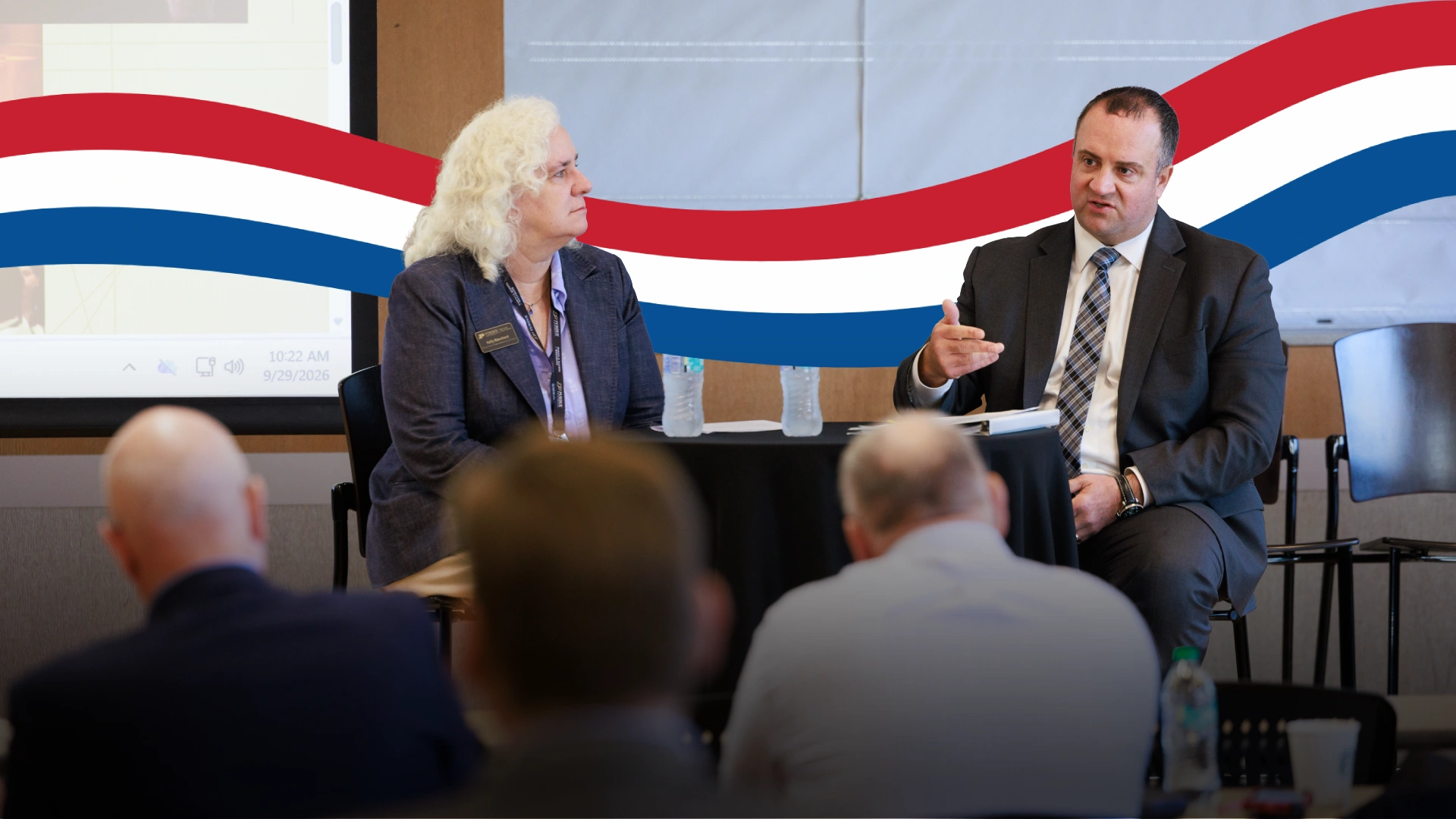
American businesses need a balanced ecosystem to succeed: room to compete, protection against genuine vulnerabilities and enough policy stability to invest for the long term. Finding that balance, rather than choosing between government intervention and unrestricted markets, was a central theme of the “Fireside Chat: Free Markets and Foundation of American Success” at the 2026 Cornerstone for Business conference.
Matt Miller, senior vice president of government affairs at Business Roundtable, joined moderator Kelly Blanchard, senior associate dean for undergraduate programs and Indianapolis and clinical professor of economics at Purdue University’s Daniels School of Business, to explore what sustains American prosperity — and what threatens it. Their conversation connected today’s trade and regulatory debates to an enduring question: How much government involvement helps businesses succeed, and when does it get in the way?
Miller traced that tension to the nation’s founding, when competing visions of government’s economic role helped shape the American system. The lasting foundation, he argued, includes property rights, enforceable contracts, intellectual property protections and institutions that allow entrepreneurs to turn ideas into marketable products.
Success depends not simply on limiting government, but on getting its role right.
“What’s the balance of the government intervention, regulation?” Miller asked. “When do we need the help?”
Those questions carry immediate consequences. Trade restrictions, supply chain vulnerabilities and rapidly changing regulations influence where companies invest, how they source materials and whether they can confidently pursue new opportunities.
Free trade remains essential, says Miller. Durability and national security concerns complicate its application. For decades, trade among the United States, Mexico and Canada provided evidence that agreements opening markets support American jobs and commercial activity. Recent protectionism leans on a broad “need” to reshore manufacturing. While national security interests could justify protected domestic manufacturing, sourcing materials often requires an international global supply chain and manufacturing ecosystem.
That said, the pandemic exposed weaknesses in concentrated supply chains. Miller recalled that companies with connections to international suppliers helped secure and transport masks when the federal government struggled to obtain them. Those vulnerabilities sharpened policymakers’ focus on pharmaceuticals, critical minerals and other strategically important supplies.
The response, he said, should emphasize diversification rather than wholesale separation from China.
“We haven’t been advocating for decoupling,” Miller said. “Let’s de-risk. Let’s diversify supply chains.”
Reducing dependence on a single source can strengthen resilience while preserving access to international markets. Miller also acknowledged a role for targeted intervention when trading partners treat American businesses unfairly, but favoring broadly applied tariffs over targeted interventions have significant downsides to durability and economies.
Blanchard pressed Miller on another challenge: What happens when businesses adjust to one administration’s policies, only to see the next administration reverse them?
For Miller, durability is a business priority. Research and development timelines can stretch from three to 20 years, he notes, far beyond a single presidential term. Even policies favorable to business can create uncertainty if companies expect them to disappear after an election.
“That’s why we advocate for legislation whenever possible,” he said. “Something that’s durable.”
Companies need confidence that an approved project can proceed before committing substantial capital. Bipartisan rules offer a firmer foundation than decisions vulnerable to abrupt political reversal.
The discussion also addressed the growing distrust of business, especially larger corporations, placing responsibility on business leaders. Blanchard connected loyalty and commitment with trust; Miller emphasized communication, workforce development and helping employees adapt as technology changes their jobs.
Miller acknowledged the place for appropriate regulations for business success: grounded in the rule of law, alongside opportunities to innovate and compete.
It’s a balance. Keep markets open, address specific vulnerabilities and make the rules durable enough for long-term decisions. American success depends on preserving both the freedom to build and the confidence to commit.
Cornerstone for Business is a collaborative initiative between the Mitch Daniels School of Business and Purdue’s Cornerstone Integrated Liberal Arts program. The program connects business education with enduring ideas, ethical leadership, and human-centered thinking to prepare students to lead with both competence and character.

