05-06-2026
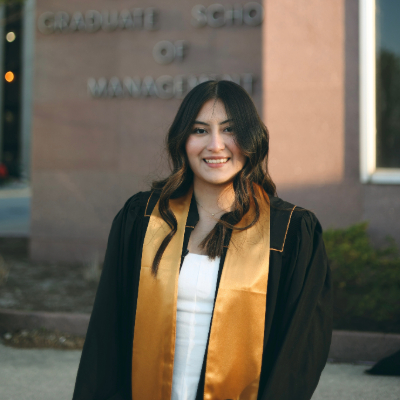
Balancing internships, CPA prep and a full course load isn’t easy — but Giselle Pablo found a way to make it manageable: using winter and summer sessions to her advantage.
Pablo, a senior in accounting, credits her winter session classes with helping lighten semester course loads, giving her flexible learning options and helping her prepare for her CPA exam.
“When I started planning out my junior and senior years, I realized how much winter and summer sessions might help simplify my schedule. As an accounting major trying to fit in internship hours, CPA prep and a full course load, I realized that taking a winter class gave me room to breathe. It would let me focus more deeply on each subject and still keep up with everything else I wanted to do. Looking back, that decision helped me stay organized, balanced and better prepared for what comes next,” says Pablo.
Pablo emphasizes the importance of being intentional early on, especially when it comes to course selection. She advises students to prioritize standard, required classes within the curriculum, with a particular focus on foundational finance and accounting courses. “Put those at a priority,” she shares, highlighting how classes like financial accounting, along with core courses such as introduction to accounting, intermediate accounting, tax, and audit, all play a critical role in building a strong academic base.
Beyond just taking the classes, she stresses the value of truly engaging with the material through strong note-taking habits, as a lot of this content resurfaces later when preparing for the CPA exam. Looking back, Pablo shares that having a solid foundation from her undergraduate experience made a significant difference — making it easier to study, retain information and ultimately feel more prepared before taking the CPA.
Pablo took one winter session and two summer session courses asynchronously. She explains that while they’re definitely different from a traditional classroom, they can be incredibly valuable when approached the right way.
“With everything from lectures to assignments and exams — all being online, my success in these online courses really came down to personal accountability. Setting aside time each day to focus on class content created structure,” shares Pablo.
As an accounting major, she found the online course structure especially effective; the lectures were detailed and closely aligned with the textbook, making it easier to follow along. If something didn’t click, she could easily refer back to the text or explore additional resources, including AI tools.
Taking one core course with Fabrico Almeida proved to be a turning point in Pablo’s CPA preparation. She shares that the Daniels School, through such courses, provides extra prep materials and even highlights which questions have appeared on past CPA exams, giving her a real sense of comfort because she is able to know what to expect and how the material connects to the actual exam.
“My favorite part of these online courses was that I was able to learn at my own pace,” shares Pablo. By choosing when she wanted to work and aligning that with her productivity and energy levels, the course became a lot more enjoyable. In just three weeks, she was able to grasp fast-paced course content in a structured and manageable way. Most importantly, it also allowed her to keep her senior semester lighter and build in more flexibility for herself. For Pablo, it ultimately comes down to having strong accountability systems in place — once that is done, she believes everything else falls into place.