05-18-2026
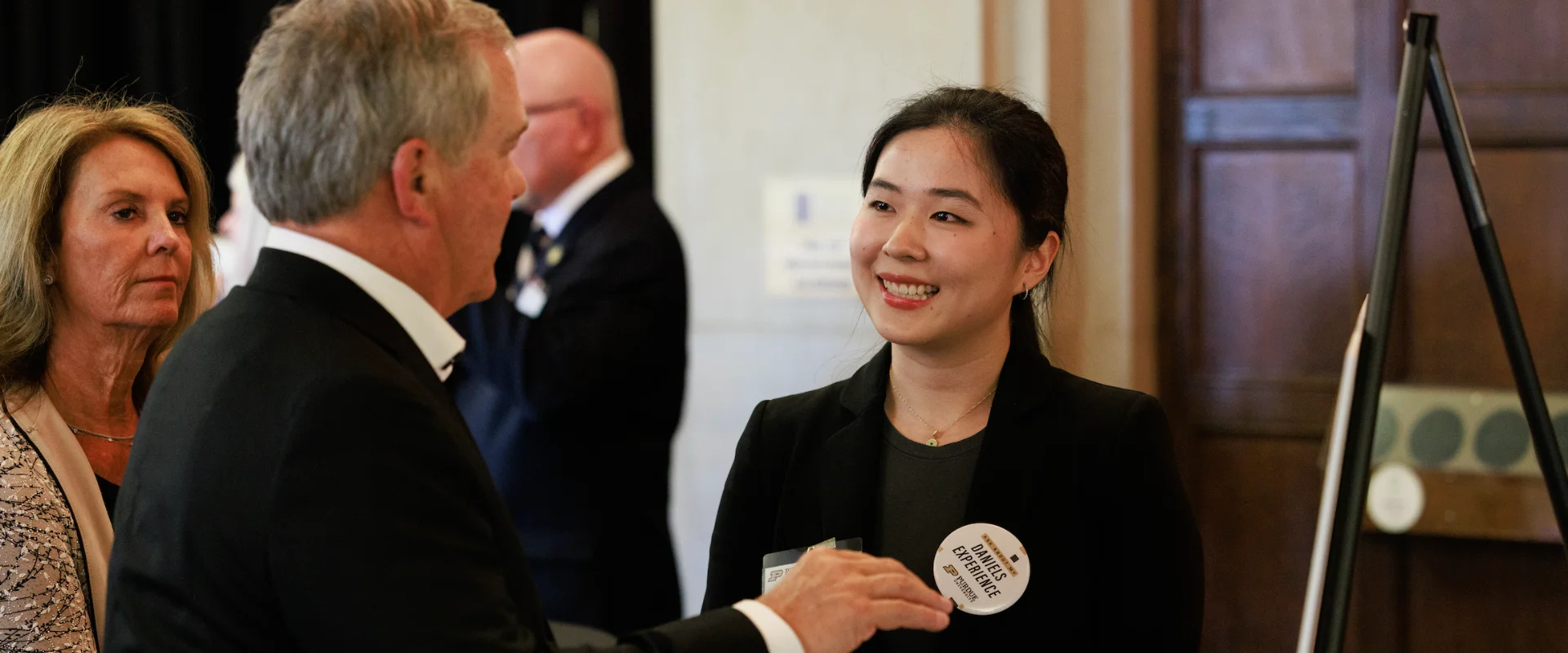
When students first land on campus as freshmen, they often have no idea how much their future plans will change over the next three to four years. For Yinuo Liu, that uncertainty became a starting point.
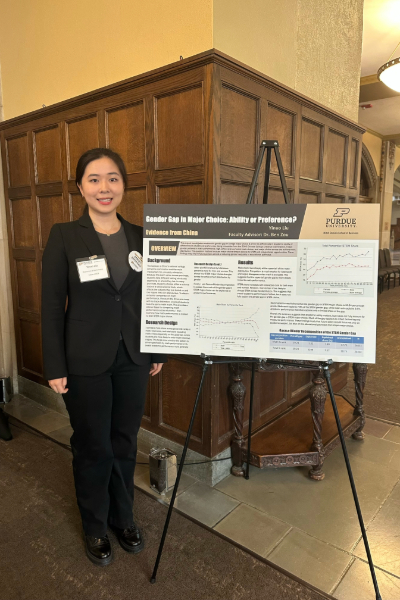
As a research assistant with the Undergraduate Research Assistantship (UGRA) program, Liu plans to pursue a PhD. But like many students approaching their senior year, she needed to test whether research was the right path before fully committing to graduate school. Her research focused on gender and education, and it reinforced a critical principle: strong decisions require strong data, such as the way data is selected, cleaned and interpreted can influence outcomes.
Working with data from China’s Gaokao system between 1999 and 2003, Liu encountered the realities of research firsthand. The dataset was large, inconsistent and difficult to standardize across regions and academic tracks. To make sense of it, she had to go beyond the numbers, researching historical context and policy differences to better understand what the data actually represented.
This experience highlighted a key difference between classroom learning and real research. In class, datasets are often clean and ready to use. In reality, data is messy. Cleaning and organizing is foundational to producing meaningful results.
Through this process, Liu developed a more rigorous and thoughtful approach to analysis. She learned to question assumptions, evaluate methodologies more carefully and recognize how small decisions in data handling can shape final conclusions. Beyond producing results, she learned how to tell a story with data, using visualizations to make complex findings clear and compelling. Her research experience has already had a tangible impact. It strengthened her graduate school applications and improved her ability to identify and synthesize relevant information. More importantly, it allowed her to test her interests and ultimately confirmed her desire to pursue a PhD.
For Liu, the value of an R1 institution lies in its ability to push students beyond passive learning. At a place like Purdue, students are not just learning what is already known; they are learning how to ask questions and explore what is not. She also found a strong sense of community. Through UGRA, Liu connected with peers who shared her interests and faculty who provided consistent mentorship and guidance. As an R1 institution, Purdue creates space for undergraduate students to engage in research earlier than many peer schools, particularly in fields like economics.
For Karis Pressler, director of the UGRA program, mentoring undergraduate researchers is both professional and personal. Her approach is shaped by her own academic journey. While research opened new opportunities for her as a student, her PhD experience also brought moments of uncertainty. Now, she uses those experiences to build a program that both challenges students and supports them through that same uncertainty.
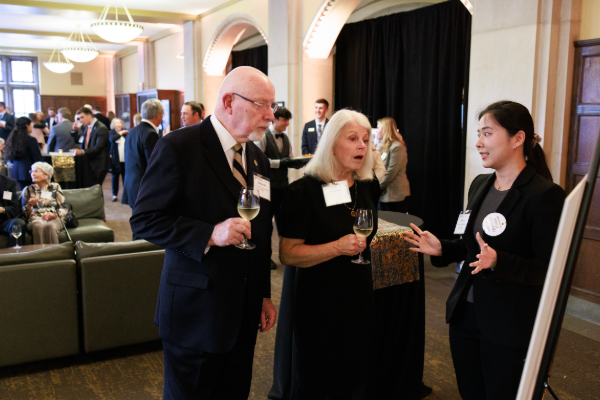
At an R1 institution like Purdue, students are expected not just to learn knowledge but to create it. Pressler helps students navigate this shift, especially the transition from structured coursework to open-ended research. Unlike assignments with clear deadlines, research can take months or even years to complete. To provide structure, she introduced weekly research logs. These logs require students to document their work, track progress and articulate questions. Over time, this practice builds accountability while helping students see how much they are learning.
One of the most important lessons she emphasizes is the value of asking questions. Many students hesitate at first, worried it may signal a lack of understanding. Pressler reframes this, emphasizing that questions are central to research. As students begin to embrace curiosity, they gain confidence and independence. She also prioritizes building community. Weekly meetings give students space to share progress, learn from one another and find connections across projects. This collaborative environment reinforces the idea that research is not something you do alone.
At the core of her mentorship is persistence. Research is often slow, tedious and frustrating. Tasks like cleaning complex datasets or integrating multiple sources can feel overwhelming. Pressler encourages students to keep going and reinforces the importance of resilience.
These lessons extend beyond research. Students leave UGRA not only with technical skills but also with the ability to navigate uncertainty, adapt and stay committed to their goals. An R1 university like Purdue gives students the opportunity to test their interests, refine their goals and gain real-world experience through programs like UGRA. For students like Liu, that process can turn uncertainty into clarity and help shape what comes next.