06-18-2026
When I first arrived at the Mitch Daniels School of Business, one of my biggest concerns was whether I would be able to keep up with how quickly technology was changing in the business world. It seemed like every industry was evolving overnight, with new AI tools, advanced analytics platforms and emerging software becoming essential skills. As a business student, I worried that if I could not adapt quickly enough, I would struggle to stand out when applying for internships and future jobs.
At the time, I expected business school to focus mostly on traditional technical skills like Microsoft Excel, Access and basic data analysis. While those skills were certainly part of my experience, what surprised me most was how deeply generative AI and modern technology became integrated into my coursework. Instead of simply learning programs, I began learning how technology could transform business analytics, marketing strategy and decision-making.
One of the most valuable skills I developed was using generative AI tools alongside traditional analytics platforms to support data analysis and visualization. I learned how to use AI tools to generate Excel formulas, clean datasets and streamline workflows.
At the same time, I strengthened my technical skills in Excel pivot tables; data visualization techniques, including dashboards and box-and-whisker plots; survey design and data collection using Qualtrics; and customer segmentation and marketing analytics.
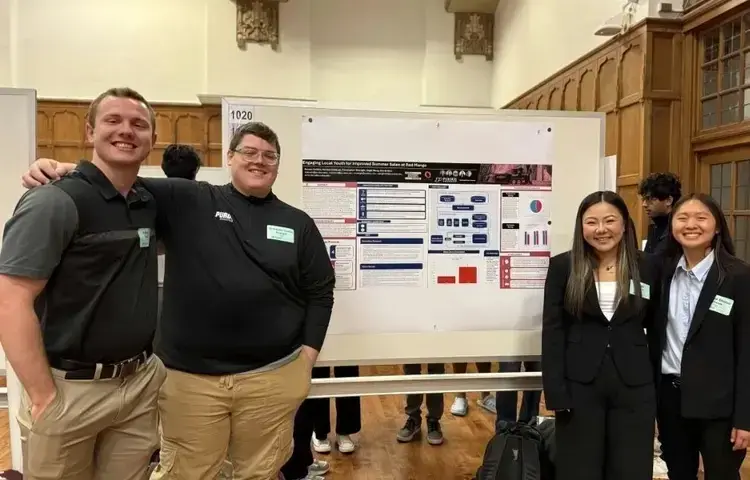
These skills came to life through a semester-long marketing research project with Red Mango, a frozen yogurt business. Working on a team with Konner DeWitt, Angel Wang and Marissa Urbanek, we partnered directly with the client to address a key challenge: increasing brand visibility and sales during the summer months.
Our team conducted a full marketing research study that included competitive analysis, survey design and customer segmentation. Using Qualtrics, we surveyed parents of students on campus to better understand purchasing behavior and preferences.
After collecting the data, we cleaned and organized the datasets in Excel, then used pivot tables to identify trends and key insights. Konnor and I built visualizations to share in our report.
My role focused on interpreting this data and developing recommendations. Based on our findings, we proposed targeted promotional offers designed to increase summer traffic and improve customer engagement. This project showed me how data analytics can directly influence real business outcomes.
In another project, I worked with Changing Footprints, a nonprofit organization based in Rushville, Indiana, that distributes reusable shoes to youth communities, sports leagues and individuals experiencing homelessness worldwide.
Our team was tasked with creating a social media marketing playbook to expand their digital presence and improve audience engagement. We began by evaluating their website and existing social media strategy, which has been focused on Facebook.
Using marketing analytics and audience insights, we recommended how they could expand to Instagram to reach new audience segments and develop a consistent brand meta-narrative to strengthen emotional connection.
Over time, the fear of falling behind started to turn into confidence. I realized that adapting to technology is less about already knowing everything and more about being willing to learn continuously. The exposure I gained through my coursework has already helped me feel more prepared during internship and job searches because employers increasingly value candidates who are comfortable working with evolving technology.

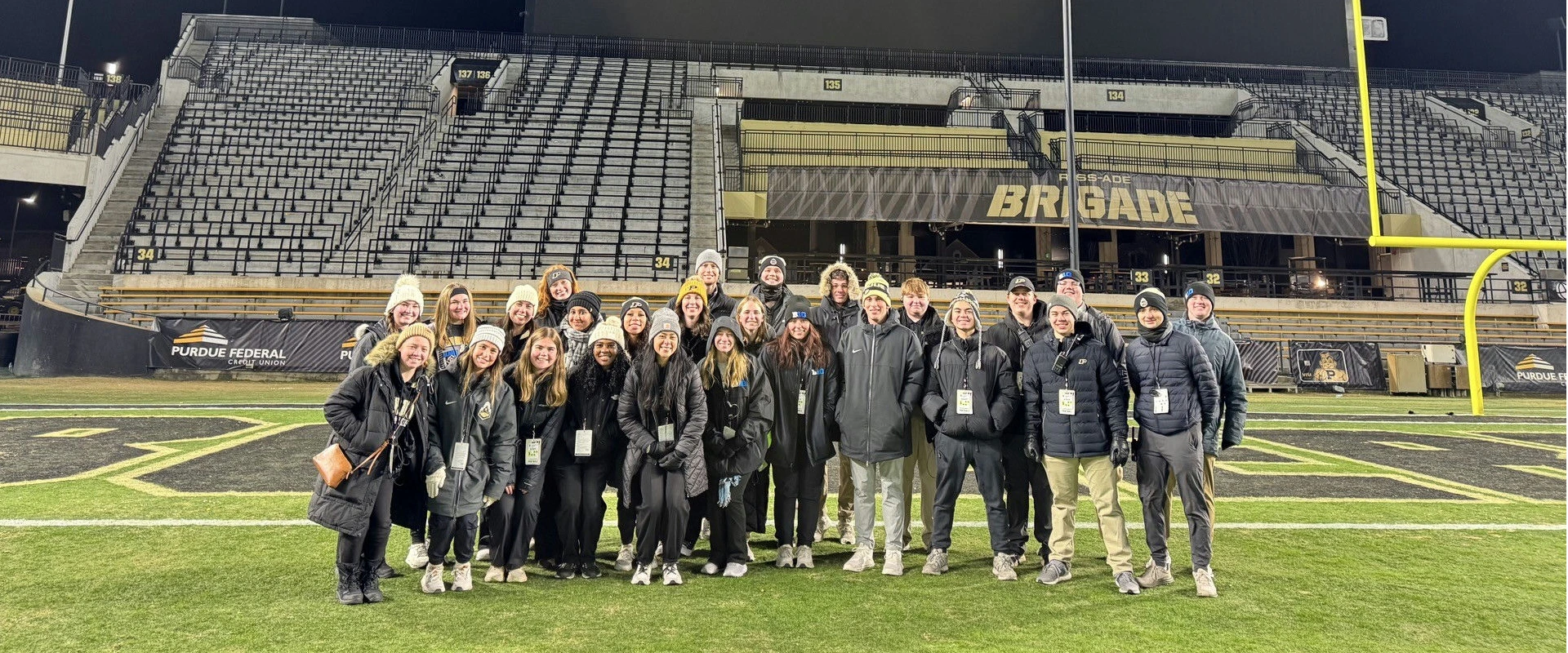
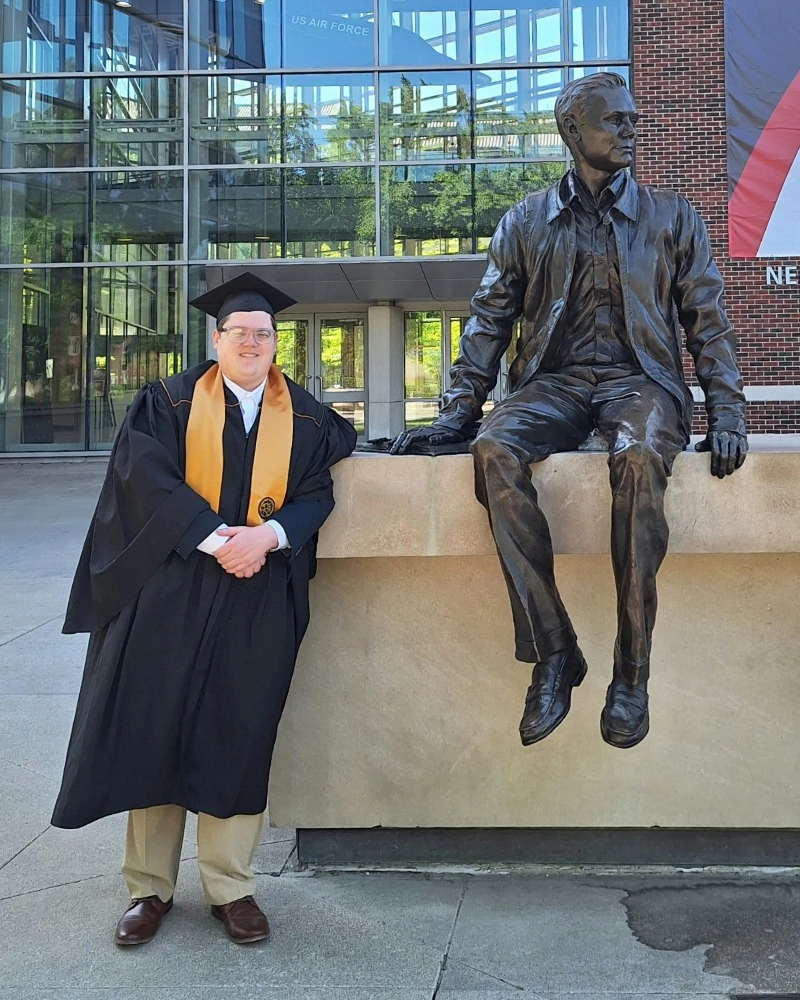
These skills have become especially meaningful as I prepare for my future career goals. Alongside my interest in business marketing, I have also developed a strong passion for the sports industry. After graduating this May, I will continue at Purdue to pursue a master’s degree in sport management. Through my experiences with the Indianapolis Motor Speedway, the Lafayette Aviators and Purdue Athletics as an event management intern, I have seen how data and technology shape fan engagement, operations and performance analysis.
Because of my experience at the Mitch Daniels School of Business, I feel prepared to enter an industry where technology will continue shaping the future. Looking back, the biggest lesson I learned was not just how to use new tools, but how important adaptability has become in modern business. The challenge that once intimidated me ultimately became one of the most valuable parts of my education, and it is a major reason why I now feel confident moving into the next stage of my career.