10-27-2026
When I think back on my time as an undergraduate research assistant at the Daniels School of Business, I realize that the most important things I learned were not just technical skills, but soft skills and a kind of intellectual discernment that changed how I see my work, my professors and myself.

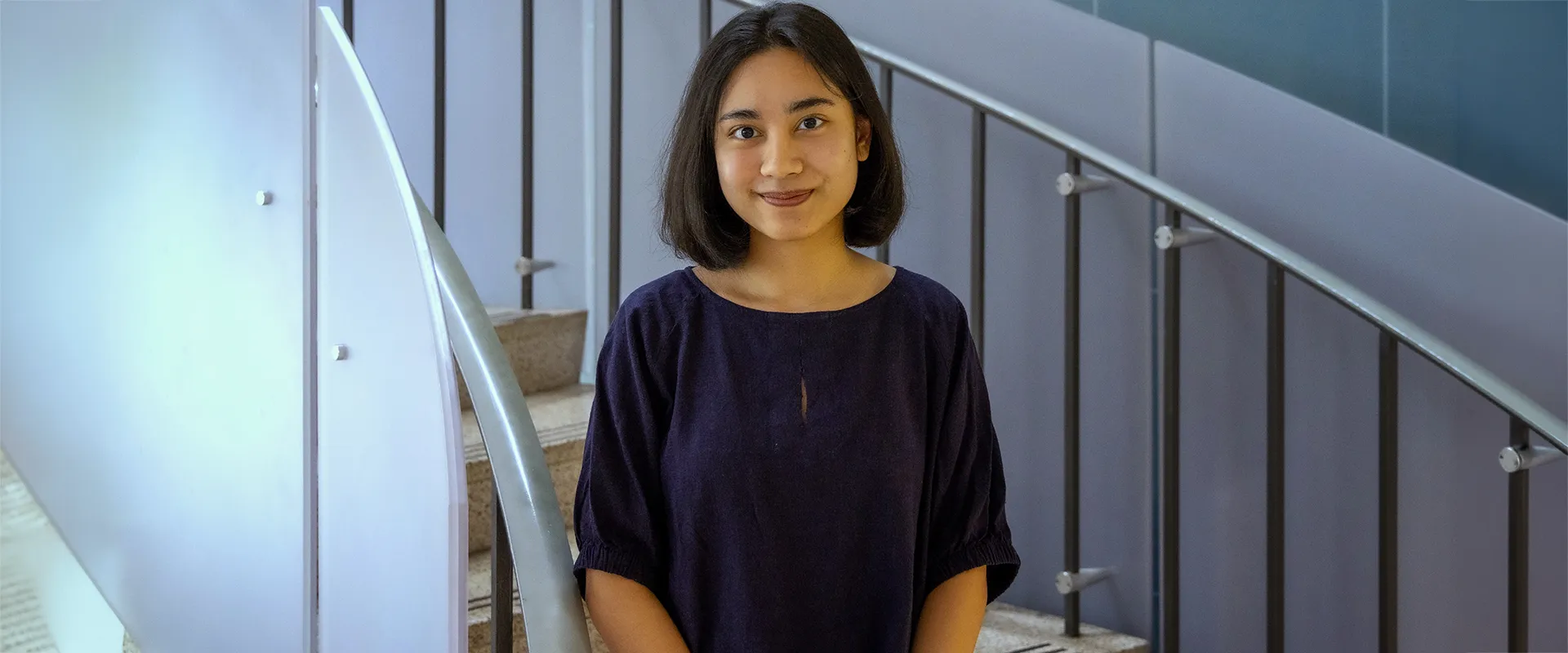
I enjoy photography. Here I am in the Navajo's Antelope Canyon.
I have two older siblings who also graduated from Purdue’s business school, both in finance, so choosing economics already felt like stepping onto a slightly different path. The economics major offered opportunities other Daniels School majors didn’t, especially through the Undergraduate Research Assistantship (UGRA) program, offered by the Purdue University Research Center in Economics (PURCE).
As a first-year student, I joined the Economic Scholars Program, also offered by PURCE, where we met weekly over dinner to discuss Adam Smith and questions ranging from student loans to what to order for the next dinner. That’s where I first met Karis Pressler, who later became my supervisor, and where I started to see research not as something reserved for graduate students or professors, but as a space undergraduates could step into.
By the time I completed the econometrics prerequisite and the UGRA program application opened, I was ready to try something that felt a little intimidating but exciting.
My UGRA experience was split between working with Professor David Hummels and Professor Russell Hillberry in Agricultural Economics.
With Professor Hummels, the project was more structured: we had clear goals, defined tasks, and set deadlines that more or less organized the work into a linear process. My role focused heavily on data work, and I worked with fellow UGRAs who complemented what I was doing, so I could lean into the parts of the project that fit my strengths at the time.
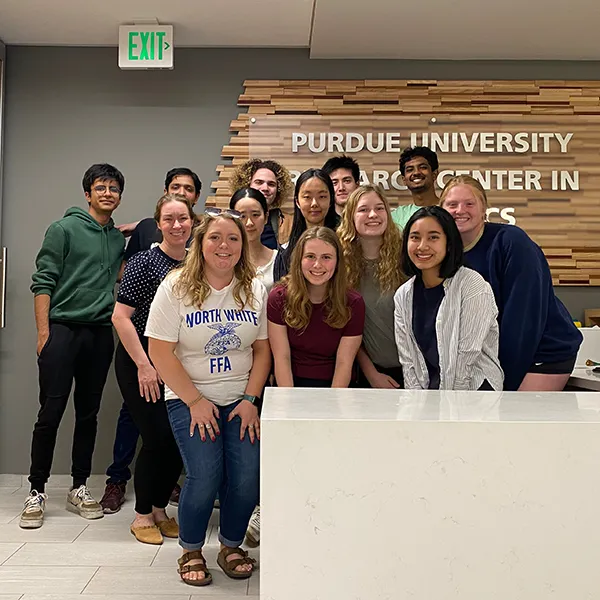
Here I am with my fellow Econ Scholars back in 2023, in the Krannert Building's Purdue University Research Center in Economics suite.
When I transitioned to working with Professor Hillberry, the tone of the work changed. The questions guiding the work were more abstract, and I didn’t always know what the final outcome would look like. Instead of marching toward a clearly defined finish line, a lot of the work involved exploring as we went — deciding which directions were promising, which weren’t, and when to reevaluate and redirect.
That shift honed my intellectual discernment. I learned to tolerate more ambiguity, make judgments without having perfect information, and separate “noise” from what was actually feasible and worth pursuing. It was harder than simply executing a list of tasks, but it required me to own more of my work along the way.
One of the soft skills I did not expect to build so much was communication. In the UGRA community, students were working on all kinds of projects — trade, education, policy and more — and each of us had to present our progress to peers who had not been living inside our specific dataset or model. I had to figure out how to explain what I was doing in a way that made sense to people who were smart and well-trained but not working on the same problem as me.
My completed project with Purdue agricultural economics professor Russell Hillberry features an Indonesian GDP dataset that considers administrative boundaries. See our Purdue University Research Repository publication; my native language expertise was an asset when creating this panel dataset.
That meant putting myself in other people’s shoes: what background do they share with me, and what do I need to explain from the ground up? Over time, I became more comfortable presenting my work, answering questions, and adjusting my explanations based on the looks on people’s faces — were they confused, curious, skeptical? Being able to translate technical work into clear, human language is a skill I know will matter beyond economics.
Another big area of growth for me was professionalism, especially in my relationships with supervisors and faculty. Pressler, who coordinates the UGRA program, set up regular one‑on‑one checkpoint meetings where we talked not only about what we had done and what was next, but also how we were feeling about the work. That experience showed me what a thoughtful supervisor could look like — someone who genuinely paid attention to how I was doing while still pushing me to grow.
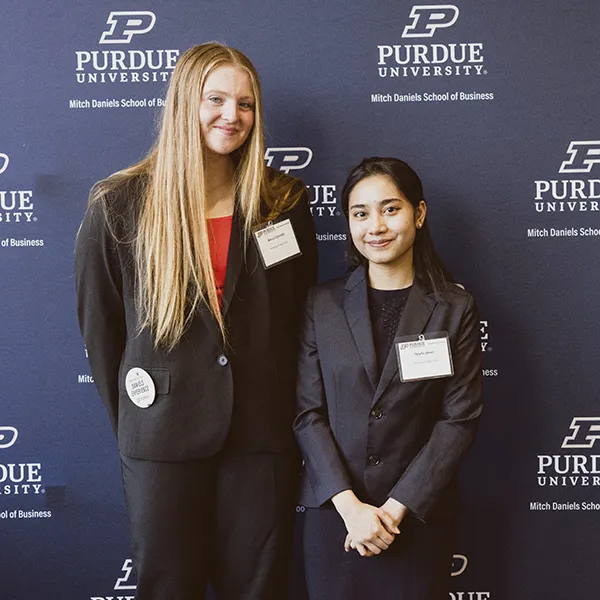
Fellow UGRA Becca Caliendo and I assisted David Hummels in decoding college costs. Becca is now at Northwestern University's Pritzker School of Law.
At the same time, working directly with professors, I realized that research supervisors are balancing different responsibilities: teaching, their own research, service and more. I learned that professionalism isn’t just about doing what you’re told; it’s about recognizing their constraints and meeting them halfway, respecting their time while still communicating what I need to move the project forward. That balance between respect and agency isn’t something I learned in a classroom lecture, but through research.
One of the most important soft skills I developed was learning to be active rather than passive. When I first entered the UGRA role, it was tempting to sit back and wait for tasks: “Tell me what to do next.” But over time, I realized that I got more out of the experience when I took initiative — proposing next steps, asking questions and suggesting how I could contribute based on what was in front of me. I started asking myself, “What can I do next?”
I also learned that “taking initiative smartly” matters. It’s about paying attention, noticing gaps or bottlenecks, and then approaching my professor with ideas: “I noticed this issue, here’s what I think we could try,” or “here’s what I tried” — and asking for input. That mindset helped me grow from someone who waited for instructions into someone who didn’t depend on them.
Research gave me a training ground for my soft skills in a setting where mistakes were part of the learning process, not the end of the world. I learned to think more deeply about the questions behind our data and models and to draw connections between the frameworks I learned in classrooms and what I encountered in research. It also taught me how to navigate relationships with peers and mentors in a more mature way. Whatever career I choose next, those soft skills and that intellectual discernment will travel with me.
Read some of the research I contributed to:
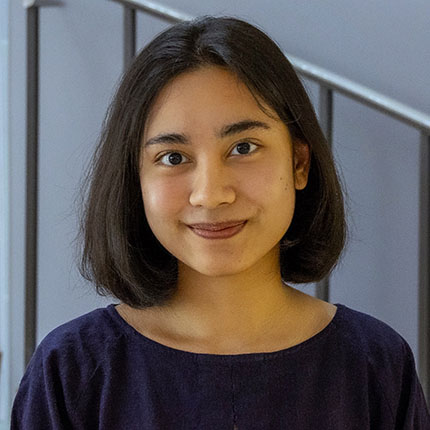
Nayfa Johan (Economics ’26) is from Bandung, West Java, Indonesia. Not only was she an UGRA, but she was also a Helen Bass Williams Academic Success Center supplemental instruction leader for two courses: Statistics & Society and Microeconomics. She was the fundraising officer for the Indonesian Student Association. Johan participated in the 2023 Econ Games, University of Kentucky, and the 2024 Women in Economics Symposium hosted by the Federal Reserve Bank of St. Louis.

