12-01-2025
When I was in high school in Dubai, my grandfather suffered a medical emergency. I rode with him in the ambulance, while behind us in her own car, my mom was scrambling to collect his medical reports and medications. The ambulance reached the hospital long before she did, and the ER doctors didn’t know what prescriptions he was taking. Even after waiting for her to arrive doctors lost more valuable time sorting through the documents before treatment could start. That moment stayed with me. I kept wondering why there wasn’t a simple way for emergency responders to instantly access verified medical data.
That's when I started thinking about whether there could be a digital platform that lets paramedics quickly access critical medical information in situations like this, reducing delays during emergencies. The concept lived in my head for months, but I had no idea where to begin or how to turn it into something real.
That changed when I came across an email about the BioMedship (MGMT 59000) course at Purdue. At first, it looked like another graduate-level entrepreneurship announcement that didn’t apply to undergraduates, so I almost deleted it. But when I read it, I realized it offered something I hadn’t explored before: a structured way to explore ideas in healthcare technology and understand how real solutions get built.
The more I learned, the more I wanted in. The class combines biomedical engineering and entrepreneurship, focusing on reducing commercialization risk in early-stage ventures. Even though it was designed for graduate and PhD students, I reached out to the professor to ask if an undergraduate could join. He said yes, if I was serious about it. I was, and that’s how I ended up as the only sophomore in a class of thirty, surrounded by graduate and doctoral students. That’s where I proposed my idea: MedWeb.
MedWeb is a digital platform that uses biometric identification to securely access a patient’s medical history in emergency situations. The goal isn’t only to improve emergency medical response. It also aims to streamline workflow for first responders, reduce time lost during critical decision-making and ensure hospitals receive accurate information before the patient even arrives. Imagine if paramedics could scan a fingerprint or use facial recognition to instantly pull up a patient’s vital information. They’d know current medications, allergies and past conditions, including live updates and drugs administered in transit, and could communicate updates to the ER without delays.
Out of thirty class pitches, only five projects were selected to move forward. I didn’t think mine would make the cut. After all, I was just a sophomore, but it did.
Once my project was chosen, I suddenly found myself leading a team of PhD and master’s students. At first, it was overwhelming. They had more experience, more technical knowledge and more research background than I did.
But leadership isn’t about knowing everything. It’s about coordinating strengths, listening and keeping the direction clear. I encouraged open collaboration while keeping the team focused on MedWeb’s mission: reducing response time and improving outcomes during medical emergencies. Over time, the team saw my commitment and rallied behind the vision.
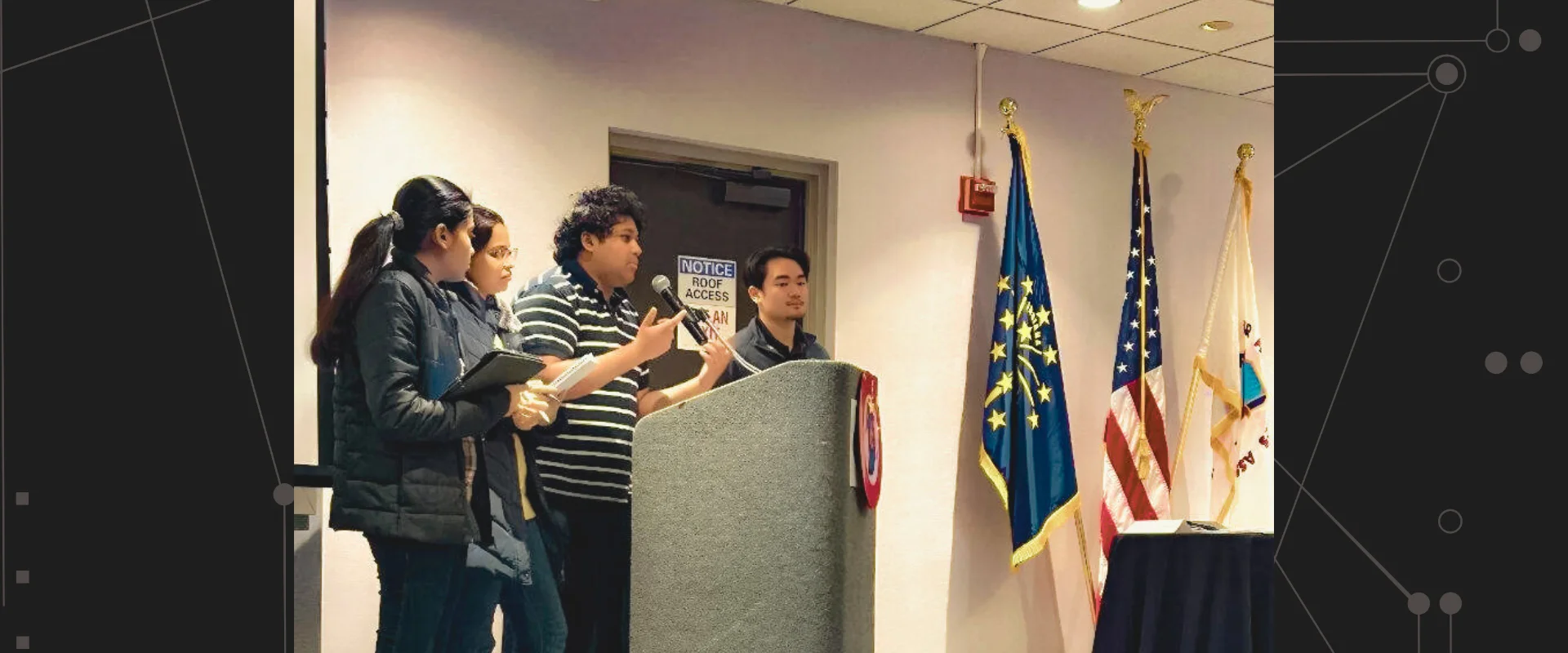
Throughout the course, we focused heavily on customer discovery to understand whether MedWeb could actually work in real emergency settings. As a team, we interviewed between 80 and 100 medical professionals, firefighters and paramedics. We distributed surveys to collect broader feedback. Those conversations helped us identify the real constraints and priorities in the field. One of the biggest issues that emerged was data security and system integration: how to make MedWeb secure enough to manage sensitive medical information while still being fast and accessible for first responders.
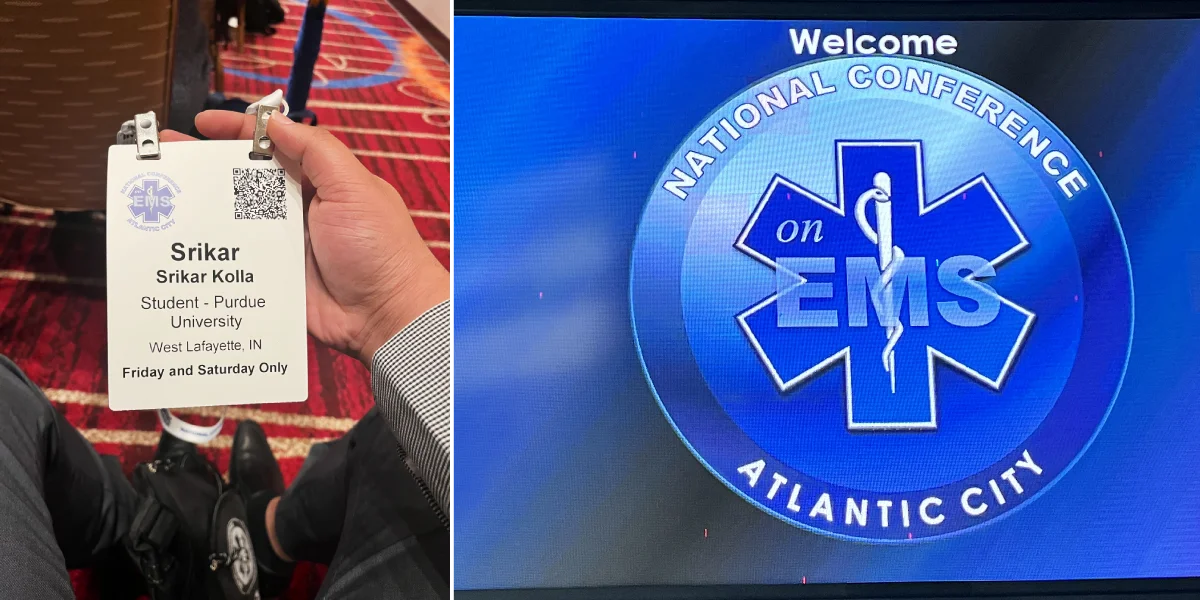
The class funded our trip to the National EMS Conference in Atlantic City, where I met leaders in emergency response and healthcare technology. Talking with the conference head and other professionals provided valuable feedback and helped us understand the HIPAA regulations governing patient data. It also made me realize how complex the path to implementation would be.
A major part of the long-term vision is integrating MedWeb with hospital systems, so a patient’s profile stays accurate without any extra steps. For example, if someone goes for a routine appointment, completes a lab test, or receives a new prescription, that information could automatically be updated in their MedWeb record. In an emergency, first responders would be working with the most current data rather than relying on memory, paper files or family members under stress.
Eventually, I hope MedWeb could integrate AI to help emergency responders make safer, faster decisions. For example, by asking, “Can I give this drug to this patient?” and getting an instant, informed answer.
It’s an ambitious idea, and I know that making it real would require government-level support and strict data protection standards. But knowing that this idea could one day save lives keeps me motivated to keep pushing forward.
Leading MedWeb has taught me that innovation isn’t just about having a good idea, it’s about courage, persistence and collaboration. I was hesitant to even apply for the course, let alone pitch an idea to graduate students. But taking that leap opened doors I never expected.
The BioMedship course gave me real-world experience that no textbook could. It showed me how business and engineering work together to turn a concept into something that could genuinely change lives.
Looking ahead, I want to stay in the intersection of healthcare and business, where innovation can directly improve the lives of the people around me. My biggest takeaway for other Purdue students is simple: Take the leap. You might surprise yourself with how far you can go.

Srikar Kolla is an honors junior from Dubai studying Integrated Business and Engineering at the Mitch Daniels School of Business. He is currently a peer consultant at the Center for Career Opportunities and an incoming summer business analyst intern at Indiana Farm Bureau Insurance. He is also a teaching assistant for Business Statistics and an active member of Engineers Without Borders.