William McGinn is not one to shy away from a challenge. He chose his master’s program because he had a craving to master a discipline that initially thwarted him.
“I chose economics mostly because I didn’t understand it,” McGinn reflects candidly. After a C-minus in his first undergraduate economics course, most might steer clear. But McGinn, then building his career as a reliability engineer, decided to lean in: “It was kind of the study of how the world works altogether. I wanted to understand a lot more about it."
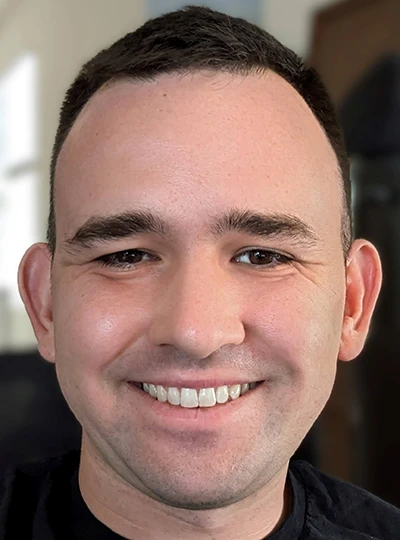
This impulse — to chase down discomfort and conquer blind spots — has shaped McGinn’s approach to learning and leadership.
“If you don’t understand something, that’s the thing you need to go after,” he notes. For McGinn, ignoring intellectual challenges would mean stagnating professionally and personally. This philosophy, born out of grappling with economics, has become a habit propelling him into new territories of problem-solving, collaboration and innovation.
Though McGinn’s economics coursework covered the expected bases — macroeconomics, microeconomics and game theory — it was the data focus of Purdue’s program that most dramatically enhanced his work as an engineer. Skills acquired in econometrics and statistical analysis became his ticket to advanced Python bootcamps and opened doors to bringing cutting-edge data applications into mining operations.
"How you avoid having blind spots at work is if you don't understand something, that's the thing that you need to go after and understand. It's easy to understand what you already know, but it won't gain you anything. It'll just keep you exactly where you are."
“I was able to incorporate a lot of techniques that wouldn’t typically be applied outside of the economics world,” he shares. The real-world result? Informed by economic reasoning, he delivered measurable value in data-heavy engineering projects.
One skill, surprisingly basic yet rare among engineers, proved transformational: “What was really useful was just calculating net present values (NVP),” he says. His ability to rigorously evaluate the financial sense of industrial investments helped him direct millions of dollars of capital investment within a $2 billion smelter project in Indonesia Financial Econometrics
“What stuck out in my interview was I could do NPV calculations and understand if investments made sense — using a spreadsheet format from Purdue.” This combination of technical and economic expertise caught the attention of senior leaders. "Directors and VPs were looking at it like, 'Wow, there's an engineer who can do this too.'"
Each Daniels School economics course became a tool for understanding and adapting to new challenges, sparking what he calls “strange new ideas” that surprised his colleagues. Behavioral economics, for instance, helped him see why individuals and organizations sometimes act against their best interests. Financial Econometrics, meanwhile, allowed him to connect risk/reward thinking from investment portfolios to mine and lab operations — shaping strategies for maintenance scheduling, safety and even community engagement.
Further, the deep dive into decision-making and quantitative analysis made McGinn a more strategic project manager.
“The economics degree helped me figure out what the right projects were,” he says. Whether quantifying value in dollars, tons of rock or telescope uptime, economic thinking brought clarity to complex project selections — a critical edge in leading multidisciplinary teams.

Both McGinn and his now-wife began dating just after enrolling in respective online master’s programs — necessary since they worked in a small, rural New Mexico town. He began his MS in Economics in fall 2019 and found a silver lining in the program when the pandemic led to a plant closure. While he survived layoffs that affected others, he found structure and purpose due to his studies.
“I was lucky enough to keep my job, but restaurants were closed, everything was closed. I was very happy to have something to do with my time.” The immersive and demanding coursework not only kept him intellectually engaged but also helped him emerge from the lockdown period more skilled and future-ready.
Despite working in different fields, McGinn and his wife encouraged each other through late-night study sessions and even helped with each other’s projects, from coding in Python to business strategy. Their partnership proved that challenge and support — ‘iron sharpening iron’ — can raise the bar for both individuals.
“We’re definitely very competitive,” McGinn smiles. “She has two master’s degrees. As soon as I got my PMP certification, she signed up for the test the next day — she said, ‘You can’t have a certification I don’t have!’”
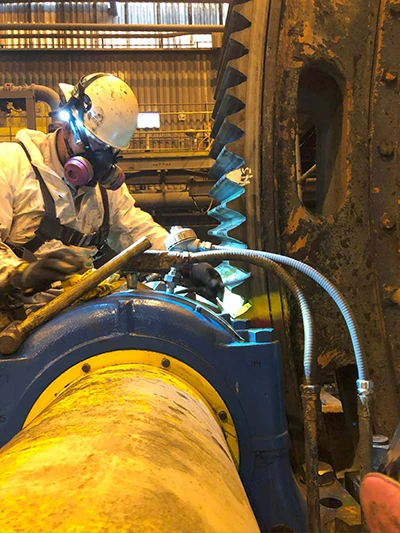
Reflecting on his journey, McGinn strongly recommends economics for engineers and technical professionals. “A big value of a degree in economics is that you’re able to understand the world ... You’re not tied down to any industry.” His economics training broadened his career options, sharpened his ability to read company strategy, and empowered him to save his organizations millions through smarter, data-driven project selection and management.
“In project management, the big question is: Is it more important to do projects right, or to do the right projects? The answer is, you have to do the right projects right. The economics degree helped me figure out the right projects — and how to value them.”
William McGinn’s path to, through, and beyond his master’s in economics is a testament to the transformative power of facing the unfamiliar. In conquering what once confused him, he built a career marked by adaptability and innovation — one that bridges disciplines and drives real-world outcomes. For engineers and aspiring leaders alike, McGinn’s advice is to seek out those blind spots. Because, sometimes, the most surprising challenges become the foundation for lifelong growth and extraordinary impact.
Interested in learning more? Explore the Daniels School Master of Economics to start your journey.
If you would like to receive more information about pursuing a business master’s at the Mitch Daniels School of Business, please connect with us and a program specialist will be in touch!