Each year, master’s students rub elbows with professionals and academics at the annual HR Case Competition and Working Well Conference. The conference features cutting-edge research across OBHR and related fields. This year’s conference — “Bodies, Behaviors and Bots” — focused its aperture on the shared responsibilities of organizations in shaping employee well-being and embracing new technological and policy horizons.
Center for Working Well leaders Allison S. Gabriel and Kasie Roberson strategically sought out research illuminating emerging workplace challenges that deserve greater visibility. They chose topics — ranging from health policies to AI’s impact on work — to elevate pressing issues that will instigate organizational conversations for years to come.
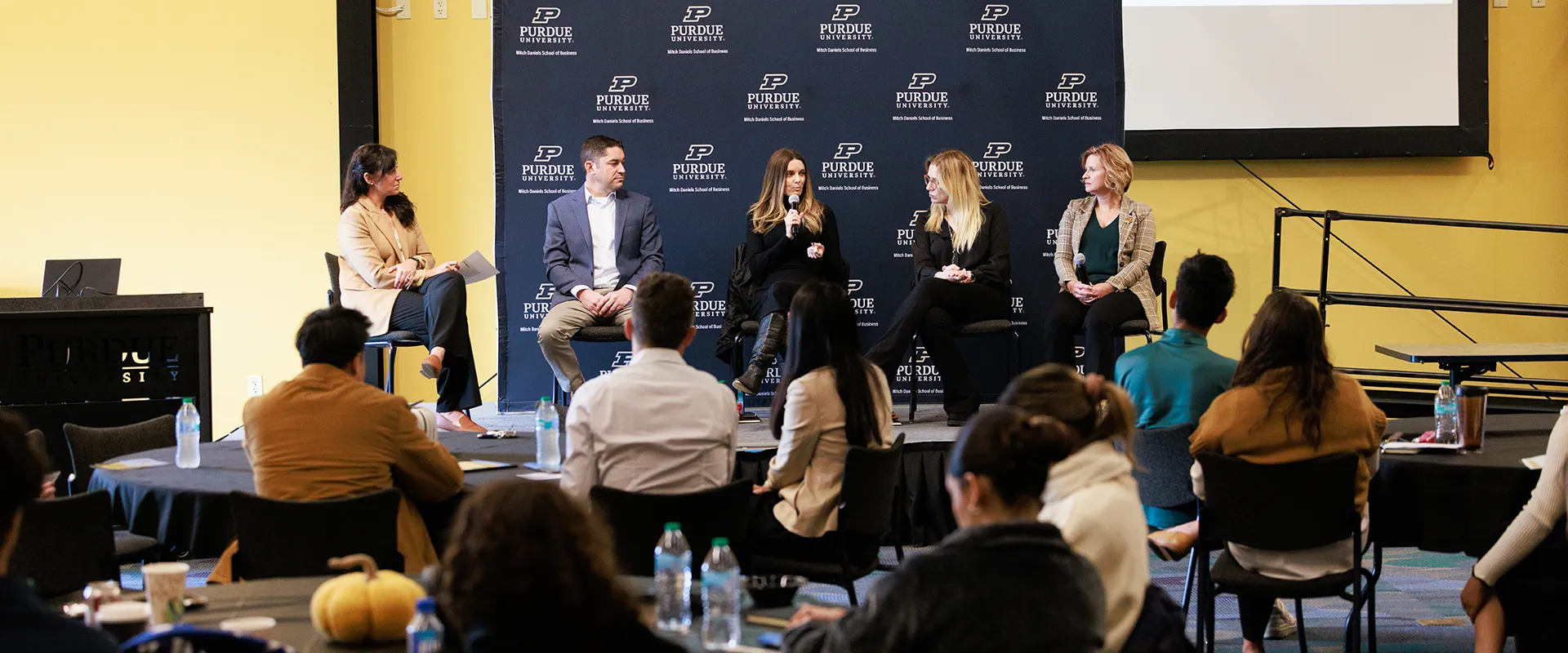
The conference highlighted three papers and included a panel discussion. PhD candidate in consumer science Jiarui Li presented findings on the collaboration between service robots and luxury retail employees. Gloria Liou, a PhD candidate in I-O psychology, presented on the signals supervisors send to subordinates about work-life balance. Rachel Hahn, postdoctoral research fellow in OBHR, rounded out the sessions with a presentation on making leave available for employees who menstruate or live with other chronic health conditions. Afterwards, a multi-industry panel discussed the nuances of implementing such findings in their organizations.
“The conference showed me how students have been able to take the education received here at Daniels and transform it into meaningful studies covering prominent HR issues,” says Andon Shano (BS 2024, MS 2025). “The researchers' findings further reinforced how important and dynamic employee engagement, motivation and a positive work culture are to creating an effective and inviting workforce.”
Jiarui Li’s session urged leaders to recognize the “double-edged sword” of automation. Li’s findings demonstrated that service robots, like food-delivery and check-in-and-out robots and those that recommend or help customers find products, may streamline tasks, but they introduce challenges — particularly social isolation for frontline employees and added stress when technology malfunctions.
"You can imagine if you're working with a service robot, that's probably not the same as the camaraderie that you would get with having other co-workers,” says Gabriel.
The research, says Shano, shows how “technological advancements both help and hinder the degree of social connection with employees.” He notes the strain on social connections that the loss of face-to-face communication with fellow humans takes.
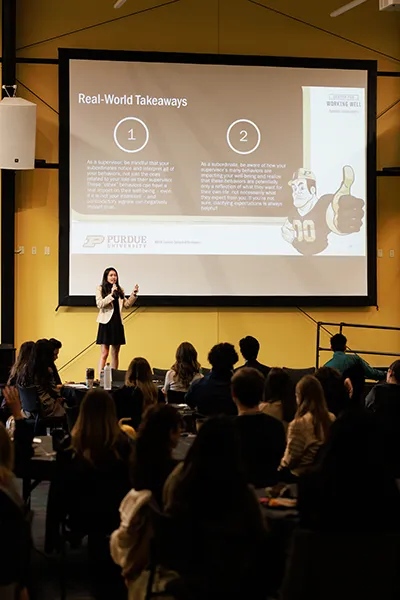
In session two, Gloria Liou presented research on how supervisors’ behaviors signal managerial expectations that influence employees’ behavior, satisfaction and retention. When supervisors model relentless work habits — not using PTO or sick time, constantly taking on projects, answering emails at all hours — they unintentionally reinforce an expectation that everyone should do the same, increasing stress and turnover intent. By contrast, supervisors who visibly take time off, share personal interests, bring their gym bags to work, and encourage rest create environments that support holistic well-being, thereby increasing job satisfaction and organizational loyalty.
Shano’s takeaway? “Supervisors' behaviors, both inside and outside of the workplace, have a significant impact on their employees' perceptions of them. They must ensure that they are a strong role model who exemplifies the company’s values and ensure that employees are motivated to contribute more meaningfully to their work environment.”
Rachel Hahn wrapped up sessions with a presentation exploring how organizations can meaningfully support employees with chronic health conditions, including menstrual symptoms. Crucially, it’s not enough to simply introduce a policy; businesses must also actively signal its legitimacy and real-world use. When employees observe others using these benefits — such as menstrual leave — they’re more likely to feel empowered to do the same. This creates cultures where employee health is visibly prioritized, reducing presenteeism and boosting long-term productivity. Leaders who publicly support and model usage of wellness-related policies normalize and validate their use, signaling work-life balance.
As an MSHRM student, Shano said the research on chronic health conditions — illness legitimacy and absenteeism — will stick with him. “Employees can face countless invisible chronic conditions, which affect their engagement at work. Through creating a more welcoming environment, organizations can greatly reduce their absenteeism, leading to more efficient and equitable work environments.”
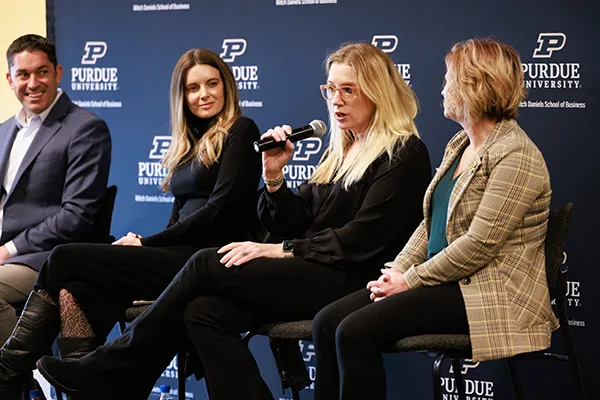
The panel discussion enhanced the conference by fostering conversation from diverse industry perspectives. Panelists Amy Lewis, vice president of executive talent at Lightspeed Ventures; Heather Ernst, head of talent, leadership, inclusion and engagement at Rolls-Royce; Dave Teeter, vice president of executive talent, leadership and coaching at Wabash; and Sabrina Wilson, founder of Spill the T Consulting, spoke to different ways their organizations think about supporting employee well-being. Rolls Royce and Wabash handle their office, manufacturing and technical staffs according to the demands of the positions. In Silicon Valley, Lewis pointed out, tech startups run on a 9-9-6 schedule: working 9 a.m. to 9 p.m. six days a week.
"They're all in a footrace; they're all producing similar products. If they don't get there first, that's the whole company,” Gabriel says. “I think the challenge is how to deal with this paradox between well-being and performance to work together. Maybe we do have to accept that there may be some times in life, whether it's our personal lives or our personal careers or the lifespan of a company, that those things are not in balance at all, that there are seasons of careers and organizations."
For Shano, Ernst’s observations about international identities and cultural preferences and how these impact the viability of company policies resonated. He appreciated the diversity of perspectives from the panel, saying it left him with “a holistic view of how HR works to balance business performance with employee well-being.”
The Center for Working Well offers a variety of events for students and professionals to enrich their knowledge and practice.
If you would like to receive more information about pursuing a business master’s at the Mitch Daniels School of Business, please connect with us and a program specialist will be in touch!