Fall 2025
High above our heads, a growing cloud of space junk circles the planet. Defunct satellites, rocket stages and thousands of shards from past collisions now clog Earth’s orbits, turning once-clear lanes of travel into dangerous minefields.
According to the European Space Agency (ESA), more than 36,000 pieces of debris larger than a softball are currently tracked, along with millions of smaller fragments too tiny to monitor but still capable of puncturing spacecraft. Traveling at speeds of more than 17,000 miles per hour, even a bolt or paint fleck can cause catastrophic damage.
The nightmare scenario, known as the Kessler syndrome, imagines one collision sparking a chain reaction, where debris from each crash triggers more collisions until entire orbital paths are unusable. It’s a crisis decades in the making — and one that threatens the very infrastructure humanity relies on for navigation, communication, weather forecasting and defense.
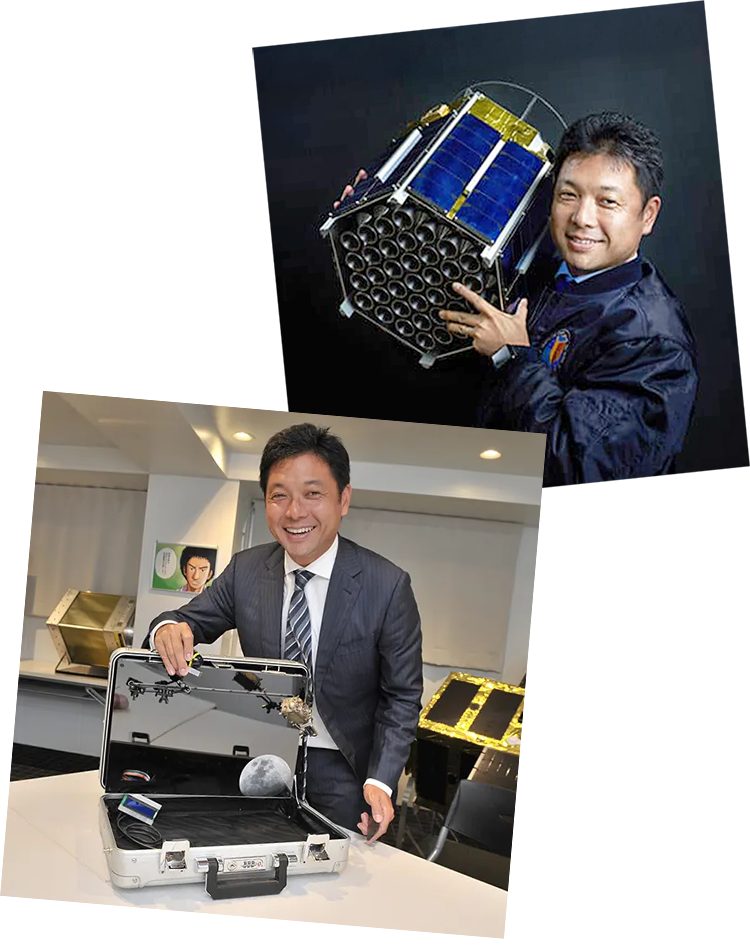
Into this mounting crisis steps Astroscale, a company founded by award-winning Purdue MBA alumnus Nobu Okada in 2013 with one audacious goal: to make orbital cleanup and space sustainability not just possible, but commercially viable.
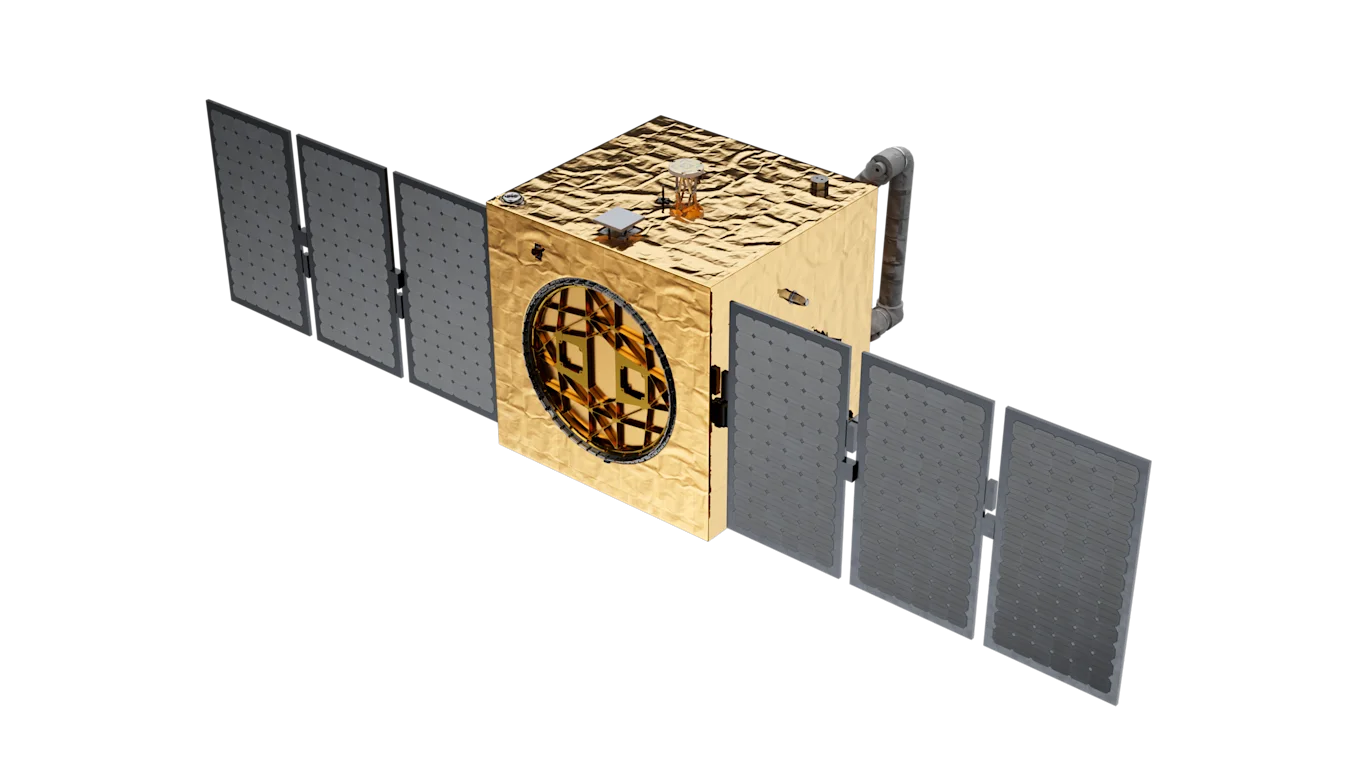
Based in Japan with more than 600 employees across five countries, Astroscale is building innovative spacecraft and launching pioneering missions that prove spacecraft can safely rendezvous with, inspect, service, and eventually remove dangerous debris from orbit.
Okada says his interest in space began in his childhood. “I even went to U.S. Space Camp in Alabama when I was 15, which was an unforgettable experience,” he says. “But life took me on a different path, and for years, my career had nothing to do with space.”
Still, Okada’s lifelong passion for space eventually brought him to Purdue University, the “Cradle of Astronauts” and alma mater of his boyhood hero, Neil Armstrong, where Okada earned an MBA in 2001 from the business school. He then leveraged his new degree into a finance career, rocketing to new levels with jobs at several leading consulting firms and financial services companies, including McKinsey & Company and Bain Capital.
He remained unfulfilled, however. “I found myself searching for something that could reignite that childhood passion,” Okada says. “That search eventually led me back to space.”
As Okada acquainted himself with the space industry, he quickly realized the severe implications of space debris.
“Today, our modern lives depend on space more than most people realize — everything from GPS on your phone and weather forecasts to streaming a live soccer match,” Okada says. “To meet this demand, companies are launching constellations of satellites — a single constellation sometimes with more than tens of thousands of satellites — into orbits that are already crowded. The result is a dangerous traffic jam in space.”
In 2013, Okada started attending space conferences to see where the industry was heading and learn about the most pressing challenges. “Three things quickly became clear: space debris wasn’t some distance problem,” he says. “It was already making space unsustainable. No one had a scalable solution and tackling it would require fresh thinking. That was the challenge I wanted to dedicate myself to. A week later, I founded Astroscale.”
Although Okada launched the company as an unknown, today he’s a respected expert on space debris. He is an honorary ambassador of the International Astronautical Federation (IAF), a member of the International Academy of Astronautics, an advisory board member of the Space Generation Advisory Council and a Fellow of the Royal Aeronautical Society.
In addition, Okada plays an active role in United Nations forums, contributing to key workshops and committee discussions that shape the global agenda for space sustainability. He also served as the IAF’s vice president for space economy and sponsorship and co-chaired the World Economic Forum’s Global Future Council on Space Technologies until 2021. He was honored with the Burton D. Morgan Entrepreneurship Award by Purdue’s Daniels School of Business in 2018.
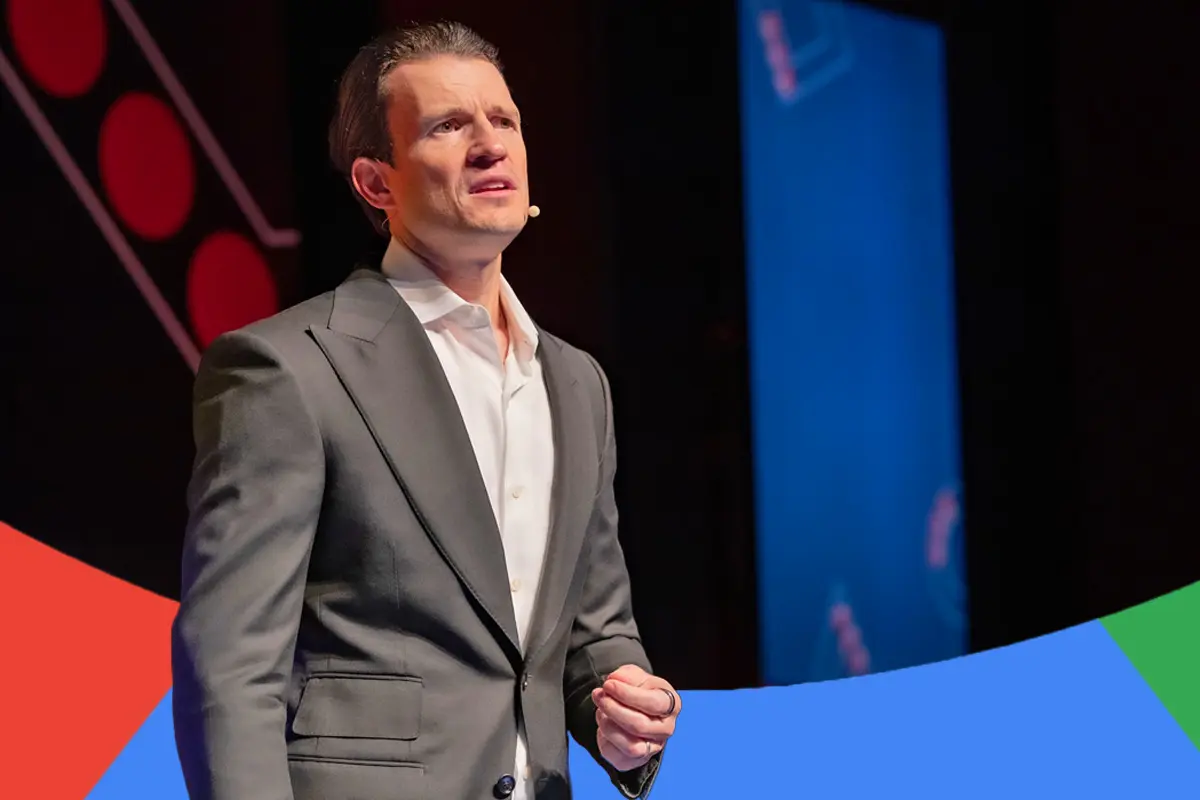
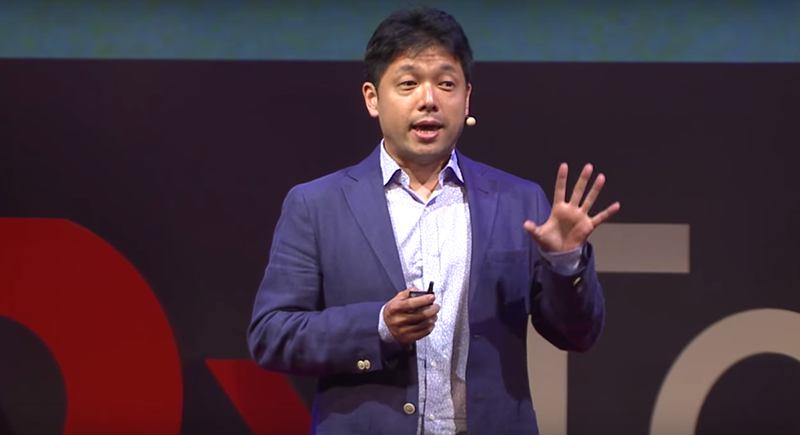
To advance his company’s mission, Okada returned to many of the same industry conferences as a speaker rather than a guest, creating awareness about the issue in a series of media appearances and YouTube videos from his talks at TEDxTokyo, various global summits and other news outlets.
“I focused on building four things: a great engineering team, a proven solution, initial funding and an international framework,” he says. “I knew that waste management in space wasn’t sexy enough to convince governments and taxpayers to pay for it, at least not until there was a viable business model.” So, Okada built one himself. To date, Astroscale has raised more than $500 million in funding, which includes venture capital, debt and a public offering.
“Space is a capital-intensive field,” he says. “To grow, we had a series of private funding rounds and utilized bank loans before going public on the Tokyo Stock Exchange in 2024 and raising additional funds in 2025 from public equity investors. Today, most of our revenue comes from contracts with government and defense agencies around the world.”
While those governments and agencies have struggled to fund large-scale cleanup missions, Astroscale is betting on a commercial model: proving debris removal and other on-orbit services can be done safely, then offering them as a repeatable service for satellite operators, national security and space agencies.
“We started with a singular focus on space debris removal,” Okada says. “Over time, that expanded into the full spectrum of on-orbit services, including life extension and refueling of satellites in orbit. A good analogy of what we do is 'roadside assistance for satellites.' Sometimes a satellite needs more fuel, other times we need to get close and inspect it to see what’s wrong, and sometimes it needs help getting off the road safely.”
Astroscale’s customer base has also shifted. “Initially, we were working mostly with governments, and now defense agencies are becoming key partners,” Okada says. “Commercial demand isn’t quite there yet, but we expect it will come. Through all this change, one thing hasn’t wavered: our vision to ensure the secure and sustainable development of space.”
Under Okada’s leadership, Astroscale’s first big step was ELSA-d, launched in 2021 from Baïkonur Cosmodrome, Kazakhstan, on a GK Launch Services Soyuz-2 mission. The company followed this with ADRAS-J, launched in 2024 in partnership with the Japan Aerospace Exploration Agency (JAXA) from Rocket Lab's Launch Complex 1 in New Zealand.
“ELSA-d was the world’s first commercial demonstration of key technologies for satellite servicing and debris removal,” Okada says. “It proved our magnetic capture, rendezvous and proximity operations capabilities in space."
ADRAS-J went a step further by approaching and inspecting a large piece of debris that has been in orbit since 2009 — a rocket upper stage around the size of a city bus. “Once it was within 50 meters of the debris, we successfully performed multiple close fly-arounds, gathered critical data and set the stage for the follow-up removal mission,” Okada says. “Together, these missions established Astroscale as a leader in space sustainability.”
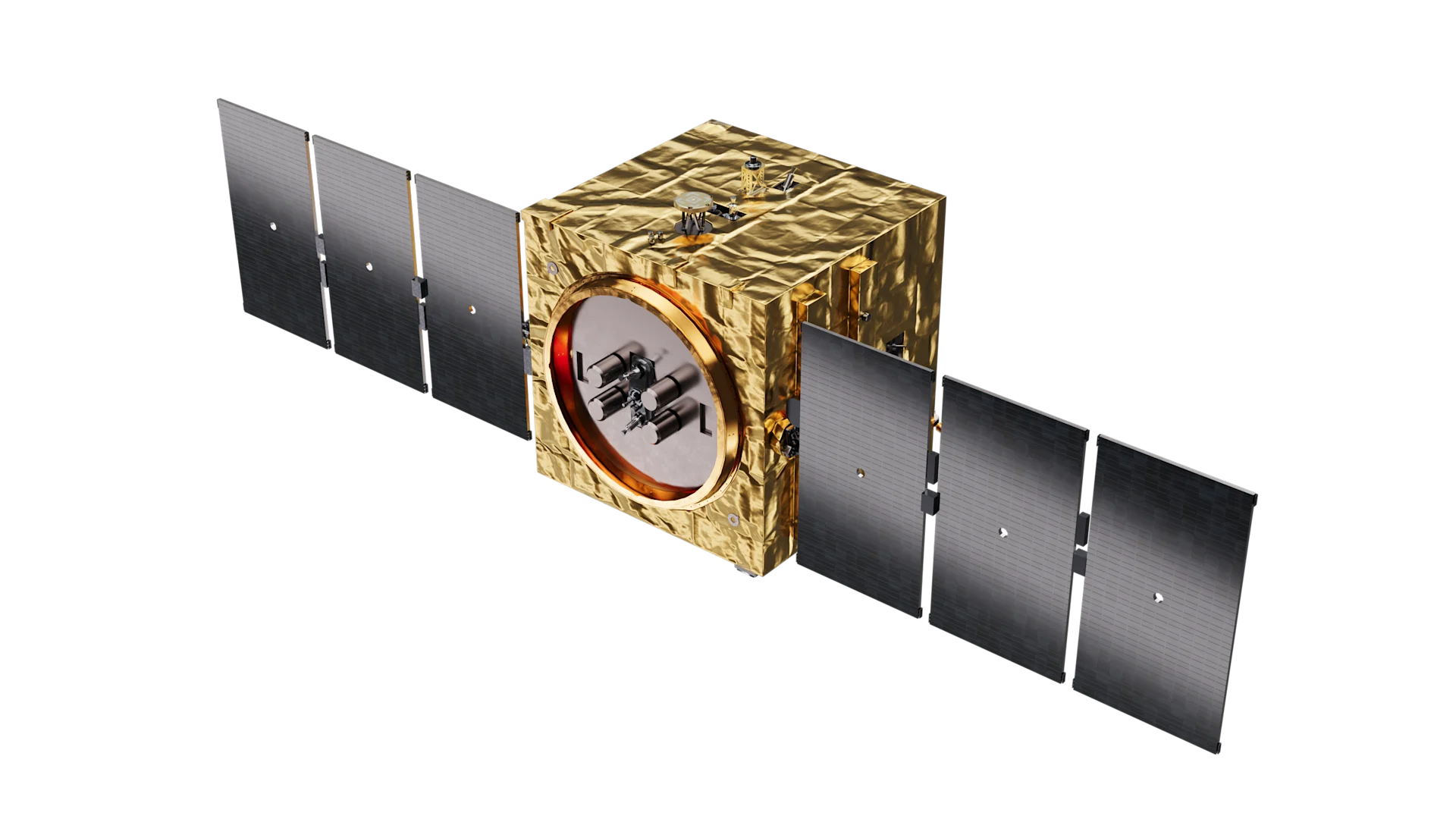
In addition, Astroscale’s first-generation docking plate technology was successfully tested on-orbit during the ELSA-d mission. It can be compared to a car ‘tow hook’ — a standardized interface that enables future servicing. They’re customizable for different satellite designs and enable both robotic or magnetic capture mechanisms to securely attach a servicer to a satellite.
The second-generation docking plate is in space with customers today and available to purchase off the shelf. Its benefits are critical to commercial and government satellite operators, including efficient upgrades, relocations and recoveries with minimal costs and no need for in-house design resources, and active debris removal (ADR) to ensure sustainable operations from launch.
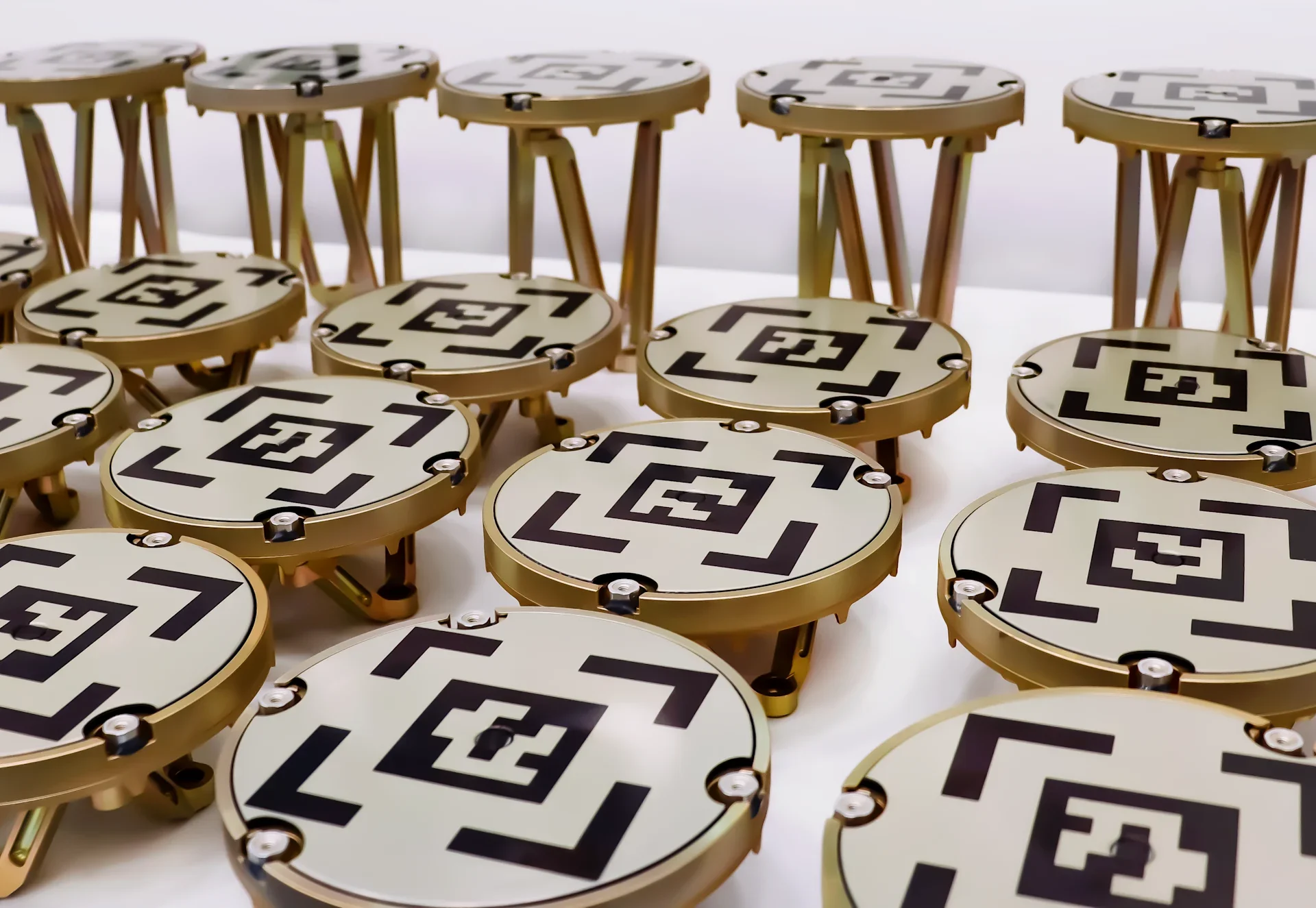
Astroscale’s second-generation docking plate is in space with customers today.
Astroscale U.S. recently signed a reimbursable Space Act Agreement with NASA’s Goddard Space Flight Center (GSFC) to test rendezvous, proximity operations and docking (RPOD) capabilities of the Astroscale U.S. Refueler spacecraft, APS-R. The company tested its Refueler at GSFC in August in preparation for two refueling operations of U.S. DOD satellites in geostationary orbit (GEO) for the United States Space Force (USSF).
Conducting orbital maneuvers to match the orbit and altitude of a client spacecraft, closely approach, and then dock to it is a series of incredibly complex activities. GSFC provides one of the most flight-like testing environments available, allowing the USSF to test like it flies, leverage the center’s deep expertise in on-orbit servicing and assembly, and build on Astroscale’s global, flight-proven leadership in rendezvous and proximity operations (RPO).
Designed for maneuverability, the 300-kilogram refueler spacecraft will carry a refillable hydrazine tank, supporting refueling for a client spacecraft and enabling an end-to-end refueling ecosystem with a client, servicer and depot in space.
The mission will demonstrate multiple capabilities of the Astroscale U.S. Refueler, including RPO, docking, inspection and refueling. Set to launch in the summer of 2026, it will be the first spacecraft to conduct hydrazine refueling operations above GEO and will be the first-ever on-orbit refueling mission supporting a DOD asset.
In another recent agreement, Astroscale U.S. is partnering with Cambrian Works on a NASA study to develop a comprehensive concept of operations and implementation plan for a potential commercial mission to raise the orbit of the agency’s Neil Gehrels Swift Observatory. The mission concept study will provide NASA with a technically credible, operationally executable and rapidly developed solution to extend the spacecraft’s mission life.
Launched in November 2004, Swift has been a cornerstone of NASA’s astrophysics program, detecting gamma-ray bursts and other high-energy astrophysical phenomena. Over its more than two decades in orbit, Swift has transformed the way scientists study transient cosmic events — from exploding stars and stellar flares to active galaxies, comets and asteroids. Increased solar activity has recently accelerated orbital decay, with projected reentry likely by late 2026.
The partnership with Astroscale U.S. represents the growing strength of the domestic commercial space servicing sector. A successful Swift orbit boost would not only extend the mission of one of NASA’s most productive science assets, but also serve as a demonstration of U.S.-developed, commercially led capabilities that can be applied to future government and commercial spacecraft.
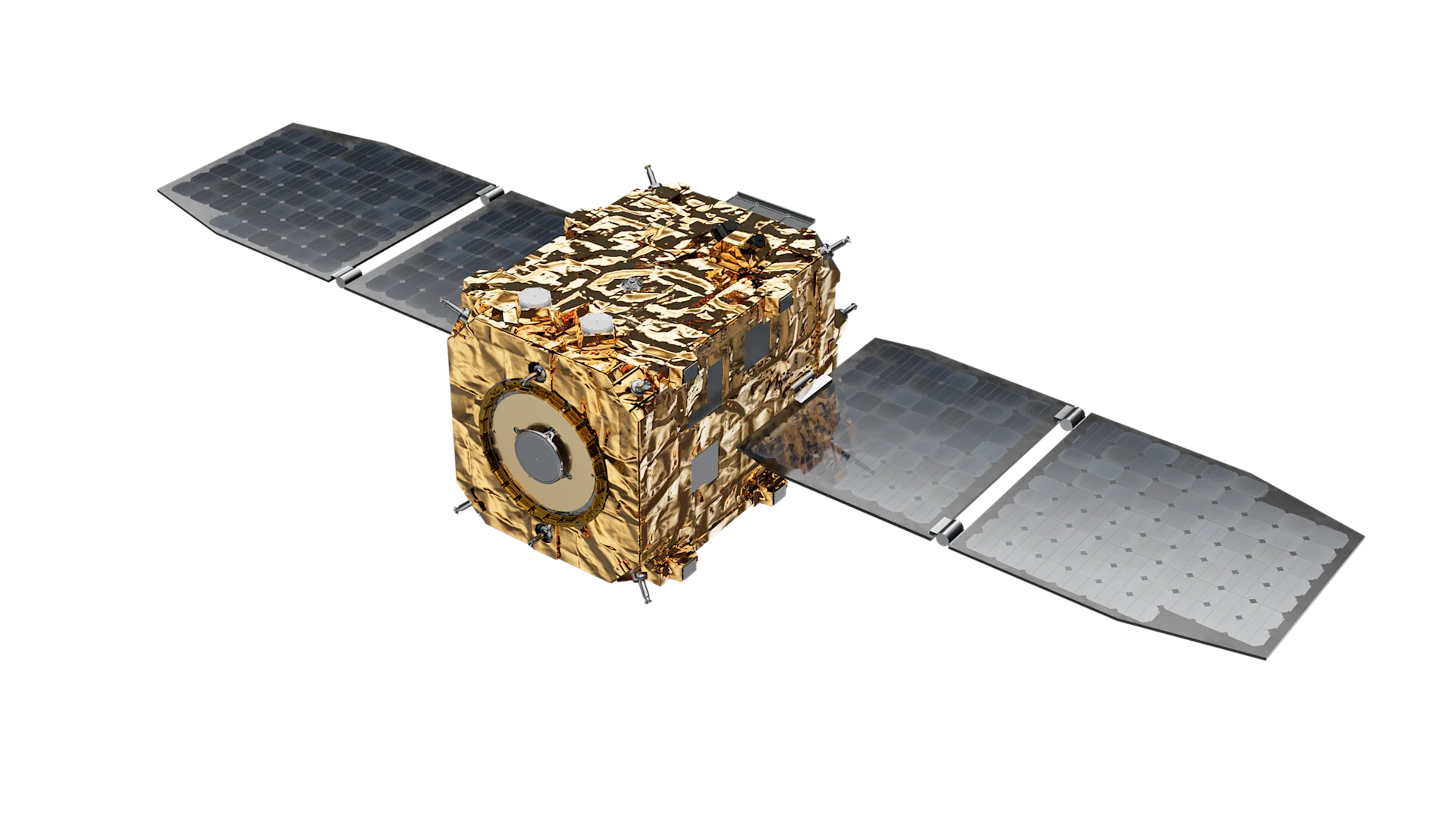
Looking ahead, Astroscale is preparing ELSA-M, which will extend its capabilities to real, end-of-life commercial satellites in partnership with Eutelsat OneWeb, the European Space Agency (ESA) and UKSA. By using standardized docking plates and precision guidance systems, the servicer could latch onto aging satellites and escort them out of busy orbital lanes. Advancing from previous missions, ELSA-M will show the commercial viability of on-orbit rendezvous and magnetic capture with prepared in-orbit client satellites.
But perhaps the company’s most ambitious idea yet is its newly patented multi-object debris removal system. The technology offers a sustainable and cost-effective distributed architecture approach to ADR, allowing for scalable, repeatable operations and controlled reentry of multiple debris objects.
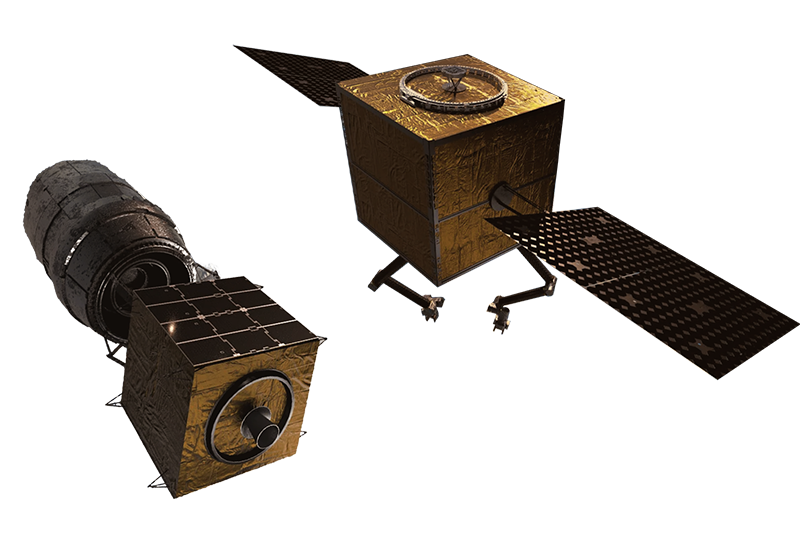
Instead of removing one piece of junk per mission, Astroscale envisions a two-part architecture: a nimble servicer that corrals debris and hands it off to a “shepherd” spacecraft, which handles the fiery reentry. This process repeats, allowing the servicer to remove multiple large debris objects over the course of its mission. “It’s a game-changer for sustainable debris management,” Okada says.
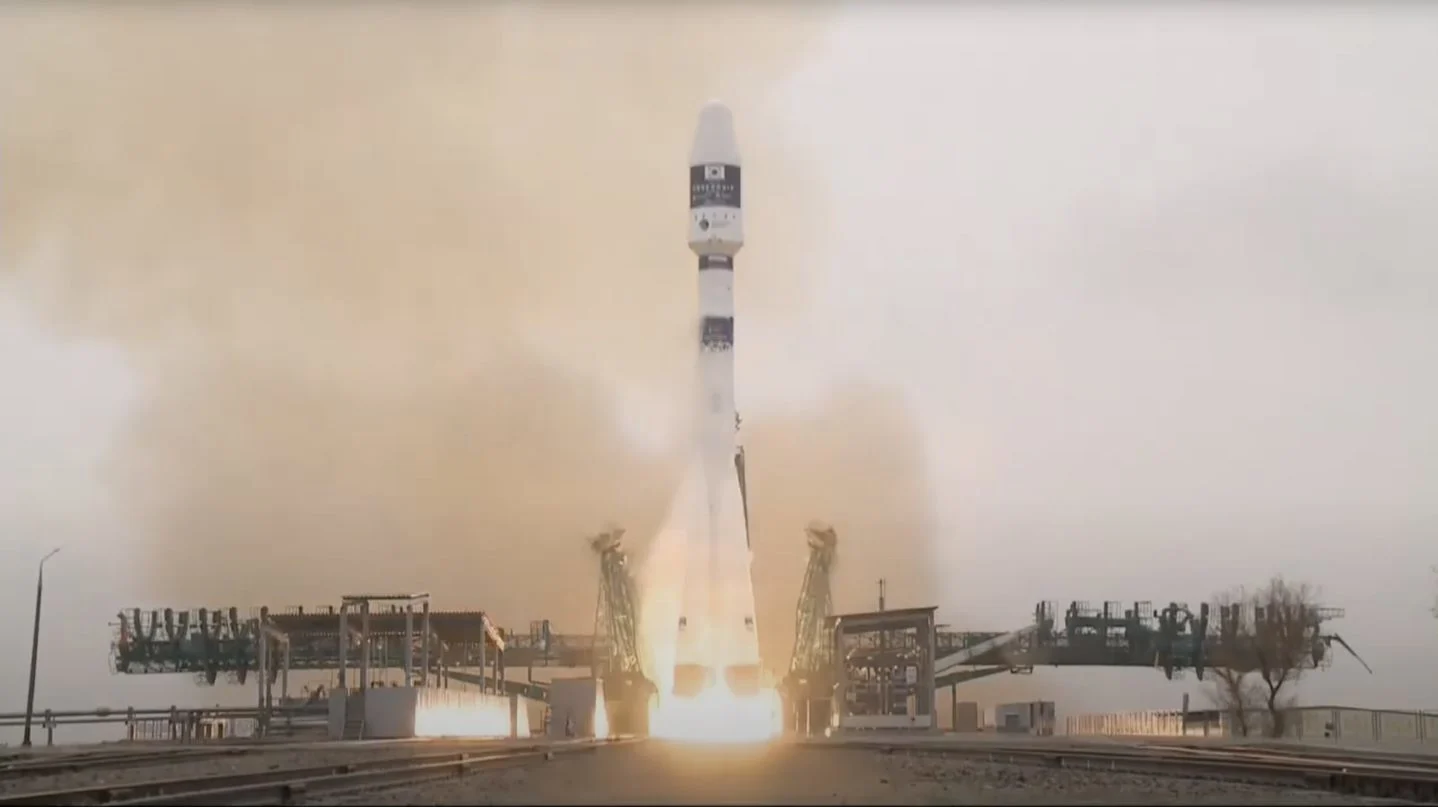
Astroscale partners with different launch providers to use sites that best suit their specific missions and target orbits. The ELSA-d mission launched from Baïkonur Cosmodrome, Kazakhstan, in 2021 on a GK Launch Services Soyuz-2 mission, and a future mission is scheduled to launch from India's Satish Dhawan Space Centre.
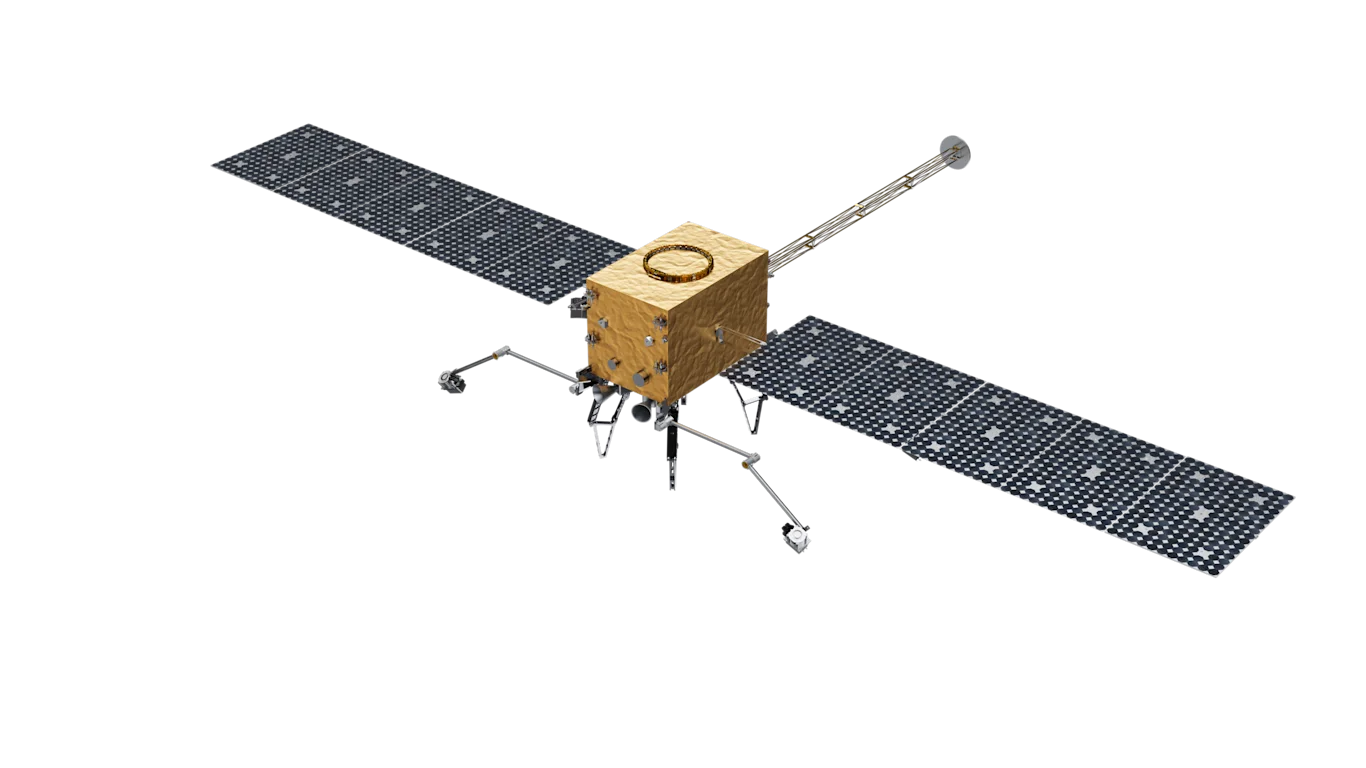
Astroscale’s other upcoming missions include ISSA-J1, targeted for launch in spring 2027, which will image and diagnose two large, defunct satellites in space. Also under development is LEXI-P, which will transform satellite operations by prolonging the use of payloads, extending and expanding missions, providing key insights through inspection and situational awareness, and enabling responsible end-of-life disposal — all with the ability to service clients on multiple missions.
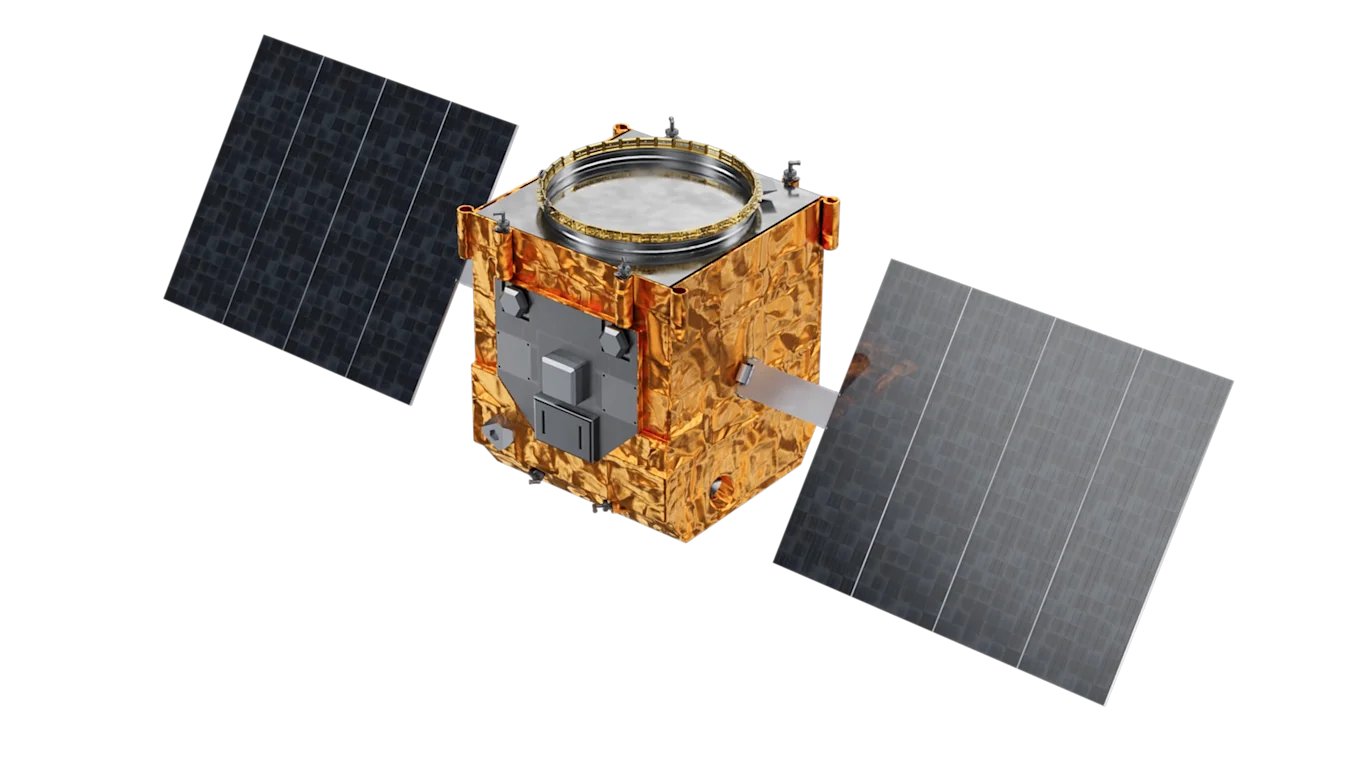
Astroscale is also developing COSMIC, a debris removal servicer for the UK Space Agency (UKSA) that’s a technological evolution of ELSA-d, with a robotic arm capture system to grab the inactive satellites. Leveraging technology matured in its ELSA and ADRAS-J operations, the COSMIC mission harnesses Astroscale's rendezvous and proximity operations (RPO) and robotic debris capture capabilities to remove two inactive British satellites currently orbiting Earth.
The ADRAS-J2 for JAXA, scheduled to launch in the next couple of years, is a follow-on ADR spacecraft that will similarly attempt to safely approach the same rocket body from the ADRAS-J mission through RPO, obtain further images, then remove and deorbit the rocket body using in-house robotic arm technologies.
Astroscale’s progress has caught the attention of governments and agencies around the world, and its partnerships with JAXA, the UKSA and the ESA highlight the growing recognition that orbital debris isn’t just a nuisance but a global threat.
For decades, space exploration has been guided by a frontier mindset: launch now, clean up later. That attitude has left Earth’s orbit littered with dangerous junk. Astroscale is one of the few companies confronting the problem head-on, offering not just a vision but tangible solutions.
If successful, Astroscale’s efforts could mark the beginning of a new era where orbital cleanup is as routine as launching satellites. By turning debris removal into a viable service, the company is helping ensure that space remains a place of opportunity rather than an orbital graveyard.
“The difference now is awareness,” Okada says. “Governments, industry and the public increasingly recognize this as urgent. We’re seeing more responsible action from satellite operators, more funding for debris removal and more companies entering the servicing market. I’m encouraged because solutions like ours are becoming central to changing the trajectory of space.”
The challenges remain enormous. Debris objects are tumbling, unpredictable and often unprepared for capture. Fuel constraints, autonomy requirements and regulatory questions all loom.
Yet Astroscale is steadily proving that orbital cleanup is no longer a dream. Indeed, the company’s incremental approach — moving from demonstrations to real inspections, and from single to multiple-object removal — shows a clear path forward.
“We’ve evolved from debris removal to a full range of on-orbit services: inspection, life extension and refueling,” Okada says. “Looking further ahead, we’re exploring repairs and recycling in space, which will be key to building a circular space economy.”
In the early days, Okada says, the challenges were about survival — building a great team, raising money and proving its technology could work. Today, humanity’s ongoing relationship with space may hinge not only on our ability to reach new frontiers, but also on how well we clean up after ourselves.
“The challenge now is scaling,” he says. “We need to transition from pioneering one-off demonstrations to delivering services at scale, making on-orbit servicing routine by 2030. This means being nimble, adaptable and ready to evolve with a rapidly growing sector.
"The future of space depends on it.”